Where to Inject KLOW Peptide
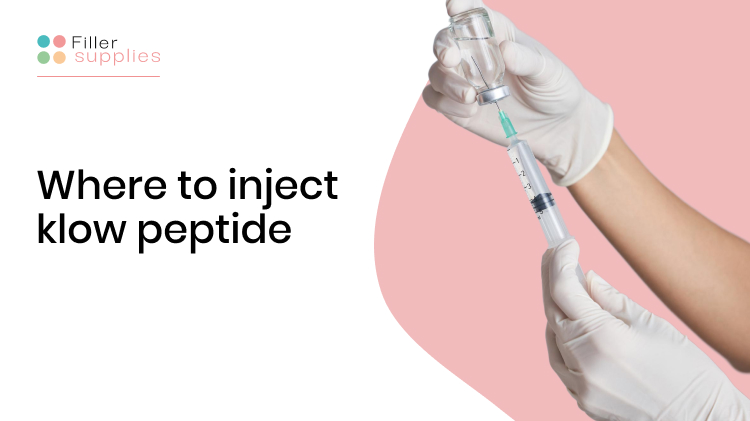
Respectable cosmetologists and aesthetic professionals, high alert: a new rising star among cosmetic treatments is spotted! Of course, we are talking about peptide injections. Today’s article in particular is dedicated to the unique blend widely used in clinics — the KLOW peptide mixture. Here, we will not only explain the peculiarities of the said solution but also explain where and how to administer it to achieve the best possible results.
FOR YOUR INFORMATION:
Most peptides are still in the research stage, meaning their use in humans is not approved. Still, some studied brands are already widely used in aesthetic medicine for faster recovery, wellness, and skin improvement. Only order KLOW peptides from a reliable supplier who can provide you with valid certification.
Definition of KLOW in Peptide Therapy
Peptide stacking is surely a new page in the industry of rejuvenating and regenerative injections. While the original solution — the GLOW blend — contains three main peptides for tissue repair and improved collagen/elastin synthesis, KLOW adds a fourth element that drastically transforms its regenerative formula. The addition of KPV is ideal not only for tissue repair but also for better control of systemic inflammation, which often affects the efficacy of healing processes in the body. That’s the main reason the GLOW peptide blend is primarily associated with aesthetic medicine, while KLOW is mentioned more frequently in the context of healing and post-trauma recovery, often in the sports field.
The primary component in such GHK-Cu — a naturally occurring copper peptide that stimulates collagen production and accelerates wound healing; its high concentration (50 mg of GHK-Cu in an 80 mg KLOW vial) helps achieve a therapeutic effect. Other components are included in lower concentrations — 10 mg each.
Four Peptides Included in the Composition
KLOW peptides can be used for various therapeutic golas. It supports gut health by reducing gastrointestinal inflammation and maintaining gut lining integrity, improving tissue resilience and skin quality, and accelerating healing in tissues affected by physical stress. Most users notice a significant advancement once the therapy is finished, and the reason is the beneficial composition of KLOW peptide blends. Let’s discuss in more detail.
BPC-157
BPC-157 is a gastric-derived pentadecapeptide that has attracted attention for its potential tissue-repair properties. In animal studies, it has been associated with faster healing of tendons, ligaments, and muscles, possibly through effects on angiogenesis and growth-factor signaling. Research also suggests it may support gastrointestinal health, reduce NSAID-related damage, and aid recovery from various tissue injuries. BPC-157 in KLOW also accelerates new blood vessel formation.
GHK-Cu
GHK-Cu is a naturally occurring copper-binding peptide found in human plasma, saliva, and urine. It stimulates over 300 repair-related genes. The ingredient is involved in extracellular matrix remodeling and may stimulate the production of collagen, elastin, and proteoglycans. Research suggests that GHK-Cu may help reduce the appearance of wrinkles, support wound healing, and influence gene expression associated with tissue repair and regeneration. At 50 mg per vial, it is the primary component of KLOW.
TB-500
TB-500 is a synthetic peptide modeled after thymosin beta-4, a naturally occurring protein involved in actin regulation. Because actin plays an important role in cell movement, this activity may help cells migrate to injured areas and support the repair process. Preclinical research suggests that TB-500 may promote wound healing, repair cells, modulate inflammation, and support cardiovascular function. It is often paired with BPC-157 in peptide protocols intended to support tissue recovery.
KPV
KPV is the key ingredient that differentiates KLOW from GLOW. This tripeptide fragment of alpha-melanocyte-stimulating hormone has been studied for its potential anti-inflammatory properties, including effects on the NF-κB and MAPK signaling pathways. Unlike its parent hormone, KPV is not associated with skin pigmentation. Early research suggests it may help support inflammatory balance and gastrointestinal health, although evidence in humans remains limited, particularly for chronic inflammatory and autoimmune conditions.
How and Where to Inject Peptides with KLOW Technology?
Subcutaneous injections are preferred for most peptide therapies, as they are generally easier and less painful; however, intramuscular injections allow for faster absorption of peptides, but they must be performed under the supervision of a qualified medical professional! Injection procedures should always be performed under the supervision of a healthcare professional. We recommend using insulin syringes with 29G-31G needles for general comfort during the procedure. Before administration, the skin should be cleaned with an alcohol pad to sterilize the area. Injections should be administered at a 90-degree or 45-degree angle depending on tissue thickness; once you push the needle straight down in a smooth motion, the solution should be slowly administered into the target area.
If you are wondering where to inject KLOW peptides, here’s the answer: common sites for subcutaneous administration include the abdomen and thighs. We recommend rotating injection sites by at least 2 cm to prevent irritation and also avoiding injecting KLOW into bruised or damaged skin. Guidelines are crucial for patients, so show them the correct injection technique, instruct on dosage and precautions, and always stay in touch to assist in case they have questions.
What Is the Optimal Dose for General Injection Comfort?
Reported KLOW protocols range from roughly 2.7–8 mg of total peptide per day, depending on the intended use and individual response.
For general wellness or anti-aging, suggested amounts are typically 2–4 mg daily. Injury-recovery protocols often use 4–6 mg, while more intensive short-term approaches may reach 6–8 mg for acute injuries or post-surgical recovery.
Dosing should be discussed with a qualified healthcare professional rather than adjusted independently. It’s also important to note that only licensed specialists can buy research peptides online to ensure the products are of good quality and can be used in safe environments.