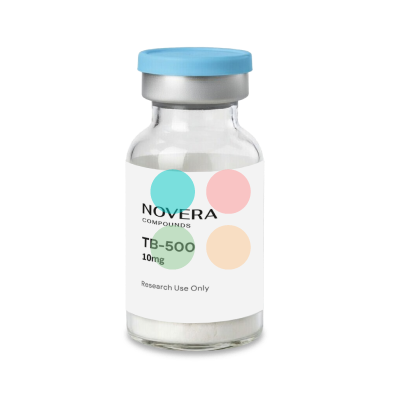
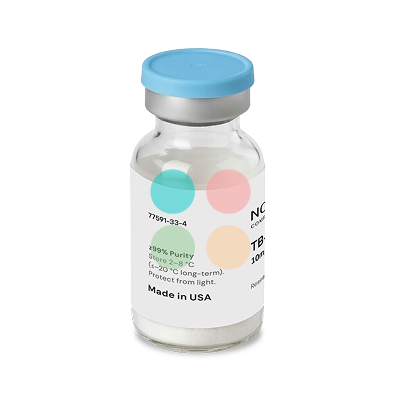
TB-500 is a synthetic peptide derived from thymosin beta-4 (Tβ4), the naturally occurring 43-amino acid protein that plays a central role in actin binding, cell migration, and tissue repair across mammalian cells. Extensively studied in preclinical animal models, this synthetic peptide has demonstrated compelling research potential in wound healing, cardiac tissue repair, modulating inflammation, and tissue regeneration – making it one of the most actively investigated peptides in regenerative biology today.
TB-500 is supplied exclusively for laboratory research use only and is not approved for human or veterinary use. It has not been evaluated by the FDA. Every claim presented on this page reflects published preclinical findings from animal studies and in vitro experiments, and researchers should interpret all data within that context. When you buy TB-500 peptide from a reputable source, independent testing of peptides is essential to ensure product safety, and reputable vendors provide a Certificate of Analysis to confirm product purity.
General Information About TB-500
TB-500 is a synthetic 43 amino acid peptide that replicates the biologically active sequence of thymosin beta 4 (Tβ4), with particular emphasis on the central actin binding domain corresponding to amino acids 17–23 of the parent protein. The full sequence includes residues such as Ac Ser Asp Lys Pro Asp Met Ala Glu Ile Glu Lys Phe Asp Lys Ser Lys Glu Thr Ile Glu Gln Glu Lys Gln Ala Gly Glu Ser – extending through the complete chain with the characteristic Thr Gln Glu Lys, Lys Glu Thr Ile, Glu Lys Phe Asp, Ile Glu Lys Phe, Gln Ala Gly Glu, Ala Gly Glu Ser, Lys Gln Ala Gly, Glu Lys Gln Ala, Ser Lys Glu Thr, Phe Asp Lys Ser, Gln Glu Lys Asn, Glu Lys Asn Pro, Lys Asn Pro Leu, Leu Pro Ser Lys, Pro Ser Lys Glu, and Ser Asp Lys Pro motifs that collectively define the molecular formula and functional domains of this peptide.
It is smaller than typical growth factors at 4.96 kDa molecular weight, which contributes to its ability to distribute rapidly through tissues following administration. While its pharmacokinetics remain incompletely characterized, rodent studies estimate a plasma half-life on the order of 2–3 hours after subcutaneous or intramuscular injection, with rapid distribution to sites of injury. No formal human pharmacokinetic study has been published.
The primary mechanism of action centers on actin polymerization regulation. TB-500 binds G-actin monomers, modulating cytoskeletal dynamics that drive cellular migration – including fibroblasts, endothelial cells, and stem cells toward injured tissues. Beyond actin binding, TB-500 engages the integrin linked kinase (ILK) → Akt signaling pathway, which promotes cell survival, can inhibit apoptosis, and supports angiogenesis. The peptide also demonstrates anti-inflammatory and antifibrotic properties, likely through upstream modulation of NF-κB and related inflammatory cascades.
Compared to naturally occurring thymosin beta 4, the TB-500 synthetic peptide mimics key tissue repair functions of the parent protein – particularly through the actin-binding region – but dosing, receptor interactions, tissue penetration, and potency may differ. Full-length Tβ4 has a broader evidence base, including some human clinical trial data in wound healing and ocular applications, whereas direct peer-reviewed data on the TB-500 fragment specifically remains more limited.
TB-500 Use in the Research Setting
TB-500 is predominantly supplied as a lyophilized powder for reconstitution and injection in animal models, strictly for research and laboratory use only. Below are the key research domains where this peptide has demonstrated measurable effects in preclinical investigations.
#1. Wound Healing and Tissue Repair
Animal model studies consistently demonstrate that TB-500 and full-length thymosin beta 4 significantly accelerate wound healing in preclinical settings. In diabetic mouse and rat full-thickness skin wound models, exogenously applied Tβ4 promotes wound closure days earlier than saline controls, with improved granulation tissue formation, enhanced epithelial migration, and increased blood vessel formation at the wound site. Topical TB-500 promotes dermal wound closure and collagen deposition, while TB-500 also accelerates corneal re-epithelialization in animal models and enhances hair regrowth in dermal models.
The mechanism involves enhanced cell migration of keratinocytes and fibroblasts, up regulation of vascular endothelial growth factor (VEGF), and matrix metalloproteinase (MMP)-mediated remodeling of extracellular matrix. In skin wound models, treated animals may reach 80–90% closure several days earlier than untreated controls. A 2026 scoping review examining 80 studies on Tβ4/TB-500 literature confirmed a consistent signal of enhanced healing across dozens of studies in wound, skin, and soft tissue settings, though it noted that most used full Tβ4 rather than the TB-500 fragment specifically.
Compared to standard wound-healing therapies, Tβ4 often outperforms saline controls in animal models; however, few studies have directly compared it against standard-of-care interventions such as growth factors or advanced dressings.
#2. Cardiac Tissue Regeneration
Some of the most compelling research on TB 500 thymosin beta 4 comes from cardiac injury models. The landmark study by Bock-Marquette et al., published in Nature in 2004, demonstrated that Tβ4 activates integrin linked kinase (ILK), leading to Akt phosphorylation and promoting cardiac cell migration, cell survival, and cardiac tissue repair in a mouse myocardial infarction model. Treated mice showed reduced scar volume and improved cardiac function versus controls.
“Tβ4 activates integrin-linked kinase and promotes cardiac cell migration, survival and cardiac repair.” – Bock-Marquette et al., Nature, 2004
Subsequent larger-scale rat studies reinforced these findings. Systemic TB-500 reduces infarct size in cardiac injury models: in a permanent LAD ligation rat model, long-term intraperitoneal dosing of Tβ4 at 5.37 mg/kg over 28 days reduced infarct volume by approximately 43%, compared to approximately 29% with short-term dosing. Hemodynamic performance – including left ventricular end-diastolic pressure and dP/dt measurements – was significantly preserved in the long-term dosing group, though ejection fraction improvement was not always statistically significant.
Compared to other cardioprotective peptides like BPC 157, TB-500/Tβ4 has deeper, more robust evidence in cardiac injury models with full functional endpoints. BPC 157 research focuses more on vascular protection in tendon, gastrointestinal, and other tissues, with less robust data for myocardial infarct size reduction specifically. No head-to-head trials have compared TB-500 to BPC 157 in myocardial infarction models.
#3. Anti-Inflammatory Properties
TB-500 has anti-inflammatory and antifibrotic properties that are increasingly well-documented in preclinical research. Animal studies demonstrate that Tβ4/TB-500 suppresses pro-inflammatory cytokines including TNF-α and IL-1β, resulting in reduced inflammation at injury sites. The mechanism likely involves NF-κB pathway inhibition through upstream modulation via Akt and ILK signaling, which reduces apoptotic and inflammatory cell death. TB-500’s anti apoptotic properties contribute to its ability to preserve tissue integrity during inflammatory insults.
In rat myocardial infarction models, plasma biomarkers of myocyte injury (such as ANP) are significantly reduced in Tβ4-treated groups. In skin wound models, inflammatory infiltration is visibly decreased on histology, and inflammatory gene expression assays confirm lower TNF-α and IL-1β mRNA levels. Long-term administration of TB-500 can impact immune system regulation, a consideration researchers must factor into chronic dosing protocols.
It is worth noting that while some sources reference microRNA-146a upregulation as a mechanism, specific studies demonstrating TB-500 directly inducing miR-146a are not clearly established in peer-reviewed literature; this mechanism remains hypothetical and requires further analysis.
| Attribute |
TB-500 / Thymosin β-4 Fragment |
BPC-157 |
| Source / Length |
Synthetic fragment of Tβ4; small ~7-aa active region from 43-aa parent protein |
Pentadecapeptide (15 amino acid), ~1,400 Da, derived from gastric juice protein |
| Primary Mechanism |
Actin sequestration → cellular migration; ILK–Akt pathway; angiogenesis; anti apoptotic |
Growth factor modulation (VEGF, EGF); NO signaling; GI tract protection; vascular repair |
| Half-Life (Estimated) |
~2–3 hours (rat SC/IM); human PK unestablished |
~4 minutes (rat IV); more stable in gastric juice for oral delivery |
| Best-Studied Applications |
Cardiac regeneration post-MI; dermal wound healing; corneal repair |
Tendon/ligament healing; gastrointestinal protection; ulcer and gut barrier models |
| Anti-Inflammatory Target |
NF-κB inhibition; TNF-α/IL-1β suppression; anti-fibrotic |
TNF-α/IL-1β reduction; NO modulation; cytoprotective |
| WADA Status |
Prohibited at all times (Class S2) |
Not currently listed under WADA (subject to change) |
| Stem Cell Effects |
Promotes stem cell differentiation and progenitor cell mobilization |
Less evidence for direct stem cell modulation |
#4. Neurological Applications
Emerging animal studies suggest that thymosin beta 4 promotes neuroprotection in models of ischemic stroke and neural injury. TB-500 promotes neuronal survival in neurological injury models, potentially through reduced apoptosis, enhanced angiogenesis in brain tissues, and modulation of inflammatory microglia and macrophage activity. Mechanisms may involve inducing progenitor or stem cell migration to damaged neural tissue, increasing antioxidant defenses, and supporting axonal regeneration.
However, evidence for the TB-500 fragment specifically – as opposed to full-length Tβ4 – in neurological recovery is minimal in published, peer-reviewed models. Functional recovery data (behavioral, motor) attributable solely to TB-500 remain limited, and further research is needed before conclusions can be drawn about this peptide’s neurological applications.
TB-500 is also being researched for promoting muscle regeneration and flexibility, extending its potential relevance beyond the neural injury and recovery context.
<em>Important to Know:</em>
#5. Research Administration and Dosing
TB-500 is administered via intraperitoneal (IP), intravenous (IV), subcutaneous (SC), or intramuscular (IM) injection in animal studies. Topical application has been used in corneal and dermal wound models. Administration route selection depends on the research model and target tissue.
| Research Model Type |
Typical Doses (Animal) |
Frequency / Duration |
| Rat MI (permanent LAD ligation, full Tβ4) |
~5.37 mg/kg IP |
First 3 days; then every 3 days for up to 28 days (long-term group) |
| Mouse/Rat dermal wound models |
µg/kg range or µg per wound application (most data from full Tβ4) |
Daily or every few days |
| Corneal/ocular topical models |
Microgram quantities applied locally to corneal surface |
Daily application over one week or more |
| Toxicology assessment |
High doses up to 60 mg/kg showed no toxic effects in studies |
Varies by protocol |
Reconstitution and Storage: Store TB-500 at –4°F to –112°F (–20°C to –80°C) as lyophilized powder. Use bacteriostatic water for reconstitution of TB-500. Aliquot reconstituted TB-500 into single-use volumes to preserve integrity. Short-term solutions can be refrigerated at 36°F to 46°F (2°C to 8°C). Avoid repeated freeze-thaw cycles to maintain peptide integrity, as stability data over multiple freeze-thaw cycles is limited.
Buy TB-500 Online at FillerSupplies.com
When you buy TB 500 peptide for laboratory research, sourcing from a trusted, established supplier is essential. Purchasing TB-500 from unregulated vendors is discouraged due to risks of contamination, mislabeling, and purity issues – it is crucial to avoid “Too Good to Be True” pricing indicating poor quality. TB-500 has potential risks including contamination from unregulated sources, and the safest way to obtain TB-500 is through a licensed medical provider or established research supplier. FillerSupplies.com delivers research-grade TB-500 peptide to licensed professionals worldwide, backed by:
- Authentic, certified products – original, quality-controlled compounds, warehouses worldwide.
- 11 years of reliability & trust – established supplier on the market since 2006.
- Temperature-controlled shipping – thermal packaging with ice gel / cold packs preserves stability.
- Express worldwide shipping – next-day dispatch, global delivery.
- Best wholesale prices – tiered bulk discounts and price-match guarantee.
- Privacy guaranteed; expert support at (888) 392-6640, WhatsApp and email, Mon–Fri 10am–6pm EST.
- Supplied for research use only, to licensed professionals.
All TB-500 peptide sold through FillerSupplies.com is strictly for laboratory research use only and is not intended for human or animal use outside controlled research environments.
Related research peptides available at FillerSupplies.com: Thymosin Alpha-1, LL-37, KPV.
FAQ
What Is TB-500 and How Does It Work in Research?
TB-500 is a synthetic peptide derived from thymosin beta-4 that promotes cell migration and tissue repair through its central actin binding domain. It works by binding G-actin monomers, regulating actin polymerization and cytoskeletal dynamics, which enables fibroblasts, endothelial cells, and stem cells to migrate toward injured tissues. The peptide also activates the integrin linked kinase (ILK)–Akt signaling pathway, supporting angiogenesis and the ability to inhibit apoptosis.
Is TB-500 Safe for Laboratory Research?
In preclinical animal studies, TB-500 has demonstrated an acceptable safety profile. High doses up to 60 mg/kg showed no toxic effects in studies. However, most studies on TB-500 are preclinical and lack long-term human safety data. TB-500 has not been evaluated by the FDA and is not approved for human or veterinary use. Independent testing of peptides is essential to ensure product safety in any research application.
How Does TB-500 Compare to BPC-157 in Research?
TB-500 and BPC 157 are both regenerative peptides but differ in mechanism and best-studied applications. TB-500 primarily operates through actin binding and ILK–Akt activation, with the strongest evidence in cardiac tissue repair and dermal wound healing. BPC-157 modulates growth factors and nitric oxide signaling, with more extensive data in tendon, ligament, and gastrointestinal models. No head-to-head trials have directly compared the two peptides in cardiac or wound models.
What Are Common Research Dosing Protocols?
Dosing varies by model: rat myocardial infarction studies have used approximately 5.37 mg/kg IP, while dermal wound models typically employ microgram-level quantities applied locally. Frequency ranges from daily to every three days depending on the research protocol. All dosing is based on animal studies and should not be extrapolated to human use.
How Should TB-500 Be Stored and Reconstituted?
Store TB-500 at –4°F to –112°F (–20°C to –80°C) as lyophilized powder. Use bacteriostatic water for reconstitution, and aliquot reconstituted TB-500 into single-use volumes. Short-term solutions can be refrigerated at 36°F to 46°F (2°C to 8°C). Avoid repeated freeze-thaw cycles to maintain peptide integrity.
Is TB-500 a Prohibited Substance?
Yes. TB-500 is banned by the World Anti-Doping Agency regulations, classified under WADA Class S2 (Peptide Hormones, Growth Factors, Related Substances) and prohibited at all times. Researchers must account for this classification in any study design. Additionally, misuse of TB-500 may violate local laws, and it remains not approved for human or veterinary use.
Where Can I Buy TB-500 Peptide for Research?
You can buy TB 500 peptide for laboratory research through established suppliers like FillerSupplies.com, which offers authentic, quality-controlled products with temperature-controlled shipping and expert support. Purchasing TB-500 from unregulated vendors is discouraged due to contamination and purity risks. Always verify that a vendor provides a Certificate of Analysis.
- Bock-Marquette, I., et al. (2004). Thymosin beta4 activates integrin-linked kinase and promotes cardiac cell migration, survival and cardiac repair. Nature, 432(7016), 466-472. https://doi.org/10.1038/nature03000
- Bao, W., et al. (2013). Cardioprotection by systemic dosing of thymosin beta four following ischemic myocardial injury. Frontiers in Pharmacology, 4, 149. https://doi.org/10.3389/fphar.2013.00149
- McGuire, F. P., et al. (2026). Thymosin Beta-4 and TB-500 in Tissue Healing, Regeneration, and Musculoskeletal Repair: A Scoping Review. Applied Sciences, 16(12), 6202. https://doi.org/10.3390/app16126202