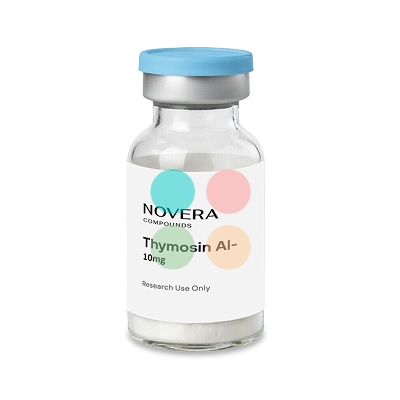
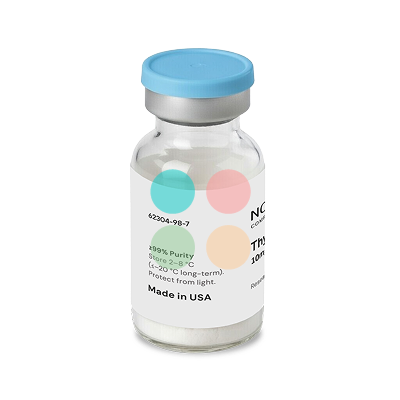
Thymosin Alpha-1 is a 28-amino-acid immunomodulatory peptide, first discovered in 1972, that plays a crucial role in T-cell maturation, cytokine regulation, and adaptive immunity. Researchers study this naturally occurring peptide for its broad effects on immune cell function – from enhancing natural killer cells and dendritic cells to modulating immune signaling pathways that govern the body’s natural defense against chronic infections, viral pathogens, and tumor microenvironments. Thymosin Alpha-1 is approved in more than 35 countries for various medical uses under the brand name Zadaxin, though it is not FDA-approved for general human therapeutic use in the US and remains classified for research purposes in American laboratories.
FillerSupplies.com supplies authentic Thymosin Alpha-1 exclusively for research and laboratory use by licensed professionals. Every compound ships under temperature-controlled conditions with global distribution capabilities, ensuring that individuals seeking high-quality research peptides receive stable, properly handled material ready for experimental protocols.
General Information About Thymosin Alpha-1
Thymosin Alpha-1 (Tα1, also known as Thymalfasin in clinical settings) is a synthetic peptide consisting of 28 amino acid residues with a molecular weight of approximately 3,108 daltons (3.108 kDa) and the molecular formula C₁₂₉H₂₁₅N₃₃O₅₅. The sequence begins with an N-terminal acetylated serine residue – a post-translational modification essential for biological activity – followed by the remaining 27 residues: SDAAVDTSSEITTKDLKEKKEVEEEAEN.
In the body, Thymosin Alpha-1 is generated by proteolytic cleavage of the larger precursor protein prothymosin α (ProTα), which contains approximately 109 amino acids. This cleavage occurs via asparagine endopeptidase, predominantly in the thymus gland epithelium, though expression of ProTα extends to the spleen, lung, kidney, brain, and circulating blood. The thymus gland yields the highest concentrations, which aligns with the peptide’s primary role in immune regulation and T cell function.
The science behind Thymosin Alpha-1’s mechanism of action is distinctive: unlike conventional ligands, the peptide has no single classical receptor. In solution, it exists as an intrinsically disordered structure but adopts a partially helical conformation (two α-helices) upon interacting with negatively charged membrane components such as phosphatidylserine. This conformational shift enables engagement with membrane-proximal signaling complexes. Downstream, Thymosin Alpha-1 activates Toll-like receptors (TLR2, TLR9) and triggers NF-κB and MAPK (JNK, p38) signaling cascades, leading to upregulation of MHC class I expression, enhanced T-cell differentiation (both CD4+ and CD8+ populations), activation of dendritic cells and natural killer cells, and modulation of cytokine output – increasing IL-2 and IFN-γ while dampening pro-inflammatory mediators such as IL-1β and TNF-α.
Pharmacokinetic data from human studies demonstrate that after subcutaneous administration, Tα1 reaches peak serum concentrations (Tmax) at approximately 2 hours, with Cmax values scaling roughly proportionally across doses of 0.8 to 6.4 mg (Cmax range: ~39–130 ng/mL; AUC range: ~124–679 ng·h/mL). The serum half-life is approximately 2 hours, with no accumulation observed after repeated dosing. Excretion occurs primarily via urine – approximately 50–60% after a single dose and ~24% after multiple doses.
Compared to related thymic peptides, Thymosin Alpha-1 differs substantially from Thymosin Beta-4 (Tβ4). While both originate from thymic tissue, Tβ4 is a 43-amino-acid peptide whose primary functions involve tissue repair, actin sequestration, and angiogenesis rather than direct immune modulation. Thymosin Alpha-1 is also 10 to 1,000 times more potent than Thymosin Fraction 5 (TF5) – the crude thymic extract from which both α and β thymosins were originally isolated – across numerous in vitro and in vivo immunological assays.
Thymosin Alpha-1 Use in the Research Setting
Thymosin Alpha-1 is supplied as a lyophilized powder for reconstitution and is designated for research and laboratory use only. The following sections detail key components of the current evidence base, organized by research domain. All findings described reflect in vitro, animal model, or controlled clinical research data – Thymosin Alpha-1 is sold as a research chemical only and is not intended for human consumption outside of approved clinical protocols.
#1. Immune System Modulation Research
Immune system modulation represents the most extensively documented area of Thymosin Alpha-1 research. In vitro studies using peripheral blood mononuclear cells (PBMCs) demonstrate that the peptide helps stimulate proliferation of T-cell precursors, expand CD3+, CD4+, and CD8+ cell populations, and enhance natural killer cell cytotoxicity. Thymosin Alpha-1 supports T-cell function in the immune system through multiple converging pathways: it upregulates MHC class I expression on antigen-presenting cells, enhances cytokine production for immune responses (particularly IL-2 and IFN-γ), and reduces immunosuppressive Th2 cytokines such as IL-4 and IL-10.
Thymosin Alpha-1 enhances T-cell function and immune responses in a manner that supports immune balance rather than unidirectional stimulation. In PBMC cultures derived from patients with chronic HCV infection, Tα1 treatment increased IL-2 output while simultaneously reducing inflammation-associated Th2 markers. This dual action – bolstering adaptive immunity while dampening excess inflammatory signaling – distinguishes Thymosin Alpha-1 from many other immunomodulatory peptides that tend to either activate or suppress immune function, but rarely regulate immune pathways in both directions.
In vivo, subcutaneous or intraperitoneal administration of Tα1 at doses of 0.1–1 mg/kg in immunocompromised rodent models reverses bone marrow suppression, improves survival under infectious challenge, and restores immune system function in sepsis paradigms where cytokine storm typically proves lethal. Thymosin Alpha-1 may also enhance macrophage efficiency in immune response, further broadening its immunomodulatory profile beyond T-cell and NK-cell activation.
#2. Neuroprotection Studies
Emerging research positions Thymosin Alpha-1 as a candidate for neuroprotection investigations, particularly in autoimmune neuroinflammatory models. In experimental autoimmune encephalomyelitis (EAE) – the standard mouse model for multiple sclerosis – Tα1 administration ameliorated disease severity through anti-inflammatory mechanisms, including regulation of the regulatory T-cell (Treg) and regulatory B-cell (Breg) balance, inhibition of pro-inflammatory cytokines, and support for myelin repair processes.
These findings suggest that the peptide helps reduce inflammation in neuronal tissue while promoting body’s natural processes of repair, though evidence remains at the preclinical stage. The capacity of Thymosin Alpha-1 to modulate immune balance rather than simply suppress immunity makes it a subject of ongoing interest for researchers studying neurodegenerative diseases where immune dysregulation and chronic inflammation intersect. Thymosin Alpha-1 has potential applications in treating chronic infections and autoimmune diseases, though human clinical data for neurological indications remain limited.
#3. Antiviral and Antimicrobial Research
Thymosin Alpha-1 has been studied extensively as an adjuvant in antiviral research, particularly against hepatitis B and C viruses. Meta-analyses of chronic HBV studies indicate that Tα1 monotherapy approximately doubles sustained virological response rates compared with controls, although end-of-treatment effects do not always reach statistical significance across all trial populations.
In the context of SARS-CoV-2 research, a meta-analysis encompassing nine studies and approximately 5,417 adult patients found that in severe or critical COVID-19 cases, Tα1 administration was associated with significantly reduced mortality (relative risk ≈ 0.67; 95% CI 0.58–0.77; p < 0.001) versus non-Tα1-treated controls. For non-serious cases, Tα1 reduced length of hospitalization but did not significantly affect mortality. These data, while promising, carry substantial heterogeneity across studies.
“In severe COVID-19 patients, administration of Tα1 was associated with a 33% reduction in mortality compared to controls in retrospective multicenter cohort analyses.”
The peptide’s antiviral mechanism centers on its ability to enhance the immune system’s ability to recognize and eliminate infected cells through upregulated MHC class I expression and heightened CD8+ cytotoxic T-cell responses – key components of the immune response against intracellular pathogens. Research shows Thymosin Alpha-1 may improve natural killer cell activity against infections, providing an additional layer of innate immune surveillance.
|
Feature
|
Thymosin Alpha-1 (Tα1)
|
Thymosin Beta-4 (Tβ4 / TB-500)
|
|
Length / Structure
|
28 amino acids; N-terminal acetylated; intrinsically disordered, partly helical when membrane-bound
|
43 amino acids; actin-sequestering motif; promotes cytoskeletal dynamics and cell motility
|
|
Primary Mechanism
|
Immune modulation: T-cell maturation, cytokine regulation, NK/dendritic cell activation, MHC I upregulation
|
Tissue repair: angiogenesis, wound healing, actin polymerization, cell migration, anti-fibrosis
|
|
Key Research Domains
|
Infection models, oncology, immune aging, sepsis, neuroprotection
|
Dermal/corneal/cardiac injury, fibrosis models, musculoskeletal repair
|
|
Regulatory Status
|
Approved in 35+ countries as Zadaxin for hepatitis B/C; not FDA-approved in the US
|
No widespread therapeutic approval; experimental status globally
|
|
Half-Life (Native Form)
|
~2 hours in human serum
|
Variable; tissue-dependent retention
|
#4. Tissue Repair and Regeneration Studies
While tissue repair is more commonly associated with Thymosin Beta-4, Thymosin Alpha-1 demonstrates meaningful wound healing and angiogenic properties in laboratory models. A landmark 1998 study demonstrated that Tα1 enhanced migration of endothelial cells and monocytes in vitro, stimulated angiogenesis in subcutaneous models in vivo, and accelerated wound closure in murine punch wound models when administered topically or intraperitoneally. The peptide also enhanced extracellular matrix production. This peptide may enhance recovery from tissue damage through immune-mediated repair mechanisms, though Tβ4 remains superior for applications requiring robust structural reconstruction such as cardiac or corneal regeneration.
Thymosin Alpha-1 supports immune balance and reduces inflammation in wounded tissue microenvironments, which may contribute to improved healing timelines. The benefits of Thymosin Alpha-1 in this domain appear to be mediated through its immunomodulatory actions rather than direct structural repair – effectively creating a more favorable immune environment for the body’s natural immune processes to drive regeneration.
<em>Important to Know:</em>
#5. Cancer Research Applications
Thymosin Alpha-1 has been studied for its role in cancer treatment as an immune adjuvant, particularly in hepatocellular carcinoma, non-small-cell lung cancer, and melanoma research. The mechanisms under investigation include enhanced antigen presentation through MHC class I upregulation, activation of CD8+ cytotoxic T cells against tumor cells, and potential suppression of tumor cell migration via STAT3-MMP2 pathway inhibition.
“In mouse and rat models, doses of Tα1 between 0.1 and 1 mg/kg administered subcutaneously or intraperitoneally produced significant immunomodulatory effects without detectable toxicity up to much higher doses.”
Combination therapy research – pairing Thymosin Alpha-1 with conventional chemotherapeutic agents or emerging immunotherapies – represents a growing area of preclinical investigation. Medicinal use of Thymosin Alpha-1 in clinical settings is based on evidence from multiple trials, and the peptide’s capacity to enhance immune resilience while supporting overall immune function makes it an attractive candidate for combination protocols where immune suppression from other treatments limits therapeutic efficacy.
Animal toxicology studies report no adverse reactions at single doses up to 20 mg/kg or repeated dosing up to 6 mg/kg/day for 13 weeks, establishing a wide safety margin for experimental applications. Common side effects of Thymosin Alpha-1 observed in human studies include injection-site irritation and mild fatigue – generally classified as mild side effects that do not necessitate protocol discontinuation.
Buy Thymosin Alpha-1 Online at FillerSupplies.com
When you buy Thymosin Alpha-1 from FillerSupplies.com, you receive a research-grade compound backed by over a decade of supply-chain expertise. A Certificate of Analysis (COA) is important for confirming peptide purity and quality – healthcare providers and laboratory directors should request documentation for every batch to ensure experimental reproducibility. Purchasing unapproved drugs online poses legal and physical safety risks; FillerSupplies.com mitigates these concerns by operating as an established, transparent supplier with verifiable product sourcing. If you are looking to buy thymosin alpha 1, our platform provides a streamlined ordering process – orders placed by 12 PST ship the same day.
-
Authentic, certified products – original, quality-controlled compounds, warehouses worldwide.
-
11 years of reliability & trust – established supplier on the market since 2006.
-
Temperature-controlled shipping – thermal packaging with ice gel / cold packs preserves stability.
-
Express worldwide shipping – next-day dispatch, global delivery.
-
Best wholesale prices – tiered bulk discounts and price-match guarantee.
-
Privacy guaranteed; expert support at (888) 392-6640, WhatsApp and email, Mon–Fri 10am–6pm EST.
-
Supplied for research use only, to licensed professionals.
All Thymosin Alpha-1 products available through FillerSupplies.com are supplied exclusively for research use by licensed professionals. Taking Thymosin Alpha-1 without medical supervision can pose risks, and this product is not sold for direct human consumption.
Related research peptides available at FillerSupplies.com: LL-37, KPV.
FAQ
What Is Thymosin Alpha-1 and How Does It Work in Research?
Thymosin Alpha-1 is a 28-amino-acid peptide that acts as an immunomodulator, originally discovered in 1972 from thymus gland extracts. In research settings, Thymosin Alpha-1 activates immune pathways through Toll-like receptors (TLR2, TLR9), upregulates MHC class I expression, and enhances T-cell differentiation and cytokine production. The peptide's intrinsically disordered structure allows it to adopt helical conformations upon membrane binding, enabling engagement with multiple immune signaling cascades.
What Are the Safety Considerations for Laboratory Handling?
Animal toxicology studies demonstrate no adverse reactions at single doses up to 20 mg/kg or repeated doses up to 6 mg/kg/day for 13 weeks. In human clinical data, common side effects include injection-site irritation and mild fatigue. Laboratory personnel should follow standard peptide handling protocols, including use of appropriate PPE and proper reconstitution techniques to prevent degradation. Thymosin Alpha-1 is available by prescription from licensed compounding pharmacies for approved clinical uses, but laboratory supply is designated for research purposes only.
How Does Thymosin Alpha-1 Compare to Thymosin Beta-4 in Studies?
Though both peptides originate from thymic tissue, they serve fundamentally different research functions. Thymosin Alpha-1 is specialized for immune modulation - enhancing T-cell maturation, dendritic cell activation, and cytokine regulation - while Thymosin Beta-4 (43 amino acids) primarily drives tissue repair through actin sequestration, angiogenesis, and cell migration. Researchers investigating immune function typically select Tα1, whereas Tβ4 is preferred for wound healing and structural regeneration studies.
What Are Typical Research Dosage Ranges in Animal Models?
In mouse and rat models, effective immunomodulatory doses range from 0.1 to 1 mg/kg administered subcutaneously or intraperitoneally. In vitro concentrations typically span 1–100 ng/mL for moderate effects, with some cell culture studies employing up to 1,000 ng/mL depending on the cell type and experimental readout. Engineered long-acting forms, such as the Tα1-Fc fusion protein, use adjusted molar dosing to account for their extended half-life (~29 hours in rodent models versus ~2 hours for native Tα1).
How Should Thymosin Alpha-1 Be Stored and Reconstituted?
Lyophilized Thymosin Alpha-1 should be stored at −20°C or colder for long-term stability. The peptide is heat-stable in lyophilized form but becomes sensitive to proteolytic degradation after reconstitution. Reconstituted solutions should be prepared fresh for each experiment, aliquoted to avoid repeated freeze-thaw cycles, and used promptly. Temperature-controlled shipping with cold packs or ice gel is essential to preserve biological activity during transit.
Is Thymosin Alpha-1 a Prohibited Substance for Sports Research?
As of mid-2026, Thymosin Alpha-1 is not explicitly listed on the WADA Prohibited List. However, immune modulators are under ongoing scrutiny, and researchers conducting sport-related studies should verify the most current WADA documentation before incorporating Tα1 into experimental protocols. Thymosin Alpha-1 can be prescribed through licensed medical providers or telehealth clinics for approved clinical indications in certain jurisdictions.
Where Can Licensed Researchers Buy Thymosin Alpha-1?
Licensed professionals can buy Thymosin Alpha-1 online at FillerSupplies.com, which offers authenticated research-grade compounds with temperature-controlled shipping and global delivery. Thymosin Alpha 1 is not FDA-approved for general human therapeutic use in the US, so all domestic sales are classified as research use only. You can buy Thymosin Alpha-1 strips in person or online, and Thymosin Alpha-1 peptide strips are available for nationwide shipping. Orders placed by 12 PST ship the same day.