Korean Botox
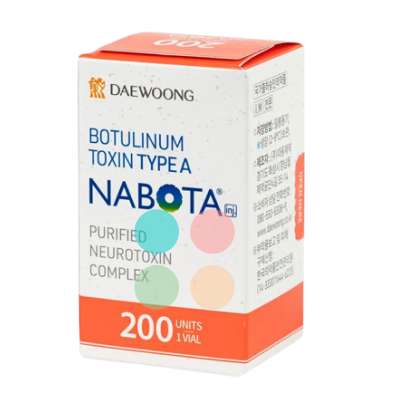
Nabota (Jeuveau) 200u
Wholesale discount
| Quantity | Price |
|---|---|
| 1 - 3 | $279 |
| 4 - 10 | $249 |
| 11 - 20 | $244 |
| 21+ | $239 |
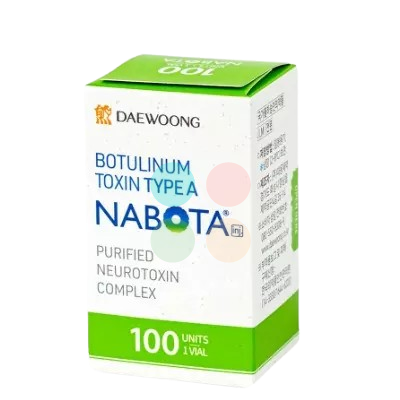
Nabota (Jeuveau) 100u
Wholesale discount
| Quantity | Price |
|---|---|
| 1 - 3 | $219 |
| 4 - 10 | $199 |
| 11 - 20 | $194 |
| 21+ | $189 |
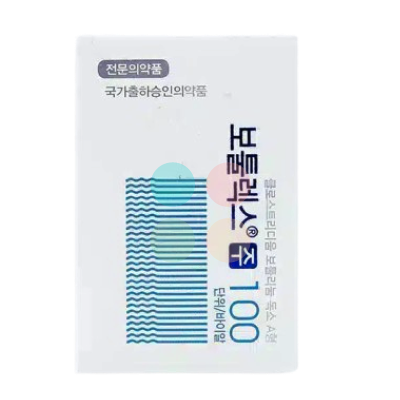
Botulax (Letybo) 100U (Korean)
Wholesale discount
| Quantity | Price |
|---|---|
| 1 - 5 | $219 |
| 6 - 10 | $209 |
| 11 - 20 | $199 |
| 21+ | $189 |
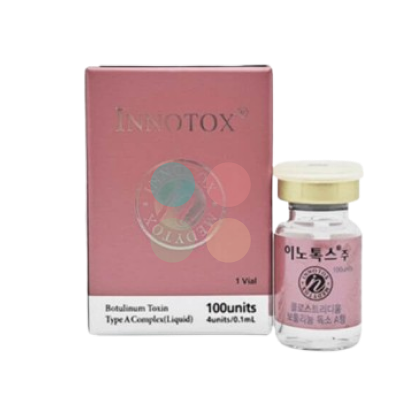
Innotox 100U
Wholesale discount
| Quantity | Price |
|---|---|
| 1 - 5 | $199 |
| 6 - 10 | $169 |
| 11 - 20 | $159 |
| 21+ | $149 |
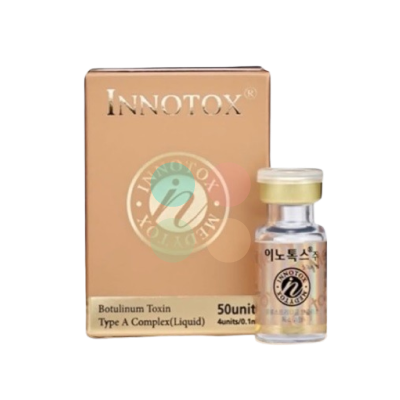
Innotox 50U
Wholesale discount
| Quantity | Price |
|---|---|
| 1 - 5 | $169 |
| 6 - 10 | $159 |
| 11 - 20 | $149 |
| 21+ | $139 |
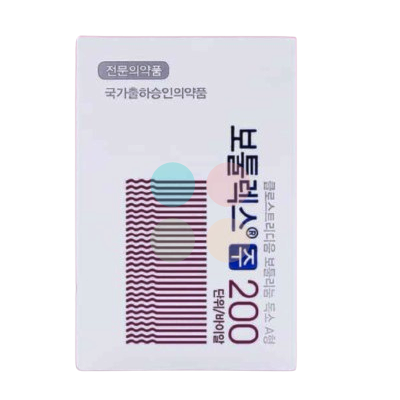
Botulax 200U (Korean)
Wholesale discount
| Quantity | Price |
|---|---|
| 1 - 5 | $349 |
| 6 - 10 | $339 |
| 11 - 20 | $329 |
| 21+ | $319 |
FillerSupplies is a wholesale distributor of Korean botulinum toxin type A for licensed medical professionals. Below you can buy Korean Botox online from three manufacturers — Hugel, Medytox and Daewoong — with transparent per-unit pricing, verifiable LOT numbers and temperature-controlled shipping.
“Korean Botox” is the industry’s informal shorthand for botulinum toxin type A manufactured in South Korea. It is not a brand name. BOTOX® is a registered trademark of Allergan/AbbVie and is not among the products offered on this page.
All products on this page are supplied to licensed practitioners only. A valid medical or clinic licence is verified manually by our team before any order is processed.
Korean Botox Comparison Chart
| Product | Manufacturer | Formulation | Price | Price per unit |
|---|---|---|---|---|
| Innotox 50U | Medytox | Liquid, ready-to-use | $139 – $169 | from $2.78 |
| Innotox 100U | Medytox | Liquid, ready-to-use | $149 – $199 | from $1.49 |
| Botulax 100U | Hugel | Lyophilized powder | $189 – $219 | from $1.89 |
| Botulax 200U | Hugel | Lyophilized powder | $319 – $349 | from $1.60 |
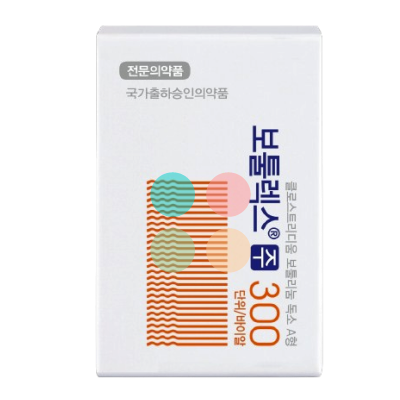
| Botulax 300U | Hugel | Lyophilized powder | $429 | from $1.43 |
| Nabota 100U | Daewoong | Lyophilized powder | $189 – $219 | from $1.89 |
| Nabota 200U | Daewoong | Lyophilized powder | $239 – $279 | from $1.20 |
Per-unit price is calculated at the lowest available tier for each vial size. For most practices this is the figure that actually drives procurement decisions. The pattern is consistent across all three manufacturers: larger vials lower the per-unit cost substantially — Nabota drops from $1.89 to $1.20 per unit between the 100U and 200U vial, and Botulax from $1.89 to $1.43 between 100U and 300U. The saving is only real if your patient volume allows the reconstituted product to be used within its stability window.
Korean Botulinum Toxin Manufacturers: Who Makes What
One of the most common sources of confusion in this category is that the same manufacturer’s toxin is sold under different names in different markets. A brand well known in Seoul may appear under an entirely different name in Europe or the United States — and in several cases the export version is a separately licensed product rather than the same item in different packaging.
Hugel — Botulax and LETYBO®
Hugel is one of South Korea’s largest botulinum toxin manufacturers. Its toxin is marketed domestically and across much of Asia as Botulax, and in the United States and Europe as LETYBO® (letibotulinumtoxinA).
These are not the same commercial product. LETYBO® is separately licensed for the US and EU markets, and Botulax and LETYBO® should not be treated as interchangeable even though both originate from Hugel.
Medytox — Innotox and Meditoxin
Medytox produces several toxin lines. Meditoxin is the flagship lyophilized product, exported under the name Neuronox in a number of markets. Innotox is Medytox’s liquid formulation and the product most often sought specifically for its ready-to-use format.
Daewoong — Nabota and Jeuveau®
Daewoong manufactures Nabota, sold in the United States as Jeuveau® (prabotulinumtoxinA-xvfs) through Evolus. As with Hugel, Jeuveau® is a distinct US-licensed product, not a relabelled Nabota vial.
| Manufacturer | Korean / export name | US-licensed brand |
|---|---|---|
| Hugel | Botulax | LETYBO® |
| Medytox | Meditoxin, Neuronox | — |
| Medytox | Innotox | — |
| Daewoong | Nabota | Jeuveau® |
Formulation: Ready-to-Use vs Lyophilized
Formulation is the single most practical difference between Korean botulinum toxin products, and for most practices it matters more than the brand name.
Innotox — liquid, ready-to-use
Innotox arrives as a pre-mixed liquid and requires no reconstitution. The practical consequences:
- No dilution step. Removes a source of preparation error and reduces chair time.
- Consistent concentration between vials. Because dilution happens in manufacturing rather than in the clinic, unit-per-millilitre concentration does not vary with staff technique.
- Lower flexibility. The concentration is fixed. Practitioners who prefer to adjust dilution for different treatment areas lose that control.
- Cold chain matters more. A liquid product is less tolerant of transport temperature excursions than a lyophilized powder.
Innotox is generally the choice for higher-volume practices that value throughput and standardisation over dilution flexibility.
Botulax and Nabota — lyophilized powder
Lyophilized products ship as a vacuum-dried powder, reconstituted with sterile saline before use.
- Dilution control. The practitioner sets the concentration — more dilute for broad areas, more concentrated for precision work.
- Greater transport stability. Powder tolerates handling and transit better than liquid.
- Requires a preparation step. Reconstitution adds time and introduces technique-dependent variability between operators.
- Lower cost per unit at volume. The largest vials in this category are lyophilized, and they carry the lowest per-unit pricing.
There is no universally superior formulation. The question is whether your practice values dilution control or preparation speed.
Is Korean Botox FDA Approved?
This is the most important question for any practitioner sourcing these products, and it deserves a direct answer rather than marketing language.
Current as of August 2026:
| Product | US regulatory status |
|---|---|
| Jeuveau® (prabotulinumtoxinA-xvfs, Evolus / Daewoong) | FDA approved (2019), glabellar lines |
| LETYBO® (letibotulinumtoxinA-wlbg, Hugel) | FDA approved (2024), glabellar lines |
| Nabota (Korean-labelled) | Not an FDA-approved product |
| Botulax (Korean-labelled) | Not an FDA-approved product |
| Innotox | Not an FDA-approved product |
| Meditoxin / Neuronox | Not an FDA-approved product |
The distinction most often blurred in this industry is this: an FDA approval attaches to a specific licensed product, not to a manufacturer or a molecule. Hugel holds FDA approval for LETYBO®. That approval does not extend to Korean-labelled Botulax vials. Daewoong’s toxin is approved in the United States as Jeuveau®; that approval does not extend to Korean-labelled Nabota.
Korean-labelled products are authorised by South Korea’s Ministry of Food and Drug Safety (MFDS) and are licensed for sale in a range of markets worldwide. They are not authorised for distribution in the United States.
What this means for procurement. Practitioners are responsible for verifying that any product they purchase is authorised for use in their own jurisdiction. Regulatory status varies by country and changes over time, so confirm current status with your national regulator before ordering. We will not represent a product as approved in a market where it is not — the alternative, implying equivalence between Korean-labelled products and their US-licensed counterparts, is both inaccurate and a poor basis for a professional supply relationship.
Understanding Units and Why They Are Not Interchangeable
Botulinum toxin potency is expressed in units, but a unit is defined by each manufacturer’s own proprietary assay. Units are not interchangeable between brands.
This is the most consequential misconception in the category. A practitioner switching from one product to another cannot assume a 1:1 conversion and should re-establish dosing according to the specific product’s instructions for use, the clinical literature for that product, and their own clinical judgement.
Comparative data on Korean toxins exists but remains limited, and conversion ratios proposed in one study do not necessarily generalise across indications or patient populations. Treat any published ratio as a starting point for clinical judgement, not as a formula.
Reconstitution, Storage and Cold Chain
The parameters below reflect standard handling practice for botulinum toxin type A. Always refer to the instructions for use supplied with each specific product, as manufacturer specifications differ in detail.
Reconstitution of lyophilized products
Botulax and Nabota are reconstituted with preservative-free sterile 0.9% sodium chloride. The diluent volume determines the final concentration and should be selected according to the treatment area and the practitioner’s technique.
- Introduce the diluent slowly against the inner wall of the vial. Do not inject it forcefully into the powder.
- Do not shake. Gentle rotation until the powder dissolves is sufficient.
- A vial that does not draw the diluent in under vacuum has lost its seal integrity and should not be used.
- The reconstituted solution should be clear, colourless and free of particulate matter.
Storage
- Unopened lyophilized vials (Botulax, Nabota): refrigerated at 2–8 °C.
- Innotox (liquid): refrigerated at 2–8 °C. Do not freeze. Liquid formulations tolerate temperature excursion less well than powders.
- Reconstituted product: refrigerated at 2–8 °C and used within the window specified in the product’s instructions for use.
- Protect all products from light and do not use beyond the printed expiry date.
Cold chain in shipping
Temperature control in transit is not a formality in this category — it is the difference between a product that performs as labelled and one that does not. All orders ship in temperature-controlled packaging appropriate to the destination and transit time.
How to Verify Product Authenticity
Counterfeit botulinum toxin is a documented and ongoing problem in the aesthetics supply chain, and regulators in several jurisdictions have issued warnings about products sold through unauthorised online channels. Every practitioner should verify product on receipt rather than assume authenticity.
On receipt, check:
- LOT number and expiry date on the vial match the outer carton and the accompanying documentation.
- The manufacturer’s security feature is present and intact. Korean manufacturers apply holographic or scratch-off verification codes that can be checked against the manufacturer’s own verification channel.
- Packaging integrity. The carton is factory-sealed, printing is sharp and correctly registered, and there is no evidence of relabelling or resealing.
- Market labelling is consistent with the product you ordered.
- Temperature indicator in the shipment, where included, shows no excursion.
Every order we ship arrives in original manufacturer packaging with intact LOT numbers traceable to source. If anything about a received shipment does not match this description, do not use the product — contact us and we will resolve it.
How to Buy Korean Botox Online at FillerSupplies
1. Licence verification
We supply licensed medical professionals only. Submit your medical or clinic licence during registration. Verification is performed manually by our team — a deliberate step rather than an automated formality, and the reason we can state with confidence who our products go to.
2. Place your order
Select products and quantities. Per-unit pricing improves at higher tiers, and the discount structure is shown openly on each product page rather than quoted on request.
3. Cold-chain dispatch
Orders ship in temperature-controlled packaging, with next-day dispatch available on stocked items.
4. Verify on receipt
Check LOT numbers and manufacturer security features as described above before use.
Ordering across categories. Botulinum toxins can be combined with dermal fillers, mesotherapy products and other categories in a single order. This consolidates shipping costs and reduces the number of separate cold-chain shipments your practice has to receive and process.
FAQ
Is Korean Botox the same as BOTOX®?
No. "Korean Botox" is informal shorthand for botulinum toxin type A manufactured in South Korea. BOTOX® is a specific product and a registered trademark of Allergan/AbbVie, and it is not offered on this page. The products here are manufactured by Hugel, Medytox and Daewoong.
Is Korean Botox FDA approved?
The Korean-labelled products on this page are not FDA-approved products. Two Korean manufacturers hold US approvals for separately licensed brands — Hugel for LETYBO® and Daewoong, via Evolus, for Jeuveau® — but those approvals do not extend to Korean-labelled Botulax or Nabota vials. Korean-labelled products are authorised by the Korean MFDS and licensed in a range of other markets.
What is the difference between Botulax and LETYBO®?
Both originate from Hugel, but they are separately licensed commercial products for different markets. They should not be treated as interchangeable.
What is the difference between Nabota and Jeuveau®?
The same relationship. Jeuveau® is Daewoong's toxin as licensed for the US market through Evolus. Korean-labelled Nabota is a distinct commercial product.
Which Korean botulinum toxin is best?
There is no single best product. The practical decision usually comes down to formulation: Innotox if your practice values preparation speed and standardised concentration, or a lyophilized product such as Botulax or Nabota if you want control over dilution and the lowest cost per unit at volume.
Can I convert units 1:1 between brands?
No. Units are defined by each manufacturer's own assay and are not interchangeable. Re-establish dosing according to the specific product's instructions for use rather than applying a conversion factor.
Do you offer worldwide shipping?
Yes, subject to the regulatory requirements of the destination. Some products cannot be shipped to certain jurisdictions.
Am I eligible to order from this website?
Only if you are a licensed medical professional or an authorised clinic. We verify every licence manually before processing a first order.
References
- Dressler D, Kim N, Johnson EA, Adib Saberi F. Korean botulinum toxins. Journal of Neural Transmission (Vienna), 2026.
- Frevert J, Ahn KY, Park MY, Sunga O. Comparison of botulinum neurotoxin type A formulations in Asia. Clinical, Cosmetic and Investigational Dermatology, 2018;11:327–331.
- US Food and Drug Administration — approval records for Jeuveau® (2019) and LETYBO® (2024).
- Ministry of Food and Drug Safety (MFDS), Republic of Korea — product authorisation records.