Emla Cream for Premature Ejaculation
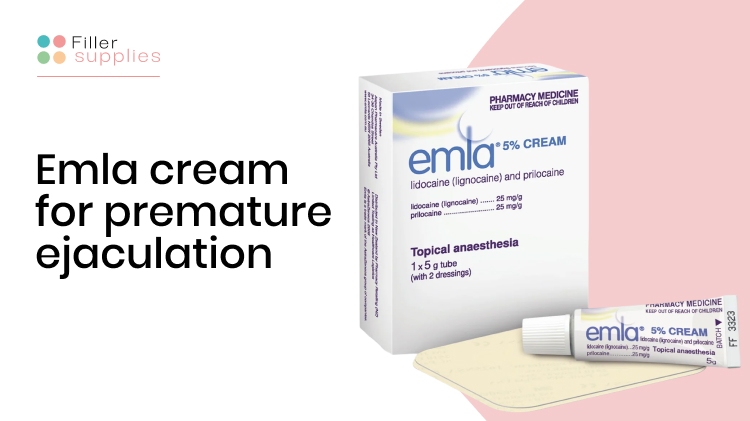
Premature ejaculation (PE) is a common sexual health concern affecting men, characterized by ejaculation occurring sooner than desired during sexual activity. The condition can contribute to sexual dissatisfaction, reduced confidence, and emotional distress, potentially affecting intimate relationships and overall sexual well-being.
Emla cream, a topical anesthetic containing lidocaine and prilocaine, has gained attention as a potential option for managing premature ejaculation. By temporarily reducing penile sensitivity, the cream may help delay ejaculation and improve control during sexual intercourse.
PLEASE NOTE: We recommend purchasing Emla cream only from reliable suppliers, since this is the only way to obtain medical products safely. Check the availability of Emla 5% cream at FillerSupplies.
Emla Topical Anesthetic Cream Explained
Clinical research has explored the effectiveness of Emla cream in extending the time before ejaculation. In one study published in Andrologia, 40 men were divided into four groups of ten to assess different application times. The first group applied lidocaine-prilocaine cream 5% 20 minutes before sexual intercourse, the second applied it 30 minutes beforehand, and the third applied it 45 minutes before intercourse. A fourth group received a placebo base cream. All participants covered the penis with a condom after application.
The findings demonstrated improvements in ejaculation latency among participants who used Emla cream. Men in the 20-minute group achieved an average ejaculation latency of 6.71 ± 2.54 minutes. In the 30-minute group, latency rose to 8.70 ± 1.70 minutes in four of the ten men, but the remaining six lost their erection because of numbness, and the same happened to every man in the 45-minute group. The placebo group showed no measurable improvement.
“In group 1, the pre-ejaculation period increased to 6.71 +/- 2.54 min without any adverse effects.”
— Atikeler, Gecit and Senol, Andrologia, 2002
That is why the researchers identified 20 minutes before intercourse as the optimum application interval: longer exposure produced more numbness than benefit.
| Application time | Men per group | Reported outcome |
|---|---|---|
| 20 minutes | 10 | Latency 6.71 ± 2.54 min, no adverse effects |
| 30 minutes | 10 | Latency 8.70 ± 1.70 min in 4 men; 6 lost erection from numbness |
| 45 minutes | 10 | All lost erection from numbness |
| Placebo | 10 | No change in latency |
These results suggest that Emla cream may offer a useful approach to managing premature ejaculation by reducing sensitivity and helping prolong sexual activity. However, effectiveness varies between individuals, and further research is needed to establish optimal application methods and long-term outcomes. A 2025 randomized study in the World Journal of Urology compared Emla cream with lidocaine spray and benzocaine condoms in lifelong premature ejaculation, which shows the comparative question is still being actively studied. Men considering Emla cream for premature ejaculation should consult a healthcare professional to ensure appropriate use and minimize potential side effects, including excessive numbness or reduced sensation in their partner.
Target Audience for a Premature Ejaculation Treatment
Emla cream may be an option for adult men experiencing premature ejaculation who wish to improve their control over ejaculation during sexual intercourse. Containing the local anesthetics lidocaine and prilocaine, Emla works by temporarily reducing sensitivity in the penis, particularly around the glans. This numbing effect may help delay ejaculation and prolong sexual activity.
When used for PE, Emla cream is generally applied as a thin layer to the glans penis to reduce sensitivity. However, the appropriate quantity, application time, and method of use should be determined according to professional medical guidance, as Emla is not specifically approved for treating premature ejaculation, and in the United States no drug holds that approval.
“none of these pharmacotherapy options have achieved approval from the United States Food and Drug Administration”
— American Urological Association and Sexual Medicine Society of North America, Disorders of Ejaculation guideline, 2022
Following the recommended application instructions is essential to minimize potential side effects, such as irritation, excessive numbness, or the transfer of anesthetic ingredients to a sexual partner, which is why the published protocol used a condom after application.
Precautions Before the Medical Procedure
As with any medication containing local anesthetics, certain precautions should be taken when using Emla cream to minimize the risk of adverse reactions and potential complications. Understanding the appropriate safety measures is essential, particularly when applying the cream to sensitive areas such as the penis.
Emla may not be suitable for individuals with certain medical conditions or those taking specific medications. Additional medical advice is particularly important for men who:
- Have methemoglobinemia. A blood disorder that affects hemoglobin’s ability to transport oxygen throughout the body.
- Have glucose-6-phosphate dehydrogenase (G6PD) deficiency. An inherited enzyme deficiency that can increase susceptibility to certain medication-related complications, including methemoglobinemia.
- Take medications for irregular heart rhythms. Certain antiarrhythmic medications, including amiodarone, may interact with local anesthetics and require additional precautions.
- Have atopic dermatitis. People with eczema or other inflammatory skin conditions may absorb the active ingredients more quickly, which may increase the risk of adverse effects.
The Procedure’s Benefits
Numbing creams offer a convenient, non-invasive option for men looking to improve ejaculation control and sexual confidence. By temporarily reducing penile sensitivity, these products may help prolong intercourse and enhance sexual satisfaction.
- Longer-lasting intercourse. Emla helps reduce penile sensitivity, making it easier to delay ejaculation and potentially extend sexual activity. This may contribute to a more satisfying experience for both partners.
- Reduced performance anxiety. Improved control over ejaculation may help ease performance-related concerns, boost sexual confidence, and encourage a more relaxed intimate experience.
- Non-invasive solution. Unlike surgical treatments, numbing creams are applied directly to the skin without injections or invasive procedures. They require no recovery time and can be used when needed.
- Accessibility. Availability of lidocaine-prilocaine cream varies by country: it is a prescription product in some markets and available over the counter in others, so consulting a healthcare professional before use is recommended.
- Fast-acting effects. The published protocol found 20 minutes of application sufficient, and longer exposure increased numbness rather than benefit, which makes timing more important than quantity.
Overall, PE numbing creams can provide a practical way to improve ejaculation control and sexual confidence. Following proper application instructions is essential to minimize side effects and achieve the best possible results. For a broader overview of the product itself, see our guide on what to know about Emla cream.
Summary
Emla numbing cream offers a convenient, non-invasive, and potentially effective way to improve ejaculation control and sexual confidence. By temporarily reducing penile sensitivity, it may help prolong intercourse, ease performance anxiety, and enhance sexual satisfaction. The evidence also shows where it fails: applied for too long, the numbness costs the erection. Choosing a suitable product, following application instructions, and consulting a healthcare professional are therefore important. Licensed professionals can order Emla 5% cream and other topical anesthetics through FillerSupplies.