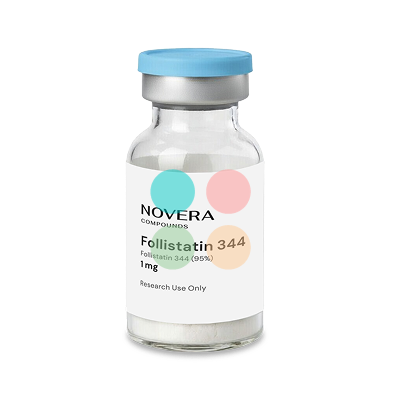
Follistatin 344 is a 344-amino acid isoform produced from the FST gene that functions as a potent inhibitor of both myostatin and activin A – two key TGF-β superfamily members that negatively regulate muscle growth. Studied extensively in animal models and early-phase human clinical trials, this endogenous glycoprotein and its engineered variants have generated substantial interest for their ability to promote lean muscle mass gains, reduce tissue fibrosis, and modulate metabolic pathways. Researchers investigating myostatin biology, regenerative medicine, and neuromuscular disease mechanisms can buy follistatin 344 as a research-grade compound for laboratory use.
Follistatin-344 is not FDA approved for human therapeutic use. The compound is supplied by FillerSupplies.com under the Novera brand exclusively for research and laboratory use by licensed professionals. All scientific findings discussed on this page derive from peer-reviewed animal studies, gene therapy trials, or early-phase clinical research – none should be interpreted as treatment recommendations or dosing guidance for human administration.
General Information About Follistatin 344
The human FST gene encodes multiple splice variants, and the transcript designated FST344 (NCBI: NM_013409.3) produces a 344-amino acid precursor protein with a molecular weight of approximately 38,007 Da. After removal of a 29-amino acid signal peptide and post-translational glycosylation, the mature circulating protein emerges as follistatin-315 (FS-315). This protein contains three follistatin domains (FSDs), numerous cysteine residues forming disulfide bonds, and a highly acidic carboxyl tail that distinguishes it from the shorter FS-288 isoform.
Follistatin-344 is involved in the regulation of TGF-beta superfamily signaling through a direct binding mechanism. The mature FS-315 protein sequesters ligands – primarily activin A and myostatin (GDF-8) – preventing their interaction with type I and type II serine/threonine kinase receptors. Follistatin’s ability to inhibit myostatin can lead to muscle fiber hypertrophy and hyperplasia, while its neutralization of activin A modulates inflammation, fibrosis, and reproductive hormone regulation. Follistatin also regulates follicle-stimulating hormone secretion through activin antagonism at the pituitary level, though the FS-315 mature form shows markedly reduced hormonal off-target effects compared to FS-288.
Binding affinity data illustrate the difference between isoforms. FS-288 binds activin A with a dissociation constant (Kd) of approximately 46.5 pM, whereas FS-315 binds at roughly 432 pM – about tenfold weaker. This reduced affinity, combined with lower heparan sulfate binding and less cell-surface retention, makes FS-315 (derived from the FS-344 precursor) the preferred isoform for gene therapy constructs aiming to balance muscle growth potency with safety. No well-validated published data exist for the circulating half-life of exogenously administered FS-344/FS-315 protein in animal or human systems; endogenous follistatin is a relatively short half-life protein (on the order of hours), though follistatin gene therapy using adeno-associated virus (AAV) vectors achieves sustained expression lasting months to over a year.
Follistatin 344 Use in the Research Setting
Follistatin 344 is supplied as a lyophilized powder intended for reconstitution in sterile environments, strictly for research and laboratory use only. The subsections below summarize documented findings from preclinical and clinical investigations.
Muscle Hypertrophy and Myostatin Inhibition
Follistatin 344 inhibits myostatin, promoting muscle growth through a well-characterized mechanism: by sequestering myostatin before it can activate the ActRIIB/Smad2/3 signaling cascade, the peptide releases satellite cells and myoblasts from growth suppression. FS344 promotes satellite cell activation, crucial for muscle repair, and downstream signaling analysis in transgenic models confirms increased phospho-Akt alongside reduced phospho-Smad2 in treated muscle tissue.
In a landmark 2009 nonhuman primate study, Kota et al. delivered the human FS-344 transgene via AAV1 vector into the quadriceps of cynomolgus macaques. The vector produced pronounced and durable gains in muscle size and strength in the injected limb, and long-term transgene expression left the morphology and function of key organs unchanged – the safety signal that made the approach worth translating (Science Translational Medicine).
Research Takeaway: In cynomolgus macaques given AAV1-delivered FS-344 into the quadriceps, Kota and colleagues recorded pronounced, durable increases in muscle size and strength, with no abnormal changes in the morphology or function of key organs over long-term expression (Kota et al., 2009, Science Translational Medicine).
A separate 2017 transgenic pig model by Chang et al. reinforced these findings. Pigs with muscle-specific overexpression of human follistatin (FS-344) achieved a lean meat percentage of 72.95 ± 1.0% compared to 69.18 ± 0.97% in wild-type controls (n = 16; P < 0.05), with increased skeletal muscle mass driven by myofiber hypertrophy and no reproductive abnormalities (Transgenic Research). FS344 increases muscle mass and strength in preclinical studies across species, confirming its relevance to myostatin biology research.
Tissue Repair and Wound Healing
Follistatin 344 reduces fibrosis in affected muscles through its antagonism of activin A, a cytokine strongly implicated in extracellular matrix deposition and scar formation. In the 2015 Becker Muscular Dystrophy (BMD) clinical trial by Mendell et al., muscle biopsies from treated patients revealed reduced endomysial fibrosis and decreased central nucleation in regions where the FS-344 transgene was expressed (Molecular Therapy). Follistatin gene therapy can reduce fibrosis in affected muscles, and this anti-fibrotic property extends the compound’s interest beyond pure hypertrophy research into broader regenerative medicine applications.
Follistatin gene therapy enhances muscle regeneration after injury by creating a permissive environment for satellite cell proliferation while simultaneously reducing the fibrotic barrier that limits tissue remodeling. Compared to peptides like BPC-157 and TB-500, which primarily act through angiogenic and cytoprotective mechanisms, follistatin targets upstream TGF-β pathway regulation – a fundamentally different approach to tissue repair.
|
Property
|
Follistatin 344 / FS-315
|
FS-288 Isoform
|
|
Amino Acid Precursor Length
|
344 aa
|
317 aa
|
|
Mature Protein
|
FS-315 (~315 aa after signal peptide removal)
|
FS-288 (~288 aa)
|
|
Activin A Binding Kd
|
~432 pM
|
~46.5 pM (tenfold stronger)
|
|
Heparan Sulfate / Cell Surface Binding
|
Low – predominantly circulating
|
High – retained on cell surfaces
|
|
Hormonal Off-Target Risk (FSH suppression)
|
Minimal in trials (up to 1 year)
|
Higher due to stronger pituitary activin blockade
|
|
Preferred Research Use
|
Gene therapy constructs for muscle disease
|
Local tissue-targeted studies
|
Metabolic Regulation Research
Beyond muscle, follistatin interacts with several TGF-β-family proteins that regulate lipid and glucose metabolism. A 2022 transcriptomic analysis of FS-344 transgenic pigs published in the Journal of Integrative Agriculture revealed upregulation of the PIK3-AKT pathway, calcium signaling, and amino acid metabolism within skeletal muscle. Adipose tissue in these animals showed a markedly different expression profile: subcutaneous fat displayed downregulation of lipid synthesis and storage genes, while retroperitoneal fat exhibited upregulated lipid catabolism. Liver tissue analysis confirmed TGF-β signaling modulation consistent with follistatin inhibition, producing what the authors described as a metabolically favorable phenotype.
The transgenic pigs demonstrated decreased adipose tissue deposition alongside their increased muscle mass, suggesting the compound’s effects on body composition extend beyond simple hypertrophy. These metabolic findings have generated research interest in whether follistatin-mediated myostatin blockade could influence glucose tolerance and insulin sensitivity pathways – topics now under active investigation in preclinical models.
Neuromuscular Disorder Models
Gene therapy with Follistatin 344 shows promise for neuromuscular diseases, as demonstrated most directly in a Phase I/IIa clinical trial conducted by Mendell et al. in 2015. Six adult patients with Becker Muscular Dystrophy received AAV1.CMV.FS344 via bilateral intramuscular injection to the quadriceps at two dose levels: cohort 1 at approximately 3 × 10¹¹ vector genomes per kilogram per leg, and cohort 2 at roughly 6 × 10¹¹ vg/kg per leg. Follistatin 344 gene therapy improves muscle mass in clinical trials – individual patient improvements on the 6-minute walk test (6MWT) ranged from +29 m to +125 m, with two subjects gaining +125 m and +108 m respectively. Hormonal profiles including FSH, LH, testosterone, and estrogen remained stable throughout follow-up periods extending to one year.
FS344 improves outcomes in sporadic inclusion body myositis patients as well, with reported improvement rates of +56.0 m/year on functional walking measures. Follistatin 344 shows potential for treating muscle-wasting disorders broadly, though it should be noted that muscle fibrosis in severely affected tissue limited vector diffusion, producing focal rather than whole-muscle hypertrophy in the BMD trial. FS344 promotes muscle regeneration by activating satellite cells, a mechanism with particular relevance to sarcopenia and dystrophy models where regenerative capacity is compromised.
Important to Know: The World Anti-Doping Agency prohibits the use of follistatin in sports. Myostatin inhibitors are classified as prohibited substances, and any use of this compound outside licensed laboratory research or approved clinical trials carries regulatory and legal risk.
Anti-Inflammatory Properties
Activin A functions as a pro-inflammatory cytokine in multiple tissue contexts, and follistatin’s sequestration of this ligand produces measurable anti-inflammatory effects in preclinical testing. In the FS-344 transgenic pig model, reduced TGF-β pathway activation correlated with decreased inflammatory marker expression in skeletal muscle, findings consistent with earlier in-vitro work demonstrating that activin A blockade attenuates NF-κB-mediated inflammation signaling.
Citation Capsule: In 2017, Chang et al. reported that transgenic pigs expressing human FS-344 achieved 72.95% lean meat composition versus 69.18% in wild-type controls (P < 0.05, n = 16), with reduced phospho-Smad2 and no cardiac hypertrophy – evidence that sustained follistatin expression produces anabolic and anti-inflammatory effects without documented organ toxicity (Transgenic Research).
The anti-inflammatory findings remain limited to animal studies and in-vitro analysis. Whether activin pathway modulation by exogenous follistatin protein (as distinct from AAV-delivered gene therapy) can replicate these outcomes has not been evaluated in controlled human research.
Buy Follistatin 344 Online at FillerSupplies.com
FillerSupplies.com offers follistatin 344 peptide under the Novera brand for licensed researchers and laboratory professionals seeking a reliable source for myostatin inhibition studies. Clinics can view current Follistatin 344 pricing during ordering, and bulk purchasing options accommodate institutions running longitudinal or large-cohort preclinical protocols. Whether your group is investigating muscle growth mechanisms, metabolic regulation, or neuromuscular disease models, the compound is available for prompt dispatch worldwide.
-
Authentic, certified products – original, quality-controlled compounds, warehouses worldwide.
-
11 years of reliability & trust – established supplier on the market since 2006.
-
Temperature-controlled shipping – thermal packaging with ice gel / cold packs preserves stability.
-
Express worldwide shipping – next-day dispatch, global delivery.
-
Best wholesale prices – tiered bulk discounts and price-match guarantee.
-
Privacy guaranteed; expert support at (888) 392-6640, WhatsApp and email, Mon-Fri 10am-6pm EST.
-
Supplied for research use only, to licensed professionals.
All follistatin 344 orders from FillerSupplies.com are intended for research and laboratory use only. Follistatin 344 (95%) requires documentation for professional inventory – low acquisition cost is not useful without complete identity records, and order details must align with internal approval workflows. Substitutions for Follistatin 344 should be conservative, given the peptide’s sensitivity to formulation and storage conditions.
Related research peptides available at FillerSupplies.com: IGF-1 LR3, Hexarelin, GHRP-6.
FAQ
What Is the Mechanism of Action of Follistatin 344?
Follistatin 344 works by binding directly to myostatin (GDF-8) and activin A, sequestering these TGF-β superfamily ligands before they can engage type I/II serine/threonine kinase receptors. This blockade suppresses Smad2/3 phosphorylation downstream, releasing satellite cells from growth inhibition and enabling muscle fiber hypertrophy. The mature FS-315 protein also binds certain BMPs, though with lower affinity than its primary targets.
How Does Follistatin 344 Compare to Follistatin-315?
Follistatin-344 is the 344-amino acid precursor that, after signal peptide cleavage and glycosylation, yields the mature FS-315 circulating protein. The two names refer to different stages of the same molecule - FS-344 designates the full precursor cDNA construct used in gene therapy vectors and research reagents, while FS-315 is the processed, biologically active form. By contrast, FS-288 derives from a separate splice variant and differ substantially in binding affinity (Kd ~46.5 pM vs ~432 pM for activin A).
What Are the Storage Requirements for Research Use?
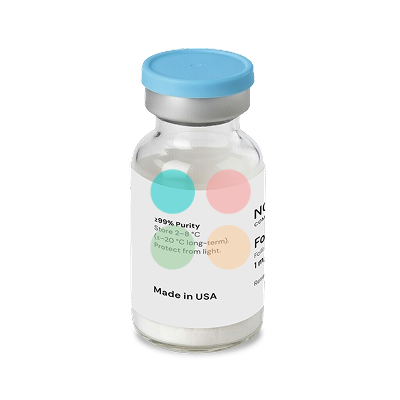
Follistatin 344 is sensitive to heat, moisture, and agitation. The lyophilized powder should be stored at −20°C or below, protected from light and humidity. After reconstitution in sterile bacteriostatic water or PBS, aliquots should be kept at 2–8°C for short-term use or re-frozen at −20°C to preserve potency. Document package condition upon receiving Follistatin 344 and quarantine the product until documentation matches institutional records.
Is Follistatin 344 Prohibited by WADA?
Yes. The World Anti-Doping Agency classifies myostatin inhibitors - including follistatin - as prohibited substances for athletic use. Any administration of this compound outside authorized laboratory research or approved clinical trials violates WADA regulations and may carry legal consequences.
Where Can I Buy Follistatin 344 for Research?
Licensed researchers and laboratory professionals can buy follistatin-344 through FillerSupplies.com, which supplies the compound under the Novera brand with temperature-controlled shipping and global delivery. Handling Follistatin 344 requires a responsible professional's review, and all purchases are managed for research use only.
What Is the Typical Research Dosage Range in Animal Studies?
Dosing in published gene therapy research has been reported in vector genomes rather than peptide mass. In the 2015 BMD clinical trial, patients received approximately 3 × 10¹¹ to 6 × 10¹¹ vg/kg per leg via intramuscular injection. For peptide-form research in animal models, peer-reviewed pharmacokinetic data remain limited, and no standardized dosing protocol for injected FS-344 protein has been established.
How Long Does Reconstituted Follistatin 344 Remain Stable?
Reconstituted follistatin 344 maintains acceptable stability for approximately 7–14 days when stored at 2–8°C, depending on the reconstitution buffer and handling conditions. For longer-term storage, aliquoting and freezing at −20°C is recommended. Repeated freeze-thaw cycles degrade the protein and should be avoided; single-use aliquots represent best laboratory practice.