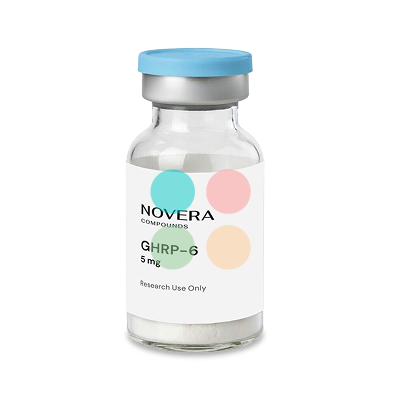
GHRP-6 is a synthetic hexapeptide and potent growth hormone secretagogue studied extensively for its ability to stimulate growth hormone release through activation of the growth hormone secretagogue receptor 1a (GHS-R1a), also known as the ghrelin receptor. Across experimental models in cardiovascular protection, neuroprotection, anti-fibrotic activity, and neuroendocrine signaling, GHRP-6 has emerged as one of the most versatile research peptides available for laboratory research. GHRP-6 is classified as a research chemical, not a drug, and it is not FDA approved – it is supplied exclusively for research use only.
Whether investigators seek to study GHS-R1a signaling, examine neuroendocrine signaling mechanisms, or explore cytoprotective pathways in vitro and in animal models, GHRP-6 provides a well-characterized pharmacological tool. Researchers looking to buy GHRP-6 online should prioritize suppliers offering authenticated, quality-controlled compound with proper handling and temperature-controlled logistics. GHRP-6 does not imply clinical implications in research and is intended solely for qualified professionals conducting laboratory studies.
General Information About GHRP-6
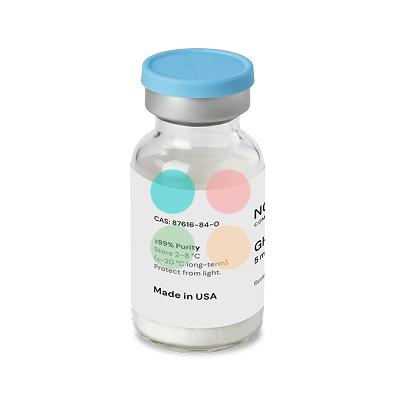
GHRP-6 (CAS 87616-84-0) is a synthetic hexapeptide composed of six amino acids arranged in the sequence His–D-Trp–Ala–Trp–D-Phe–Lys-NH₂ (abbreviated His-D-Trp-Ala-Trp-D-Phe-Lys). The inclusion of two D-amino acids – D-Trp at position 2 and D-Phe at position 5 – confers significant resistance to proteolytic degradation and stabilizes the three-dimensional conformation required for receptor binding. GHRP-6 has a molecular formula of C₄₆H₅₆N₁₂O₆ and a molecular weight of 873.0 g/mol.
Developed in the 1980s (originally coded SKF-110679), GHRP-6 was among the first growth hormone releasing peptides derived from met-enkephalin analogues, designed as a synthetic growth hormone secretagogue capable of stimulating pituitary GH secretion independent of the natural growth hormone releasing hormone (GHRH) pathway.
The primary mechanism of action involves agonist binding at the growth hormone secretagogue receptor (GHS-R1a), triggering intracellular calcium mobilization and cAMP accumulation in somatotroph cells. GHRP-6 stimulates GH release through a dual pathway: direct pituitary activation and hypothalamic modulation – enhancing GHRH secretion while suppressing somatostatin tone. Additionally, GHRP-6 interacts with the CD36 receptor in cardiac tissue, contributing to cardioprotective effects that appear to operate independently of growth hormone release.
In a human pharmacokinetic study involving nine healthy male volunteers administered single intravenous boluses at 100, 200, and 400 μg/kg, the distribution half-life averaged 7.6 ± 1.9 minutes and the elimination half-life was approximately 2.5 ± 1.1 hours, measured by LC-MS. Oral bioavailability remains extremely poor at approximately 0.3%, which is why parenteral administration dominates research protocols. It typically requires administration via injection with common dosages ranging from 100 to 500 mcg per day in investigational contexts. Aqueous GHRP-6 is most stable in acetate buffer at pH 5.5–6.0, with predicted shelf stability (t₉₀%) of approximately 4.73 years at 20 °C under optimal buffer conditions.
GHRP-6 Use in the Research Setting
Suppliers often sell GHRP-6 as a lyophilized powder in 5 mg or 10 mg vials, intended for reconstitution prior to use in research and laboratory settings only. Below are the principal domains in which GHRP-6 is actively studied.
Growth Hormone Release Studies
GHRP-6 produces robust, dose-dependent stimulation of GH secretion in both animal and human research models. In healthy adult volunteers, an intravenous bolus of GHRP-6 at just 1 μg/kg triggered a larger GH release than an equivalent bolus of GHRH-44. Intranasal administration at approximately 30 μg/kg also produced measurable GH increases, though the parenteral route remains standard due to superior bioavailability.
GHRP-6 is known for significant appetite stimulation, making it one of the most potent GHRPs in terms of orexigenic effects – a direct consequence of its ghrelin receptor agonist activity. This property distinguishes it from GHRP-2, which produces higher peak GH amplitude but less pronounced hunger stimulation, and from hexarelin, which causes minimal appetite effects.
Interestingly, co-administration of prazosin (an α₁-adrenergic blocker) amplified the GH response to GHRP-6 in male human subjects, indicating interactions with adrenergic pathways that modulate secretion beyond the primary GHS-R1a mechanism. GHRP-6 is often paired with Growth Hormone Releasing Hormones like CJC-1295 in research protocols to study synergistic effects on GH axis activation and is part of a peptide blend for receptor signaling studies.
Neuroprotective Research Applications
GHRP-6 aids in examining neuroendocrine signaling mechanisms and has demonstrated significant neuroprotective properties across multiple experimental models. In rats treated with monosodium glutamate (MSG) – a compound that induces neuronal apoptosis in the hypothalamus and cerebellum – systemic administration of GHRP-6 reversed cell death. Specifically, GHRP-6 reduced activation of caspase-9 and caspase-7, decreased poly(ADP-ribose) polymerase (PARP) fragmentation, and increased expression of the anti-apoptotic protein Bcl-2, while Bax (pro-apoptotic) levels remained unchanged. IGF-I mRNA expression increased in brain regions including the hippocampus, cerebellum, and hypothalamus.
In models of focal and global brain ischemia, recent proteomic studies combining GHRP-6 with epidermal growth factor (EGF) in rats revealed upregulation of proteins involved in mitochondrial function, antioxidant defense, and suppression of apoptosis in the ischemic penumbra at both 3 and 24 hours post-therapy.
“Growth hormone-releasing peptide-6 prevents neuronal cell death by inducing Bcl-2 and nuclear factor-κB that results in the blockage of AIF translocation and caspase and PARP activation.”
<em>Important to Know:</em>
Cardiovascular Research
Cardiovascular research represents one of the most compelling areas of GHRP-6 investigation. GHRP-6 shows potential anti-inflammatory and cytoprotective properties in research contexts, particularly in cardiac models. In a rat doxorubicin-induced cardiomyopathy model, parallel administration of GHRP-6 prevented ventricular dilation, preserved left ventricular ejection fraction (LVEF), attenuated cardiac myofibril loss, maintained mitochondrial ultrastructure, upregulated Bcl-2 (anti-apoptotic), and reduced both morbidity and mortality.
In myocardial ischemia-reperfusion (I/R) animal studies, GHRP-6 pretreatment or administration at reperfusion reduced infarct size by approximately 30–50%, reduced apoptotic cardiomyocyte markers, and improved contractile recovery. Critically, some of these effects persisted even in GH-deficient (hypophysectomized) animals, confirming GH-independent mechanisms mediated through GHS-R1a and CD36 receptor activation.
| Property |
GHRP-6 |
GHRP-2 |
Hexarelin |
| GH Release Potency |
High; strong release at low μg/kg IV doses |
Very high; greater GH peaks but more cortisol/prolactin |
Very high; sustained effects |
| Appetite Stimulation |
Significant; most potent among GHRPs |
Less pronounced |
Minimal |
| Cortisol / Prolactin Elevation |
Moderate |
Greater elevations |
Significant in both |
| Cardioprotection / CD36 Interaction |
Yes; binds CD36, demonstrated cardiac benefits |
Some evidence, less studied |
Strongest among GHRPs in cardiac models |
Metabolic and Anti-Fibrotic Studies
GHRP-6 interacts with the CD36 receptor – a scavenger receptor involved in fatty acid uptake and metabolic substrate regulation – providing a mechanism through which it may influence tissue metabolism beyond its GH-releasing properties.
In a 2026 study on acute lung injury evolving to interstitial fibrosis in mice (LPS and zymosan + PAF models), GHRP-6 administration reduced neutrophilic alveolitis, improved lung compliance, preserved alveolar-capillary barrier integrity, lowered IL-1β levels, and in the chronic phase, preserved lung parenchyma with minimal collagen accumulation. Anti-fibrotic effects appear to involve modulation of TGF-β signaling, though exact molecular mediators remain under active investigation.
In systemic doxorubicin toxicity models, GHRP-6 reduced fibrosis in liver, kidney, and lung tissues, prevented perivascular fibrosis, and preserved organ parenchyma. Mechanisms include attenuating oxidative stress, enhancing antioxidant defenses, and preserving mitochondrial integrity across multiple organ systems.
“GHRP-6 administration in parallel to Dox prevented myocardial fibers consumption and ventricular dilation, accounting for an effective preservation of the LV systolic function.”
Most products marketed as GHRP-6 are unregulated and may vary in quality – reputable suppliers may provide third-party Certificates of Analysis to verify purity. GHRP-6 is often sold as research-use-only chemicals, evading standard drug regulations.
Angiogenesis and Tissue Repair Research
While direct evidence for GHRP-6-mediated angiogenesis is less abundant than for its cardioprotective and neuroprotective effects, several lines of evidence support a role in tissue repair. GHRP-6 treatment increased IGF-1 expression in multiple brain regions – including the hypothalamus, hippocampus, and cerebellum – and IGF-1 is recognized as a pro-angiogenic growth factor in many tissue contexts.
Activation of the PI3K/Akt pathway and upregulation of Bcl-2 represent key survival signaling mechanisms through which GHRP-6 supports tissue repair. In cardiac I/R studies, this pathway activation reduced apoptotic markers and preserved mitochondrial health, which are prerequisites for effective tissue recovery. Via CD36 binding, GHRP-6 also influences fatty acid uptake and metabolic support of ischemic tissue, potentially creating a more favorable environment for vascular remodeling.
In stroke models, proteomic analysis revealed that GHRP-6 co-administered with EGF upregulated proteins involved in ROS detoxification, mitochondrial function, and anti-apoptotic defense in the ischemic penumbra – findings that support broader cytoprotective and reparative roles.
GHRP-6 can improve lean muscle tissue growth and speed up recovery from strenuous activity in preclinical models. However, prolonged use of GHRP-6 may cause receptor desensitization, reducing its effectiveness over time – a consideration for chronic study designs. Common side effects observed in research include increased appetite, water retention, and insulin resistance. GHRP-6 can also cause hormonal fluctuations such as elevated cortisol and prolactin.
Buy GHRP-6 Online at FillerSupplies.com
When you buy GHRP-6 online, selecting a trusted, established supplier is essential for obtaining authentic compound with verified integrity. FillerSupplies.com is where qualified professionals buy GHRP-6 for laboratory research – offering reliable sourcing backed by over a decade of service to the research community. Whether you need to buy sermorelin GHRP-6 combinations or standalone GHRP-6, FillerSupplies.com delivers the quality and service that serious research demands.
- Authentic, certified products – original, quality-controlled compounds, warehouses worldwide.
- 11 years of reliability & trust – established supplier on the market since 2006.
- Temperature-controlled shipping – thermal packaging with ice gel / cold packs preserves peptide stability.
- Express worldwide shipping – next-day dispatch, global delivery.
- Best wholesale prices – tiered bulk discounts and price-match guarantee.
- Privacy guaranteed; expert support at (888) 392-6640, WhatsApp and email, Mon–Fri 10 am–6 pm EST.
All GHRP-6 products are supplied for research use only, to licensed professionals. This compound is not intended for human use, cosmetic application, or food purposes.
FAQ
What Is GHRP-6 and How Does It Work?
GHRP-6 is a synthetic hexapeptide composed of six amino acids (His-D-Trp-Ala-Trp-D-Phe-Lys-NH₂) that functions as a ghrelin receptor agonist. It stimulates growth hormone release through dual action: direct activation of pituitary somatotrophs via the growth hormone secretagogue receptor 1a (GHS-R1a), triggering intracellular calcium mobilization and cAMP accumulation, and hypothalamic modulation that enhances GHRH secretion while suppressing somatostatin. GHRP-6 is used to study GHS-R1a signaling in laboratory settings.
Is GHRP-6 Safe for Research Use?
In animal models, GHRP-6 is generally well tolerated via parenteral administration. Observed effects in research settings include transient cortisol and prolactin elevation, appetite stimulation, water retention, and potential insulin resistance at higher doses. No long-term human safety trials exist, and the risk of receptor desensitization under repeated or continuous dosing is not well characterized. All research should follow institutional protocols.
How Does GHRP-6 Compare to GHRP-2?
GHRP-2 typically produces higher peak GH amplitude but causes greater cortisol and prolactin elevation. GHRP-6 generates strong GH release with significantly more pronounced appetite stimulation due to its ghrelin receptor activity. In cardiovascular research, both show protective effects, though differences in CD36 binding affinity may influence cardiac outcomes. Researchers select between them based on the specific signaling axis under investigation.
What Dosing Ranges Are Used in GHRP-6 Research?
In human pharmacokinetic studies, intravenous boluses of 100–400 μg/kg have been administered. GH release studies have used doses as low as 1 μg/kg IV and approximately 30 μg/kg intranasally. Animal model dosing varies by study design. It typically requires administration via injection with common investigational dosages ranging from 100 to 500 mcg per day. All dosing information pertains to research protocols only.
How Should GHRP-6 Be Stored and Reconstituted?
GHRP-6 in lyophilized powder form should be stored at −20 °C for long-term stability. Once reconstituted, aqueous GHRP-6 is most stable in acetate buffer at pH 5.5–6.0 and should be refrigerated and used within a reasonable timeframe. Repeated freeze-thaw cycles should be avoided. Suppliers often sell GHRP-6 as a lyophilized powder in 5 mg or 10 mg vials for reconstitution.
Is GHRP-6 a Prohibited Substance?
Yes. GHRP-6 is explicitly listed on the World Anti-Doping Agency (WADA) 2026 Prohibited List under category S2 - Peptide Hormones, Growth Factors, and Related Substances. It is banned at all times for athletes. Researchers should be aware of this classification when designing studies and handling the compound.
Where Can I Buy GHRP-6 for Research?
Qualified professionals can buy GHRP-6 online at FillerSupplies.com, an established supplier since 2006 offering authenticated, quality-controlled research peptides with temperature-controlled express shipping worldwide. GHRP-6 is supplied for research use only. Contact the support team at (888) 392-6640 or via WhatsApp and email for order inquiries.
- Cabrales, A., et al. (2013). Pharmacokinetic study of Growth Hormone-Releasing Peptide 6 (GHRP-6) in nine male healthy volunteers. European Journal of Pharmaceutical Sciences, 48(1-2), 40-46. https://doi.org/10.1016/j.ejps.2012.10.006
- Delgado-Rubin de Celix, A., et al. (2006). Growth hormone releasing peptide-6 acts as a survival factor in glutamate-induced excitotoxicity. Journal of Neurochemistry, 99(3), 839-849. https://doi.org/10.1111/j.1471-4159.2006.04122.x
- Petersenn, S., et al. (2002). Diagnosis of growth hormone deficiency in adults by testing with GHRP-6 alone or in combination with GHRH: comparison with the insulin tolerance test. European Journal of Endocrinology, 146(5), 667-672. https://doi.org/10.1530/eje.0.1460667