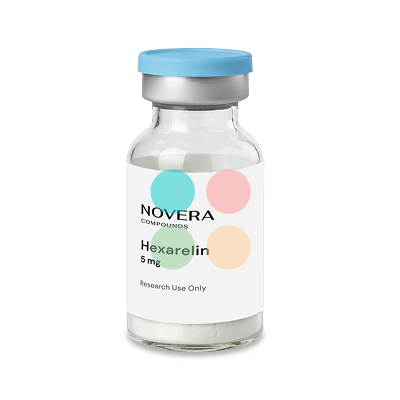
Hexarelin is a synthetic hexapeptide classified as a growth hormone releasing peptide (GHRP) that stimulates pulsatile growth hormone release through activation of growth hormone secretagogue receptors (GHSR-1a) in the pituitary gland and hypothalamus. Studied extensively since the early 1990s across endocrine, cardiovascular, and metabolic research models, the hexarelin peptide has demonstrated potent GH release, cardioprotective effects in ischemia models, and muscle-preserving properties in catabolic conditions-making it one of the most investigated growth hormone secretagogue compounds in preclinical science.
This product is supplied exclusively for in vitro research and laboratory purposes. Hexarelin is not FDA-approved for human consumption or therapy, and it is not intended for human or veterinary use. Researchers looking to buy hexarelin online will find this compound available as a lyophilized powder through FillerSupplies.com, formulated for licensed professionals conducting peptide-based laboratory research.
General Information About Hexarelin
Hexarelin is a synthetic peptide composed of six amino acids arranged in the sequence His-D-2-Methyl-Trp-Ala-Trp-D-Phe-Lys-NH₂ (often abbreviated as His-D-2-MeTrp-Ala-Trp-D-Phe-Lys-NH₂). The compound carries a molecular weight of approximately 887 g/mol and incorporates two non-natural D-amino acid residues-D-2-methyl-Tryptophan and D-Phenylalanine-that confer marked resistance to proteolytic degradation. These structural modifications make hexarelin chemically more stable than ghrelin, the endogenous 28-amino-acid ligand for the same receptor, which has a circulating half-life of only 11–17 minutes in many experimental conditions.
The peptide’s mechanism of action centers on agonism of the ghrelin receptor (GHSR-1a), through which it stimulates growth hormone release from the anterior pituitary gland. Beyond this endocrine pathway, hexarelin also binds to CD36, a scavenger receptor implicated in cardiovascular action, lipid metabolism, and atherosclerotic plaque biology. This dual-receptor profile distinguishes the compound from both native ghrelin and from growth hormone releasing hormone (GHRH), which act through separate receptor systems.
Pharmacokinetic analysis in male Sprague-Dawley rats receiving a 5 μg/kg intravenous bolus revealed a terminal half-life of approximately 75.9 ± 9.3 minutes, systemic clearance of 7.6 ± 0.7 ml/min/kg, and a volume of distribution at steady state of 744 ± 81 ml/kg. Subcutaneous dosing across the 5–50 μg/kg range produced dose-proportional exposure (AUC) without accumulation, supporting predictable pharmacokinetic behavior in preclinical research models.
Hexarelin Use in the Research Setting
Hexarelin is available in lyophilized powder form for reconstitution in sterile aqueous solvent or saline, and it is sold online as a research chemical for laboratory research use only. Primary research applications span GH axis pharmacology, cardiac ischemia-reperfusion modeling, skeletal muscle preservation, metabolic pathway analysis, and preliminary neuroprotective investigations. Below, each major use case is described with supporting evidence from the published literature.
Growth Hormone Release Research
GH release remains the most extensively documented property of hexarelin. Growth hormone secretagogues like hexarelin stimulate pulsatile growth hormone release, and the peptide’s potency in this regard has been quantified across multiple human and animal protocols.
In a 1994 double-blind, placebo-controlled study by Imbimbo et al. published in the European Journal of Clinical Pharmacology, twelve healthy male volunteers received intravenous hexarelin at 0.5, 1.0, and 2.0 μg/kg. Peak GH concentrations were dose-dependent: approximately 3.9, 26.9, 52.3, and 55.0 ng/ml, respectively, reached at 30 minutes post-injection and returning near baseline by 240 minutes. The ED₅₀ for both Cmax and AUC was estimated at 0.50–0.64 μg/kg.
In the Imbimbo et al. (1994) dose-response trial, intravenous hexarelin at 2 µg/kg produced a mean peak GH of approximately 52–55 ng/ml with an AUC₀₋₁₈₀ of ~3.695 µg·min/ml, confirming near-maximal stimulation of the somatotropic axis at this dose in healthy young men.
A separate 1994 investigation by Ghigo et al. compared administration routes in human subjects. Intravenous delivery (1–2 μg/kg) generated significantly greater GH release than equimolar GHRH; subcutaneous bioavailability reached approximately 77%, intranasal dropped to ~4.8%, and oral hexarelin bioavailability was only ~0.3%. These findings underscore why most laboratory protocols utilize injectable preparations rather than oral delivery.
Age modulates the GH response considerably. When researchers compared young men (24–30 years) with elderly subjects (65–84 years) at 2 μg/kg i.v., the GH AUC was roughly 4,849 μg·min/L in the younger cohort versus 2,112 μg·min/L in the elderly group. Co-administration with GHRH or arginine partially restored the blunted response in older subjects, suggesting that combined stimulation may overcome age-related somatotropic decline in experimental conditions.
Metabolic context also matters: oral glucose loading or lipid-heparin infusion markedly suppressed the GH response to GHRH but only partially attenuated hexarelin-induced GH release. Hexarelin may also induce the production of other pituitary hormones-higher doses have been shown to increase cortisol and prolactin levels in human experimental settings, an observation that researchers should account for when designing multi-hormone assay protocols.
Important to Know: Long-term administration of hexarelin can lead to receptor downregulation, reducing GH secretory responses over chronic dosing regimens. Hexarelin lacks comprehensive human safety and clinical efficacy data, and long-term effects on safety and health are largely unknown.
Cardiovascular Protection Studies
Hexarelin could demonstrate potential cardioprotective properties in preclinical settings, and a growing body of animal evidence supports this. The compound’s cardiovascular action appears to involve both GHSR-1a and CD36 receptor pathways, operating partly independent of GH release.
In a rat model of myocardial infarction involving 30-minute coronary artery ligation, treatment with hexarelin at 100 μg/kg/day for 7 days reduced malondialdehyde (a lipid peroxidation marker), preserved myocardial architecture, and decreased infarct size via interleukin-1 signaling pathways. Comparative treatment with ghrelin at 400 μg/kg/day produced less pronounced effects, highlighting the peptide’s enhanced potency at lower molar doses. Hexarelin improves cardiac function in ischemic rat models through these combined anti-oxidant and anti-inflammatory mechanisms.
A murine study utilizing temporary left anterior descending artery ligation demonstrated that mice receiving 0.3 mg/kg/day of the compound for 21 days-beginning immediately before reperfusion-showed significantly improved left ventricular function on MRI compared to vehicle-treated controls. Earlier work in GH-deficient rats treated subcutaneously with 80 µg/kg twice daily for 15 days confirmed restoration of somatotropic function alongside improved left ventricular developed pressure post-ischemia, enhanced prostacyclin generation, and reduced angiotensin II vasopressor activity.
Research also suggests that hexarelin attenuates cardiac fibrosis through pathways linked to chronic cardiac function improvement. One study in the spontaneously hypertensive rat model observed reductions in blood pressure alongside favorable remodeling markers, consistent with the peptide’s dual-receptor engagement.
|
Model
|
Dose / Route
|
Primary Outcome
|
Mechanism
|
|
Rat, 30-min coronary ligation
|
100 μg/kg/day s.c., 7 days
|
Reduced infarct size, lower oxidative stress
|
IL-1 pathway; GHSR-1a + CD36
|
|
Mouse, tLAD I/R injury
|
0.3 mg/kg/day, 21 days
|
Improved LV function on MRI vs. vehicle
|
Post-reperfusion cardioprotection
|
|
GH-deficient rat
|
80 μg/kg b.i.d. s.c., 15 days
|
Restored LV developed pressure, ↑ prostacyclin
|
Somatotropic restoration + vascular
|
|
Isolated mouse cardiomyocytes (in vitro)
|
Hexarelin 1 nM vs. ghrelin 10 nM
|
Preserved cell shortening and Ca²⁺ transients
|
Phospholamban phosphorylation; blocked by GHSR-1a antagonist
|
In vitro research on isolated mouse cardiomyocytes further confirmed these cardioprotective effects: hexarelin at just 1 nM preserved intracellular calcium transients and sarcoplasmic reticulum Ca²⁺ content during simulated ischemia-reperfusion, an effect blocked by GHSR-1a antagonists. By comparison, ghrelin required a 10-fold higher concentration (10 nM) to achieve similar protection.
Important to Know: All cardiovascular data derive from animal or in vitro research. No controlled clinical trials have validated these findings in humans. Hexarelin is not approved as a drug for any cardiovascular indication.
Muscle and Tissue Research
Hexarelin reduces muscle mass loss in catabolic conditions, with the strongest evidence coming from chemotherapy-induced wasting models. In a cisplatin induced cachexia model in rats, treatment with the peptide preserved muscle fiber cross-sectional area, maintained contractile function, and protected mitochondrial ultrastructure in a dose-dependent manner. Hexarelin protects skeletal muscle from chemotherapy-induced damage through anti-atrophic signaling and mitochondrial stabilization.
In cisplatin-treated rats, hexarelin and the related analog JMV2894 preserved skeletal muscle calcium homeostasis, reduced markers of protein degradation, and maintained muscle fiber size-effects that emerged within days of treatment initiation and were closely tied to mitochondrial protection.
Researchers investigating skeletal muscle calcium homeostasis have noted that the peptide helps maintain normal intracellular calcium handling under catabolic stress. These observations align with hexarelin’s broader role in opposing the expression of atrophy-related genes (e.g., MuRF1, atrogin-1) documented in rodent muscle tissue. Hexarelin can improve fat measures and protect muscles, though translational evidence remains limited: no large human trials have yet confirmed tissue preservation or hypertrophic effects beyond what might be attributed to GH axis stimulation alone.
Metabolic and Body Composition Studies
Hexarelin may improve body composition and support fat loss based on preclinical evidence. The compound’s interaction with CD36 and downstream activation of PPARγ provide a mechanistic basis for these metabolic observations.
Studies in THP-1 macrophage cultures showed that hexarelin activates PPARγ through GHSR-1a signaling, upregulating cholesterol efflux genes (ABCA1, ABCG1) and modulating sterol transporter expression. These effects on lipid metabolism may contribute to reduced atherosclerotic plaque formation observed in certain animal models. Hexarelin enhances glucose and insulin tolerance in mice, suggesting the molecule may influence carbohydrate metabolism as well-though these findings require confirmation in more complex research models before broader conclusions can be drawn.
The peptide’s metabolic profile differs meaningfully from pure GH secretagogues that lack CD36 affinity. Because hexarelin activates growth hormone secretagogue receptor pathways and CD36-PPARγ pathways simultaneously, researchers can utilize the compound to dissect GH-dependent versus GH-independent contributions to body composition changes.
Neuroprotective Research Applications
Central nervous system effects of hexarelin remain less thoroughly characterized compared to its cardiac and endocrine properties, though preliminary evidence warrants mention. Hexarelin activates growth hormone secretagogue receptor (GHSR) in the brain, and GHSR-1a expression across hypothalamic and hippocampal regions provides anatomical plausibility for neuroprotective and appetite-regulatory actions.
Limited human experimental data show that the compound can influence feeding behavior pathways at doses that also stimulate cortisol and prolactin, complicating the interpretation of appetite-specific effects. Ghrelin research has more extensively mapped these central circuits; hexarelin’s shorter peptide length and different receptor binding kinetics may produce distinct patterns of neuronal activation, but dedicated CNS-focused studies with this molecule remain scarce.
Hexarelin can cause fluid accumulation and tingling in extremities at certain experimental doses-adverse effects that researchers should monitor in any protocol examining neurological or peripheral endpoints.
Important to Know: Hexarelin is explicitly prohibited by the World Anti-Doping Agency in competitive sports. Any research conducted in athletic or performance contexts must adhere to relevant anti-doping regulations and institutional review requirements. The compound is intended for in vitro research only.
Buy Hexarelin Online at FillerSupplies.com
For researchers seeking hexarelin for sale from a trusted supplier, FillerSupplies.com offers this synthetic peptide under conditions designed to preserve peptide stability from warehouse to laboratory. Whether you need to buy hexarelin 2mg peptide for a single pilot experiment or require bulk quantities for a multi-arm study, the platform accommodates both scales with competitive pricing. Safe acquisition of hexarelin involves avoiding unregulated online vendors-independent testing of research chemicals often reveals discrepancies in purity and labeling from less established sources.
-
Authentic, certified products – original, quality-controlled compounds, warehouses worldwide.
-
11 years of reliability & trust – established supplier on the market since 2006.
-
Temperature-controlled shipping – thermal packaging with ice gel / cold packs preserves stability.
-
Express worldwide shipping – next-day dispatch, global delivery.
-
Best wholesale prices – tiered bulk discounts and price-match guarantee.
-
Privacy guaranteed; expert support at (888) 392-6640, WhatsApp and email, Mon–Fri 10am–6pm EST.
-
Supplied for research use only, to licensed professionals.
All hexarelin products from FillerSupplies.com are designated for research use only and are not intended for human or veterinary use. Researchers can buy hexarelin acetate and related peptides with confidence that storage conditions and cold-chain logistics have been maintained throughout fulfillment.
Related research peptides available at FillerSupplies.com: CJC-1295, Ipamorelin, Sermorelin.
FAQ
What Is The Mechanism Of Action Of Hexarelin?
Hexarelin stimulates growth hormone release via GHSR activation at the pituitary gland and hypothalamus, producing dose-dependent increases in circulating GH. The peptide also binds CD36 receptors, triggering PPARγ-mediated effects on lipid metabolism and cardiovascular pathways that operate independently of the GH axis.
Is Hexarelin Safe For Research Applications?
In controlled single-dose human studies from the 1990s, minor adverse effects included flushing, transient cortisol and prolactin increases, fluid accumulation, and tingling in extremities. Hexarelin lacks comprehensive human safety and clinical efficacy data, and long-term effects remain largely unknown. All protocols should follow institutional safety guidelines.
How Does Hexarelin Compare To Ghrelin In Research Models?
The compound is chemically more stable than ghrelin due to D-amino acid modifications, exhibiting a terminal half-life of ~76 minutes in rats versus ghrelin's ~11–17 minutes. At the receptor level, hexarelin achieves comparable or greater cardioprotective effects at 1 nM versus ghrelin's 10 nM in isolated mouse cardiomyocytes, reflecting its enhanced potency per mole.
What Are Recommended Storage Conditions For Hexarelin?
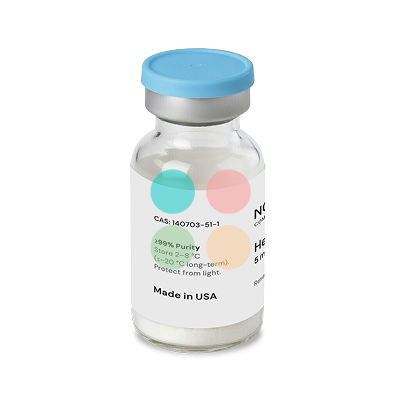
Lyophilized hexarelin is stable at room temperature for approximately 3 weeks, but the compound should be stored below -18°C for long-term storage to prevent degradation. Reconstituted solution should be kept at 2–8°C and utilized within 4 weeks. Researchers should prevent freeze thaw cycles and ensure samples are stored desiccated in a dry place when in powder form.
What Research Doses Have Been Utilized In Published Studies?
Published protocols vary by model: human GH release studies employed 0.5–2.0 μg/kg i.v.; rat cardiac ischemia models used 80–100 μg/kg/day s.c.; murine infarction studies administered 0.3 mg/kg/day for 21 days. Researchers should scale doses according to species-specific pharmacokinetic parameters and their institutional guidelines.
Is Hexarelin A WADA-Prohibited Substance?
Yes. Hexarelin is explicitly prohibited by the World Anti-Doping Agency under the category of growth hormone secretagogues banned at all times in competitive sports. Any research involving athletic populations or performance-related endpoints must account for this regulatory classification.
Can Hexarelin Be Used For Human Or Veterinary Treatment?
No. Hexarelin is not FDA-approved for human consumption or therapy. The compound is sold exclusively as a research chemical for laboratory purposes and is not authorized for clinical, therapeutic, or veterinary applications.