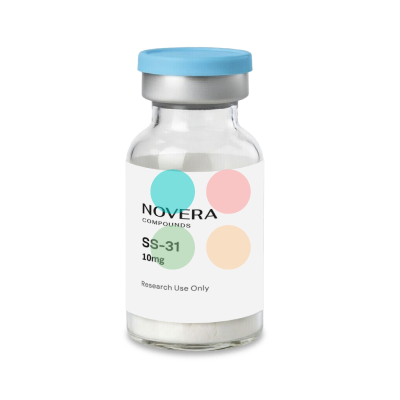
SS-31 (elamipretide) is a synthetic tetrapeptide engineered to target the inner mitochondrial membrane, where it binds selectively to cardiolipin – an anionic phospholipid critical for electron transport chain assembly and cellular energy production. Researchers studying mitochondrial dysfunction, oxidative stress, and ischemia-reperfusion injury rely on this compound to investigate how membrane-level interventions influence bioenergetics, reactive oxygen species generation, and organelle integrity across cell culture and animal models.
FillerSupplies.com supplies SS-31 exclusively for research and laboratory use. The compound is not intended for human consumption, and all products sold on this website are designated for licensed researchers conducting in vitro or preclinical experimentation under applicable laws. SS-31 is classified as an investigational drug for conditions beyond its narrow approved indication, and products labeled for “research use only” are not guaranteed safe for human use.
General Information About SS-31
SS-31 is a mitochondria-targeting tetrapeptide with the sequence D-Arg-Dmt-Lys-Phe-NH2 (abbreviated arg dmt lys phe), where “Dmt” denotes 2′,6′-dimethyltyrosine – a non-natural aromatic residue that enhances the molecule’s affinity for lipid bilayers. Its molecular formula is C32H49N9O5, corresponding to a molecular weight of 639.8 Da. Two structural modifications distinguish this peptide from ordinary tetrapeptides: the D-configuration of the N-terminal arginine confers resistance to enzymatic proteolysis, and C-terminal amidation of phenylalanine removes the carboxylate negative charge, improving membrane permeability.
The compound originated from the Szeto–Schiller peptide series developed through rational design in the mid-2000s. Unlike naturally encoded mitochondrial peptides such as MOTS-c, SS-31 is fully synthetic and was purpose-built to concentrate at mitochondria without depending on membrane potential for uptake. Its alternating aromatic–cationic motif (Dmt and Phe alternating with D-Arg and Lys) enables the molecule to cross cell membranes rapidly and accumulate at the inner mitochondrial membrane within minutes.
Once there, the peptide binds cardiolipin – a phospholipid found almost exclusively in mitochondrial membranes. This interaction stabilizes cristae architecture, supports respirasome supercomplex assembly, and reduces electron leak at complexes I and III of the electron transport chain. By preserving cardiolipin’s structural role, SS 31 lowers reactive oxygen species output and helps maintain mitochondrial membrane potential under stress. Biophysical studies confirm high-affinity binding: lipid/peptide stoichiometry reaches approximately 6.9 for tetralinoleoyl cardiolipin versus roughly 15.4 for simpler anionic phospholipids like POPG, indicating preferential cardiolipin interaction.
Pharmacokinetic data from animal models show a plasma elimination half-life of approximately 2 hours following intravenous administration. Mitochondrial retention extends well beyond plasma clearance because the compound remains bound to cardiolipin in situ. SS-31 is supplied as a white lyophilized powder and is stable for up to 28 days after reconstitution when stored properly. The molecule is unique in its specific application for mitochondrial disorders, and it received FDA accelerated approval for Barth syndrome treatment – a rare mitochondrial cardiomyopathy – though it remains investigational for all other conditions.
SS-31 Use in the Research Setting
SS-31 is supplied as a lyophilized powder in sealed glass vials for research and laboratory use only. Below, five major areas of investigation illustrate how researchers apply this compound in preclinical experimentation.
Mitochondrial Bioenergetics Research
SS-31 is used to study mitochondrial function and bioenergetics across multiple experimental systems. In isolated mitochondria from aged or stressed rodent tissues, the peptide prevents loss of electron transport chain complex activity, maintains cristae integrity, and re-couples oxidized cardiolipin to support supercomplex assembly – effects that translate into measurable improvements in ATP production.
Cell culture experiments provide concrete measurements. In cardiomyocytes subjected to oxidative insult, SS 31 restored cytochrome c oxidase activity and improved ATP/ADP ratios compared to untreated controls. The mechanism centers on the compound’s ability to stabilize cardiolipin’s interaction with respiratory supercomplexes, preventing the proton leak that dissipates mitochondrial membrane potential during metabolic stress.
Compared to MOTS-c – another peptide studied for mitochondrial effects – SS-31 operates through a fundamentally different mechanism. MOTS-c is a 16-amino-acid peptide encoded in mitochondrial DNA that acts primarily through nuclear signaling and AMPK activation to modulate energy metabolism. The Szeto–Schiller compound, by contrast, acts directly at the inner mitochondrial membrane to alter bilayer structure and respiration efficiency. This distinction makes SS-31 particularly relevant for researchers investigating membrane-level determinants of bioenergetics rather than transcriptional or signaling-pathway outcomes.
Oxidative Stress Protection Studies
A primary research application involves studying how mitochondria-targeted cardiolipin stabilization reduces oxidative damage. SS-31 reduces reactive oxygen species in laboratory studies by preventing electron leak at complexes I and III, the principal sites of superoxide generation within the electron transport chain.
In aged male C57BL/6 mice (approximately 14 months old, 27–33 g) with surgically induced hind limb ischemia, subcutaneous administration of the peptide suppressed mitochondrial ROS production, restored autophagic flux, and inhibited opening of the mitochondrial permeability transition pore. Treated animals showed markedly lower markers of lipid peroxidation and improved muscle perfusion versus saline controls – results published from in vivo animal models only.
Citation Capsule: In a rat model of renal ischemia-reperfusion injury, subcutaneous administration of SS-31 at 0.5, 2, or 5 mg/kg – given 30 minutes before ischemia, at reperfusion onset, and two hours into reperfusion – nearly normalized serum creatinine and fractional excretion of sodium, with the 5 mg/kg dose restoring renal function to near-sham levels at 24 hours post-injury (Szeto et al., Aging Cell, 2011).
<em>Important to Know:</em>
Ischemia-Reperfusion Research Models
Ischemia-reperfusion (I/R) injury represents one of the most extensively studied applications. In a 2013 rat model of acute kidney injury, the compound at 2 mg/kg administered subcutaneously before ischemia and at reperfusion preserved mitochondrial cristae, attenuated malondialdehyde (a lipid peroxidation marker), prevented glutathione depletion, and provided structural protection to proximal tubular cells.
Cardiac models show similar patterns. In ex vivo guinea-pig hearts subjected to 30 minutes of ischemia followed by 60 minutes of reperfusion, perfusate concentrations as low as 1 nM SS-31 – delivered before and during reperfusion – preserved contractile force and prevented myocardial stunning. The mechanism relies on maintaining cardiolipin integrity during hypoxic conditions, which prevents mitochondrial swelling, cytochrome c release, and the cascade of events leading to cell death.
|
Compound
|
Primary Mechanism
|
Typical Research Dose (Animal)
|
Administration Route
|
Cardiolipin Binding
|
|
SS-31 (Elamipretide)
|
Cardiolipin stabilization; membrane structural support
|
0.5–5 mg/kg
|
Subcutaneous / Intraperitoneal
|
Yes – high affinity
|
|
MitoQ (Mitoquinone)
|
ROS scavenging via ubiquinone moiety
|
4–20 mg/kg (oral)
|
Oral / Intravenous
|
No – TPP-driven uptake
|
|
SkQ1 (Visomitin)
|
Lipophilic cation antioxidant
|
0.25–1 µmol/kg
|
Intraperitoneal / Topical
|
No – membrane potential–dependent
|
A key differentiator emerges from this comparison: SS-31’s uptake into mitochondria is membrane potential–independent. MitoQ and SkQ1 rely on the lipophilic triphenylphosphonium (TPP) cation to accumulate in energized mitochondria – meaning their uptake drops precisely when mitochondrial membrane potential collapses during ischemia, the moment protection is most needed. The Szeto–Schiller peptide’s amphipathic design avoids this limitation.
Cellular Energy Metabolism Investigations
Beyond organelle protection during acute injury, researchers use SS-31 to probe fundamental questions about cellular energy production and mitochondrial respiration rates under chronic stress. It is applied in preclinical research for mitochondrial restoration in disease models where declining ATP output drives pathology.
In renal tubular epithelial cells, treatment with the compound preserved β₁-integrin localization and cell attachment during metabolic stress, reducing cell shedding – a finding relevant to understanding how energy deficits translate into tissue-level damage. Cardiomyocyte studies confirm that SS 31 boosts oxygen consumption rates and improves coupling efficiency between substrate oxidation and ATP synthesis.
Citation Capsule: According to Szeto and Schiller’s analysis of multiple preclinical datasets, SS-31 binding to cardiolipin reduces reactive oxygen species production by approximately 30–50% in mitochondria isolated from aged or stressed tissues compared to untreated controls, while simultaneously improving electron transport chain coupling efficiency (Aging Cell, 2011).
Clinical trials have begun translating these preclinical energy metabolism findings. The PROGRESS-HF Phase 2 trial (Butler et al., 2020) randomized 71 subjects with heart failure and reduced ejection fraction to receive 4 mg/day or 40 mg/day subcutaneous elamipretide, or placebo, for 28 consecutive days. Neither dose produced statistically significant improvements in left ventricular end-systolic volume – the primary endpoint – though the compound was well tolerated. Clinical trial data for SS-31 remains limited to short-term studies, and reported adverse events include injection site reactions and mild headaches.
Neuroprotection Research Applications
Neural tissue’s extraordinary dependence on oxidative phosphorylation makes it particularly vulnerable to mitochondrial dysfunction, and SS-31 has attracted attention in neuroprotection research. Brain tissue studies demonstrate that the peptide penetrates the blood-brain barrier and accumulates in neuronal mitochondria, where it exerts the same cardiolipin-stabilizing effects observed in cardiac and renal cells.
In a 2007 mouse stroke model, Cho et al. reported in the Journal of Biological Chemistry that SS-31 administered at reperfusion following middle cerebral artery occlusion prevented glutathione depletion in cortical tissue, reduced infarct volume by approximately 40–60% compared to saline controls, and decreased expression of CD36 – a scavenger receptor implicated in oxidative stress and inflammation. The protective effect was absent in CD36-knockout animals, suggesting the peptide’s neuroprotective action involves modulation of this specific inflammatory pathway. These findings remain limited to animal models.
Citation Capsule: Cho et al. demonstrated in a 2007 study published in Journal of Biological Chemistry (282:4634–42) that SS-31 attenuated cortical glutathione loss and produced a 40–60% reduction in cerebral infarct size in wild-type mice subjected to middle cerebral artery occlusion, an effect abolished in CD36-knockout animals.
Additional models of neurodegeneration show that SS-31 prevents mitochondrial fragmentation, reduces neuronal apoptosis, and supports cell survival under exposure to mitochondrial toxins. Precise neuronal dosing protocols remain less standardized in the literature than cardiac or renal protocols, representing an active area of investigation for researchers.
<em>Important to Know:</em>
Buy SS-31 Online at FillerSupplies.com
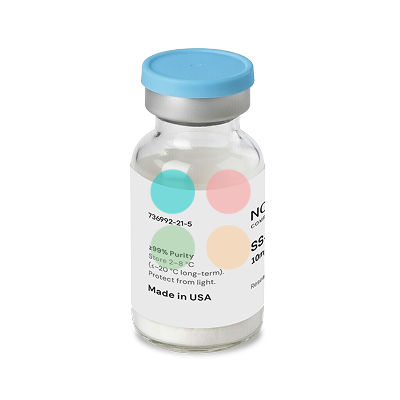
When you need to buy SS-31 peptide for laboratory investigation, FillerSupplies.com offers research-grade elamipretide under the Novera brand. SS-31 purity is ≥ 99% as verified by HPLC, and each vial contains lyophilized powder ready for reconstitution with bacteriostatic water or sterile water. Prices vary based on vial size and manufacturer sourcing – the cheapest 10 mg vial is priced at $37.50, while a 50 mg vial costs roughly $3/mg (a vendor selling 50 mg at $160 works out to $3.20/mg). Those looking to buy ss 31 peptide online can access competitive pricing and reliable supply through FillerSupplies.com for their research purposes.
-
Authentic, certified products – original, quality-controlled compounds, warehouses worldwide.
-
11 years of reliability & trust – established supplier on the market since 2006.
-
Temperature-controlled shipping – thermal packaging with ice gel / cold packs preserves stability.
-
Express worldwide shipping – next-day dispatch, global delivery.
-
Best wholesale prices – tiered bulk discounts and price-match guarantee.
-
Privacy guaranteed; expert support at (888) 392-6640, WhatsApp and email, Mon-Fri 10am-6pm EST.
-
Supplied for research use only, to licensed professionals.
All products sold through this site are sold strictly for research purposes. SS-31 is not intended to diagnose, treat, cure, or prevent any disease in humans, and purchasing decisions should comply with applicable laws governing research compounds. Lack of regulatory oversight increases safety risks for online purchases; the safety of online-sourced SS-31 is not guaranteed, and sourcing carries risks of contamination and incorrect dosing. Contact support for questions about formulation, storage, or shipping before placing an order.
Related research peptides available at FillerSupplies.com: Epithalon, NAD+, FOXO4-DRI.
FAQ
Is SS-31 Safe For Human Use?
SS-31 is classified as an investigational drug and is not approved for general human use. Adverse events reported in clinical trials include injection site reactions and mild headaches, and long-term safety data in healthy populations remains sparse. Material sold through research suppliers, including this listing, is intended for laboratory experimentation only and is not supplied for human administration.
How Does SS-31 Work At The Mitochondrial Level?
The peptide binds selectively to cardiolipin, an anionic phospholipid concentrated in the inner mitochondrial membrane. This interaction stabilizes cristae architecture, supports respiratory supercomplex assembly, and reduces electron leak at complexes I and III. The net effect is improved mitochondrial function and decreased production of reactive oxygen species.
How Does SS-31 Compare To MitoQ?
MitoQ relies on a triphenylphosphonium cation for membrane potential–dependent accumulation in mitochondria, functioning primarily as a ROS scavenger. SS-31 binds directly to cardiolipin regardless of membrane potential, providing structural membrane stabilization in addition to antioxidant effects. This distinction is particularly relevant in ischemia models where membrane potential collapses.
What Research Doses Are Used In Animal Studies?
Preclinical protocols commonly employ doses of 0.5 to 5 mg/kg administered subcutaneously or intraperitoneally, depending on species and injury model. In clinical trials for Barth syndrome and heart failure, human subjects received 4 mg/day or 40 mg/day subcutaneously for up to 28 days. These figures reflect research and clinical trial contexts only - not dosing guidance for human or animal use outside approved protocols.
How Should SS-31 Be Stored And Reconstituted?
Lyophilized powder should be stored at −20 °C and protected from light. Reconstitution is typically performed with sterile water or bacteriostatic water (bac water), and reconstituted solutions should be stored at 2–8 °C. Researchers should avoid repeated freeze thaw cycles, as these can degrade peptide identity and purity. The compound remains stable for up to 28 days after reconstitution under appropriate conditions.
Is SS-31 On The WADA Prohibited List?
WADA has not published a compound-specific ruling on elamipretide as of mid-2026. However, its metabolic-modulating properties could fall under broader prohibited categories depending on the sport and testing context. Researchers studying this molecule in animal models related to exercise physiology should verify current WADA classifications and confirm compliance with relevant anti-doping regulations.
What Is The Regulatory Status Of SS-31?
SS-31 received FDA accelerated approval for Barth syndrome treatment, making it available under prescription for that specific indication. For all other conditions, it remains an investigational drug. Products labeled for "research use only" are not evaluated by the Food and Drug Administration for therapeutic, diagnostic, or veterinary applications, and misuse outside research contexts may violate applicable laws.