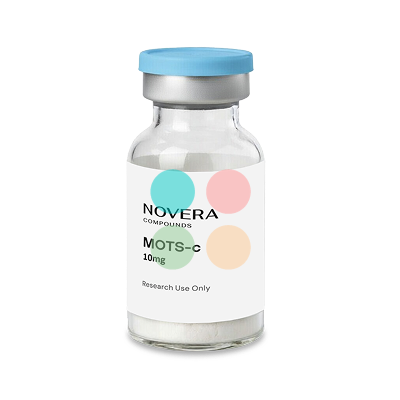
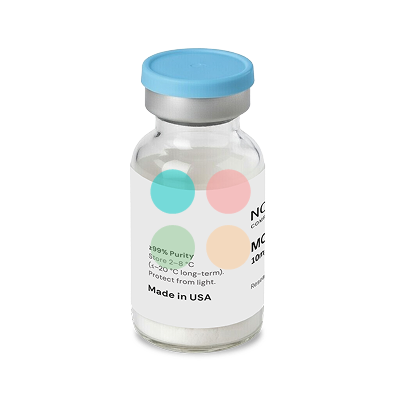
MOTS-c is a 16-amino-acid mitochondrial derived peptide encoded within the 12S rRNA gene of mitochondrial DNA, studied primarily for its activation of AMP-activated protein kinase (AMPK) and its downstream effects on glucose metabolism, fatty acid oxidation, and cellular energy homeostasis. Dr. Changhan David Lee first identified the peptide in 2015, establishing it as a signaling molecule that links mitochondrial function to nuclear gene expression under conditions of metabolic stress.
This compound is supplied strictly for research use only and is not approved by the FDA for therapeutic use or as a dietary supplement. Injectable MOTS-c is marketed as “for research use only” and is not meant for human consumption. Researchers seeking to buy MOTS-c peptide can obtain it in lyophilized form through licensed suppliers for use in controlled laboratory settings.
General Information About MOTS-c
MOTS-c (mitochondrial open reading frame of the 12S rRNA-c) is a recent mitochondrial derived peptide encoded within the mitochondrial genome rather than the nuclear genome. Its amino acid sequence reads Met-Arg-Trp-Gln-Glu-Met-Gly-Tyr-Ile-Phe-Tyr-Pro-Arg-Lys-Leu-Arg (MRWQEMGYIFYPRKLR), corresponding to a molecular weight in the range of 1.8–2.0 kDa as estimated by mass spectrometry for peptides of this length. The compound is encoded in mitochondrial DNA, making it one of very few known signaling peptides with a mitochondrial rather than nuclear origin.
At the molecular level, MOTS-c activates AMPK, the master metabolic regulator, through modulation of the folate-methionine cycle. This modulation leads to accumulation of AICAR (5-aminoimidazole-4-carboxamide ribonucleotide), a well-characterized AMPK activator. Under metabolic stress, MOTS-c translocates from the mitochondrion into the nucleus, where it interacts with regulatory DNA elements to regulate nuclear gene expression related to proteostasis and stress response. This mitochondrial to nuclear communication pathway distinguishes the peptide from conventional endocrine signals.
Compared to other mitochondrial peptides, MOTS-c occupies a distinct mechanistic niche. Humanin, encoded in the 16S rRNA region of mitochondrial DNA, is a 21–24 amino acid peptide that acts primarily through anti-apoptotic pathways (JAK2/STAT3, IGF-1 signaling) and serves a cytoprotective rather than metabolic signaling function. SS-31 (elamipretide) is a synthetic tetrapeptide that binds cardiolipin on the inner mitochondrial membrane, stabilizing membrane structure and suppressing reactive oxygen species. Neither humanin nor SS-31 activates AMPK or modulates the folate cycle in the manner documented for MOTS-c. No validated human pharmacokinetic data (half-life, clearance, tissue distribution) have been published for exogenous MOTS-c as of mid-2026; all available pharmacological parameters derive from rodent experimental models.
MOTS-c Use in the Research Setting
MOTS-c is available in lyophilized form for stability, supplied as a powder for reconstitution in laboratory research applications. All studies described below employed in vitro research systems or animal models; no controlled human interventional trials of exogenous MOTS-c have been completed.
Metabolic Signaling Research
MOTS-c activates AMPK through a mechanism distinct from other known activators. Rather than directly binding the kinase, the peptide disrupts the folate-methionine cycle in skeletal muscle, causing AICAR to accumulate intracellularly. AICAR then activates AMPK, which in turn triggers downstream cascades affecting fat metabolism, glucose uptake, and metabolic homeostasis.
In the foundational 2015 study by Lee et al. published in Cell Metabolism, mice receiving approximately 0.5 mg/kg/day of MOTS-c via intraperitoneal injection over eight weeks showed improved glucose metabolism and reduced obesity and insulin resistance when fed a high-fat diet. An acute protocol using 5 mg/kg/day over seven days produced measurable metabolic effects in the same model.
Researchers often compare MOTS-c to metformin because both activate AMPK. The upstream mechanisms differ: metformin inhibits mitochondrial complex I, while the peptide operates through folate cycle disruption and AICAR accumulation. Some overlap exists in downstream metabolic gene expression, but MOTS-c has shown effects in both young and aged muscle under stress conditions where metformin’s efficacy profile differs.
Cellular Energy Homeostasis Studies
One of the most distinctive properties of this molecule is its capacity for mitochondrial communication with the nucleus. Under glucose deprivation or oxidative stress, MOTS-c translocates from the mitochondrion to the nucleus, where it binds regulatory elements controlling genes involved in cellular adaptation and energy regulation. This mitochondrial to nuclear signaling represents a form of retrograde communication that allows the organelle to directly influence cell metabolism at the transcriptional level.
|
Attribute
|
MOTS-c
|
SS-31 (Elamipretide)
|
Humanin
|
|
Origin
|
Mitochondrially encoded, 12S rRNA region, 16 amino acids
|
Synthetic tetrapeptide; not encoded in mitochondrial DNA
|
Mitochondrially encoded, 16S rRNA region, 21–24 amino acids
|
|
Primary mechanism
|
AMPK activation via AICAR accumulation; nuclear translocation under stress
|
Cardiolipin binding on inner mitochondrial membrane; ROS suppression
|
Anti-apoptotic signaling via STAT3 and IGF-1 pathways
|
|
Aging model evidence
|
Healthspan markers improved in mice at 2, 12, and 22 months (grip strength, gait, body composition); Reynolds et al., 2021
|
Phase I/II human safety data in mitochondrial disease and cardiomyopathy models
|
Primarily observational and in vitro; neuroprotective contexts studied more than metabolic endpoints
|
|
Animal dosing range studied
|
0.5–15 mg/kg IP; acute (7 days) and chronic (8+ weeks) protocols
|
Varies by disease model; subcutaneous and IV routes in clinical trials
|
Limited standardized dosing; mostly in vitro and correlational human data
|
|
Human clinical trial status
|
No interventional human trials completed; observational data only
|
Phase II data available; disease-specific endpoints
|
No large RCTs for performance or metabolic endpoints
|
In animal studies, the compound’s effects on cellular energy pathways were dose-dependent, with intraperitoneal administration at 5–15 mg/kg producing measurable changes in metabolic gene expression within skeletal muscle. All dosing translation to humans remains unvalidated; no allometric scaling has been confirmed in published literature.
Aging and Longevity Research
MOTS-c levels decline with age, correlating with metabolic dysfunction, reduced cellular resilience, and age related metabolic decline. Reynolds et al. reported in Nature Communications (2021) that mice treated starting at 23.5 months of age with 15 mg/kg MOTS-c three times per week showed improved grip strength, longer gait stride length, increased lean mass, and reduced fat mass compared to untreated controls. Blood glucose levels also dropped in the treated group.
“Mitochondrial-encoded MOTS-c can enhance physical performance in young (2 mo.), middle-age (12 mo.), and old (22 mo.) mice.” – Reynolds et al., Nature Communications, 2021
The lifespan data from that study showed a trend toward increased median and maximum lifespan, but the result did not reach statistical significance (P = 0.23). Healthspan markers, by contrast, improved across multiple measurements. MOTS-c acts as a metabolic stress signal released by mitochondria, and its age-dependent decline suggests a potential role in the deterioration of metabolic flexibility and muscle homeostasis observed in aging organisms.
Important to Know: MOTS-c is prohibited by WADA under Section S4.4.1 (AMPK activators) both in and out of competition. USADA confirms no Therapeutic Use Exemption is available because the peptide has no approved therapeutic indication. Research institutions working with competitive athletes must account for this classification.
Physical Performance Research
Reynolds et al. (2021) tested MOTS-c at doses of 5 mg/kg and 15 mg/kg in mice aged 2, 12, and 22 months. Treated animals ran longer distances on treadmill tests, reached higher peak speeds, and maintained running capacity longer than controls, regardless of diet. In aged mice receiving intermittent dosing (15 mg/kg, three times per week), age dependent physical decline was partially reversed: walking capacity, grip strength, and gait all improved relative to age-matched controls.
The mechanism involves enhanced fatty acid oxidation and improved energy utilization in skeletal muscle. MOTS-c promotes fat oxidation and enhances glucose uptake, shifting cellular metabolism toward more efficient substrate use. AICAR, which accumulates downstream of MOTS-c activity, is itself classified as an exercise mimetic by WADA for the same reason: it activates AMPK and triggers metabolic adaptations that parallel some effects of physical training. The distinction is that MOTS-c is an endogenous, mitochondrially encoded peptide rather than a synthetic nucleoside analog.
A 2022 observational study in humans (published in PMC) compared circulating MOTS-c levels between professional athletes and non-athletes. Athletes had lower serum MOTS-c but higher humanin levels, possibly reflecting chronic metabolic adaptation. No causative intervention data exist from this study; it measured only endogenous circulating MOTS c levels.
Insulin Sensitivity and Glucose Metabolism
In diet-induced obesity mouse models, MOTS-c at 5–15 mg/kg restored insulin sensitivity and reversed insulin resistance through AMPK-mediated enhancement of glucose uptake and suppression of lipogenesis in adipose tissue. MOTS-c improves insulin sensitivity in muscle cells, enhances glucose metabolism and uptake in cells, and promotes fat oxidation while inhibiting lipogenesis.
In the 2015 Lee et al. study, mice on a high-fat diet treated with 0.5 mg/kg/day MOTS-c for eight weeks showed restored glucose uptake and reduced insulin resistance compared to untreated controls fed the same diet – Cell Metabolism, 2015.
C-peptide, by contrast, serves a different role in metabolic research: it is a byproduct released by pancreatic beta cells in equimolar amounts with insulin, and is primarily measured in laboratories via specialized assays to evaluate endogenous insulin production and classify diabetes. C-peptide is useful for assessing residual beta-cell function in diabetes research, and variation in laboratory assay methods can affect measurement results. Unlike MOTS-c, C-peptide is a specific biological marker of proinsulin cleavage rather than a metabolic signaling molecule. C-peptide administration is not an established therapeutic treatment for metabolic diseases, and research-grade C-peptide lacks mandatory purification and sterility testing. C-peptide is primarily obtained via blood or urine tests ordered by healthcare providers, not through exogenous administration.
Buy MOTS-c Online at FillerSupplies.com
FillerSupplies.com offers MOTS-c peptide for purchase in lyophilized form, supplied for research use only to licensed professionals. Whether you need to buy MOTS-c peptide for vitro research, animal model studies, or analytical applications such as high performance liquid chromatography validation, FillerSupplies delivers research peptides globally to licensed laboratories and institutions. For those searching where to buy MOTS-c or looking to buy MOTS-c peptide online, FillerSupplies.com provides:
-
Authentic, certified products; original, quality-controlled compounds, warehouses worldwide.
-
11 years of reliability & trust; established supplier on the market since 2006.
-
Temperature-controlled shipping; thermal packaging with ice gel / cold packs preserves stability and protects against repeated freeze thaw cycles during transit.
-
Express worldwide shipping; next-day dispatch, global delivery.
-
Best wholesale prices; tiered bulk discounts and price-match guarantee.
-
Privacy guaranteed; expert support at (888) 392-6640, WhatsApp and email, Mon–Fri 10am–6pm EST.
-
Supplied for research use only, to licensed professionals.
MOTS-c is not approved for human or veterinary use. Unregulated online sales of C-peptide and similar research compounds carry safety risks; always verify compound integrity and supplier credentials before procurement. This product is intended exclusively for controlled laboratory research by qualified investigators.
Related research peptides available at FillerSupplies.com: Epithalon, NAD+, FOXO4-DRI.
FAQ
What Safety Considerations Apply to MOTS-c in Research?
Animal studies have reported no overt toxicity in short- or medium-term protocols at doses up to 15 mg/kg administered intraperitoneally. Long-term safety, immunogenicity, and off-target effects from nuclear gene modulation have not been rigorously characterized. MOTS-c is supplied strictly for research use only and is not approved for human consumption or self-administration.
How Does the MOTS-c Mechanism Differ From Other Research Peptides?
While SS-31 stabilizes the inner mitochondrial membrane by binding cardiolipin and humanin activates anti-apoptotic JAK2/STAT3 pathways, MOTS-c functions through AMPK activation via AICAR accumulation from folate-methionine cycle modulation. This compound also translocates to the nucleus under metabolic stress, directly influencing nuclear gene expression, a property not shared by SS-31 or humanin.
How Does MOTS-c Compare to SS-31 for Mitochondrial Research?
SS-31 is a synthetic tetrapeptide targeting membrane integrity and oxidative stress at the inner mitochondrial membrane, while MOTS-c is an endogenous mitochondria derived peptide that activates AMPK and modulates cellular signaling between mitochondria and the nucleus. SS-31 has progressed further in human clinical trials (Phase II for cardiomyopathy and mitochondrial disease), whereas MOTS-c has no completed interventional human trials.
What Dosing Ranges Have Been Used in MOTS-c Animal Studies?
The 2015 Lee et al. study used approximately 0.5 mg/kg/day IP for chronic treatment (8 weeks) and 5 mg/kg/day IP for acute protocols (7 days). Reynolds et al. (2021) employed 5 mg/kg and 15 mg/kg doses; aged mice received 15 mg/kg three times per week. No validated human pharmacokinetic data exist, and allometric dose scaling from rodents has not been confirmed.
How Should MOTS-c Be Stored and Reconstituted?
Lyophilized MOTS-c should be stored at -20°C or below to maintain peptide integrity. Avoid repeated freeze thaw cycles after reconstitution, as these degrade peptide structure. Reconstitute in sterile bacteriostatic water or an appropriate buffer per your protocol requirements, and store reconstituted aliquots at 2–8°C for short-term use in controlled laboratory conditions.
Is MOTS-c a Prohibited Substance Under WADA?
Yes. WADA's 2025 Prohibited List classifies MOTS-c under Section S4.4.1 as an AMPK activator, prohibited at all times both in and out of competition. USADA confirms no Therapeutic Use Exemption is available. Research institutions must ensure compliance when working with athlete populations.
Where Can I Buy MOTS-c Peptide Online?
Licensed researchers can buy MOTS-c peptide online at FillerSupplies.com. Each batch ships with documentation, temperature-controlled packaging protects compound integrity during transit, and expert support is available at (888) 392-6640. The peptide is sold exclusively for laboratory research, not as a dietary supplement or for personal use.