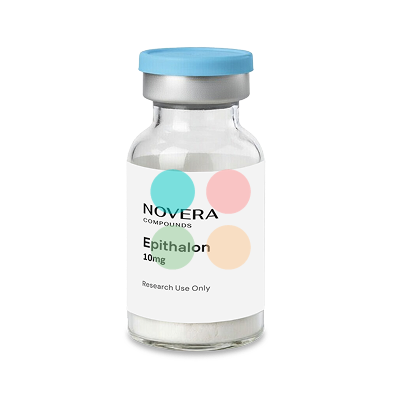
Epithalon is a synthetic tetrapeptide composed of four amino acids (Ala-Glu-Asp-Gly) that has become a focal point in cellular aging, telomerase activation, and circadian rhythm research. Originally derived as a purified analog of Epithalamin-a polypeptide extract from the pineal gland-Epithalon has demonstrated the ability to activate telomerase, modulate melatonin production, and influence gene expression across multiple in vitro and animal models, making it a promising tool for researchers investigating the mechanisms of aging and genomic stability.
This AEDG peptide is supplied exclusively for research and laboratory use. It is not approved by the FDA or authorized for human use by major regulatory agencies. All data presented below derive from preclinical studies-cell cultures, murine models, and primate research-and should be interpreted within that context. Researchers looking to buy Epithalon for their investigations will find the essential scientific background, quantitative findings, and practical product information outlined here.
General Information About Epithalon
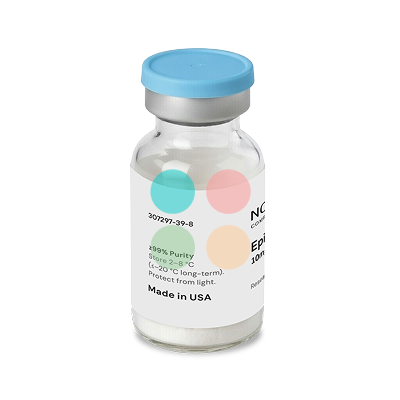
Epithalon is a synthetic tetrapeptide with the amino acid sequence Ala-Glu-Asp-Gly, a molecular weight of approximately 390.34 g/mol, the molecular formula C₁₄H₂₂N₄O₉, and CAS registry number 307297-39-8. It was first characterized as a synthetic analog of Epithalamin, a related pineal peptide preparation consisting of a mixture of polypeptides extracted from the pineal gland. Vladimir Khavinson’s bioregulatory gerontology program in Russia isolated and synthesized this specific four amino acids sequence as the active tetrapeptide responsible for Epithalamin’s observed biological effects.
The primary mechanism of action studied in the literature involves activation of the enzyme called telomerase-specifically, upregulation of hTERT (human telomerase reverse transcriptase) mRNA expression-which promotes telomere lengthening and preservation of the protective caps on chromosomes. Epithalon activates telomerase, potentially lengthening telomeres and thereby extending the replicative capacity of human somatic cells. Beyond telomerase upregulation, research has identified a possible epigenetic mechanism of action: Epithalon stimulates gene expression changes in clock genes, influences chromatin structure through heterochromatin decondensation in aging lymphocytes, and may involve competitive binding at DNA interaction sites upstream of gene promoters rather than classic histone deacetylase inhibition.
Regarding pharmacokinetics, no published study has established a definitive plasma half-life for intact Epithalon in humans or animals. Given its nature as an unprotected linear tetrapeptide, it is expected to be rapidly degraded by serum peptidases, with a circulating half-life estimated on the order of 2–15 minutes. The lyophilized powder form should be stored at −20°C; once reconstituted, refrigeration is required and in vitro stability is limited. Compared to structurally related peptides like Thymalin-a thymus-derived polypeptide complex targeting immune function-Epithalon is smaller, more precisely defined, and directed toward telomere maintenance, pineal gland peptides pathways, and circadian regulation rather than broad immune system modulation.
Epithalon Use in the Research Setting
Epithalon is typically supplied as a lyophilized (freeze-dried) white powder, soluble in water or bacteriostatic water, intended strictly for research and laboratory use only-not for human consumption or use as a dietary supplement.
#1. Telomerase Activation and Cellular Aging Research
Epithalon’s most extensively documented property is its capacity to activate telomerase and extend telomere length in human cell lines. Telomerase is an enzyme that lengthens telomeres on chromosomes, and Epithalon increased telomere length in normal cells by boosting hTERT expression. In 21NT cells, Epitalon increases telomere length from approximately 2.4 kb to ~4 kb over four days at concentrations of 0.5–1 µg/mL, with hTERT mRNA expression rising ~12-fold at 1 µg/mL. In BT474 cancer cells, maximal telomere length reached ~8 kb at 0.2 µg/mL, with ~5-fold hTERT upregulation at 0.5 µg/mL. Notably, in cancer cells, telomere extension occurred via activation of ALT (alternative lengthening of telomeres) rather than through direct telomerase activity increases.
In aged cells, Epithalon stimulated telomere restoration and cell division: Epithalon exposure led to 10 additional cell divisions in aging fibroblasts, demonstrating the peptide’s role in preserving genomic stability and extending cellular longevity. These findings suggest that peptide regulation of hTERT transcription represents a direct mechanism by which this synthetic peptide may combat cell aging at the chromosomal level.
Animal studies suggest lifespan extensions of 10%–25% with Epithalon, and some murine models report that Epithalon may increase lifespan by 11–31% depending on strain and protocol. A study showed a 52% decrease in mortality with Epithalon in certain experimental conditions. Compared to other telomerase activators such as TA-65 or forskolin, direct head-to-head quantitative comparisons remain scarce in the literature, though Epithalon’s unique capacity to activate both telomerase-dependent and ALT pathways in different cell types distinguishes it mechanistically.
Important to Know: All telomerase activation and lifespan data are derived from in vitro cell cultures or animal models. There is a lack of rigorous human trials to confirm Epithalon’s long-term efficacy. Epithalon is not approved by the FDA in the United States and is generally used in experimental or wellness settings. This compound is sold for research use only.
#2. Antioxidative and Mitochondrial Function Studies
Epithalon enhances mitochondrial function in aging oocytes and has demonstrated capacity to support mitochondrial integrity across several aged oocyte cells models. In mouse oocytes, the peptide appeared to stabilize mitochondrial membrane potential, reduce ROS generation, and lower biomarkers of oxidative damage including lipid peroxidation and protein carbonyls. Epithalon reduced DNA damage in aged oocyte cells, contributing to improved oocyte viability, enhanced oocyte survival, and reduced spindle abnormalities during parthenogenetic activation.
In rodent models, administration of Epithalon (0.1–1 µg/mouse) increased activity of antioxidant enzymes such as superoxide dismutase (SOD) in heart and brain tissue. Epithalon may help protect brain cells from oxidative stress, a finding consistent with the peptide’s broader role in modulating gene expression related to mitochondrial function and cellular defense. In aged rhesus monkeys, Epitalon treatment normalized nocturnal melatonin secretion-which has well-documented downstream antioxidant effects-and lowered fasting glucose and insulin levels, thereby reducing metabolic oxidative stress.
“Epithalon’s capacity to preserve mitochondrial membrane potential and reduce ROS in aged oocyte models positions it as a candidate peptide for studying oxidative mechanisms of the aging process in reproductive and somatic cell biology.”
#3. Gene Expression and Epigenetic Research
Epithalon stimulates gene expression changes across multiple pathways, with evidence pointing to a possible epigenetic mechanism involving chromatin structure modification. In aging lymphocytes from individuals aged 76–80, Epithalon induced decondensation of heterochromatin near centromeres, suggesting direct effects on chromatin accessibility and gene expression and protein synthesis regulation.
In a cohort of 75 women treated sublingually with 0.5 mg/day Epithalon for 20 days, the peptide modulated expression of genes involved in circadian regulation: Clock gene expression decreased ~1.8×, Cry2 gene expression doubled, and Csnk1e expression decreased ~2.1×. Urinary 6-sulfatoxymelatonin excretion-a marker of melatonin production-increased ~1.6× relative to placebo. These data demonstrate Epithalon’s role in influencing gene expression at the transcriptional level through mechanisms distinct from classic histone deacetylase inhibition.
Research on gingival mesenchymal stem cells and periodontal ligament stem cells has explored how pineal gland peptides may affect neuronal differentiation and neurogenic differentiation markers. Studies with related AEDG peptide sequences have examined neuronal cell differentiation pathways, including upregulation of β tubulin III and other markers of neuronal differentiation in stem cells, pointing to broader applications in experimental biology. Epithalon may enhance PER1 expression to reduce tumor growth, connecting circadian gene modulation to anti-tumor pathways and further illustrating how modulating gene expression may yield multifaceted biological outcomes.
#4. Cancer and Tumor Research Applications
Epithalon has been investigated in several cancer models for its effects on tumor development, metastasis, and oncogene expression. In transgenic HER-2/neu FVB/N mice models, subcutaneous administration of 1 µg/mouse for five consecutive days per month beginning at 2 months of age significantly reduced the incidence and number of spontaneous mammary tumors, decreased lung metastases size, and reduced HER-2/neu oncogene mRNA expression approximately 3.7-fold compared to controls. Epithalon showed potential to suppress HER-2/neu gene expression, connecting peptide regulation of oncogene transcription to observable tumor outcomes.
Epithalon reduced tumor growth in rat cancer models and decreased lung metastases in breast cancer mice, with treated HER-2/neu female mice showing average lifespan increases of ~13.5% and maximum lifespan increases of ~13.9%. Epithalon inhibited tumor development in colon cancer studies, and data across models suggest that programmed cell death pathways and cell cycle disruption contribute to the peptide’s anti-tumor effects.
| Animal / Cell Model |
Route |
Dose |
Frequency / Duration |
Key Outcomes |
| HER-2/neu transgenic FVB/N mice |
Subcutaneous |
1 µg/mouse |
5 days/month from 2 months of age |
Reduced tumor number & size; HER-2/neu expression ↓3.7×; suppressed metastasis |
| HER-2/neu female mice |
Subcutaneous |
1 mg/mouse |
5×/week from month 2 until death |
Average lifespan +13.5%; maximum +13.9%; reduced tumor incidence ↓2× |
| Human cell lines (21NT, BT474, HMEC, fibroblasts) |
In vitro culture |
0.1–1 µg/mL |
4 days (cancer cells) or 3 weeks (normal cells) |
Telomere length extension; hTERT upregulation up to 12-fold; ALT activation in cancer cells |
Important to Know: Epithalon is not explicitly listed on the WADA prohibited substance list as of current publicly available data. However, peptides that activate telomerase or alter endocrine status and gene expression routinely attract regulatory scrutiny. Researchers conducting studies in contexts related to athletic performance should verify current prohibited lists and consult institutional review boards. Regulatory status of Epithalon may affect its accessibility and oversight.
#5. Melatonin and Circadian Rhythm Studies
Epithalon’s effects on melatonin production and circadian rhythm regulation have been documented in both primate models and human cohort studies. Melatonin regulates sleep cycles and is produced by the pineal gland, and age-related decline in its secretion is a well-characterized feature of senescence. In aged rhesus monkeys (20–27 years old), Epitalon treatment restored nocturnal melatonin levels: maximal night-time melatonin at 22:00 rose from ~56.8 ± 4.6 pg/mL before treatment toward values closer to those observed in young animals (6–8 years old). Epithalon restores normal melatonin levels in aging monkeys through mechanisms that include peptide regulation of melatonin biosynthesis enzymes.
Epithalon influences arylalkylamine-N-acetyltransferase (AANAT) expression for melatonin synthesis, the rate-limiting enzyme in the pineal melatonin pathway. Epithalon may enhance melatonin production in aging individuals; in the human cohort study of 75 women receiving sublingual Epithalon at 0.5 mg/day for 20 days, Epithalon shifts melatonin peak to 3:00 AM in older adults and increased urinary 6-sulfatoxymelatonin excretion ~1.6× relative to placebo. Cortisol circadian rhythm amplitude was also normalized in aged primate models, restoring the difference between morning and evening secretion.
“Epithalon stimulated evening melatonin production and normalized circadian rhythms of cortisol production in old monkeys.”
Epithalon boosts T-cell production in older individuals, enhances interferon-gamma production in T-cells, and improves thymus hormone production in aged subjects-effects that connect circadian and immune function restoration. Studies show Epithalon reverses immune decline in aging mice and helps restore immune health in hypophysectomized chickens, suggesting the peptide’s influence extends from the pineal gland to bone marrow and thymic compartments of the immune system.
The 10mg Presentation of Epithalon
This listing supplies Epithalon as a 10mg vial; the same compound is also offered in 50mg. The peptide is identical across strengths, so the choice is about how much material a protocol needs from one lot rather than about the molecule itself.
Working concentration follows directly from the diluent volume. Reconstituting a 10mg vial with 2mL of bacteriostatic water yields 5mg/mL, while 4mL yields 2.5mg/mL. Because concentration depends on both fill and diluent, research protocols document the reconstitution recipe rather than the vial size alone, which is what makes results comparable between strengths.
A 10mg vial covers a single short course or a pilot run, which is the typical entry point for telomerase and pineal-peptide work before a longer protocol is committed to. Once reconstituted, the solution is refrigerated, protected from light and used within the planned experimental window, regardless of which fill it was prepared from.
Buy Epithalon Online at FillerSupplies.com
When you buy Epithalon online, sourcing matters. Purchasing from unregulated sources carries quality control risks, and products sold online may vary in identity, purity, and sterility. FillerSupplies.com offers laboratory-grade Epithalon peptide under the Novera brand, providing licensed researchers and medical professionals with a reliable supply of this AEDG peptide for their investigative work. Whether you need to buy Epithalon for telomerase activation studies, circadian rhythm research, or anti aging cellular models, FillerSupplies.com delivers the consistency and service your laboratory requires.
- Authentic, certified products – original, quality-controlled compounds, warehouses worldwide.
- 11 years of reliability & trust – established supplier on the market since 2006.
- Temperature-controlled shipping – thermal packaging with ice gel / cold packs preserves stability.
- Express worldwide shipping – next-day dispatch, global delivery.
- Best wholesale prices – tiered bulk discounts and price-match guarantee.
- Privacy guaranteed; expert support at (888) 392-6640, WhatsApp and email, Mon–Fri 10am–6pm EST.
- Supplied for research use only, to licensed professionals.
All Epithalon products from FillerSupplies.com are intended for research and laboratory use only-not for human consumption, clinical treatment, or use as a dietary supplement. There is no established FDA-approved dosing regimen for Epithalon, and it is not authorized for human use by major regulatory agencies.
Related research peptides available at FillerSupplies.com: NAD+, MOTS-c, SS-31.
FAQ
What Is Epithalon and How Does It Work in Research?
Epithalon is a synthetic tetrapeptide (Ala-Glu-Asp-Gly) originally derived as a purified analog of Epithalamin, a pineal gland extract. Its primary studied mechanism involves telomerase upregulation through increased hTERT mRNA expression, which promotes telomere lengthening in human cell lines. Research also demonstrates effects on melatonin production, circadian gene expression, and mitochondrial function in aged cell and animal models.
How Should Epithalon Be Stored and Reconstituted for Laboratory Use?
Lyophilized Epithalon powder should be stored at −20°C to maintain stability. Once reconstituted in sterile water or bacteriostatic water, the solution should be refrigerated at 2–8°C and used promptly, as the unprotected linear tetrapeptide is susceptible to proteolytic degradation. Avoid repeated freeze-thaw cycles.
What Research Dosing Ranges Are Reported in Scientific Literature?
In vitro studies typically use concentrations of 0.1–1 µg/mL over 4 days to 3 weeks. In murine models, subcutaneous doses of 1 µg/mouse administered for 5 consecutive days per month have shown tumor-suppressive and lifespan-extending effects. In one primate study, Epithalon was administered to aged rhesus monkeys with documented restoration of melatonin secretion. There is no established FDA-approved dosing regimen for Epithalon.
How Does Epithalon Compare to Other Telomerase-Activating Peptides?
Unlike small-molecule telomerase activators such as TA-65 or forskolin, Epithalon is unique in activating both telomerase-dependent pathways in normal cells and ALT (alternative lengthening of telomeres) in cancer cells. Compared to Thymalin, a larger thymus-derived polypeptide complex focused on immune modulation, Epithalon is a precisely defined four-amino-acid sequence targeting telomere maintenance and pineal-circadian pathways.
Is Epithalon Safe for Research Applications?
Within reported in vitro and animal study parameters, Epithalon has not shown significant acute toxicity. However, there is a lack of rigorous human trials to confirm long-term safety or efficacy. Theoretical concerns include potential off-target effects from telomerase activation, particularly in cancer cell contexts. Independent long-term safety data remain limited.
Is Epithalon a Prohibited Substance for Athletic Research?
Epithalon is not explicitly listed on current publicly available WADA prohibited substance lists. However, peptides that activate telomerase or modulate endocrine function routinely attract regulatory scrutiny. Researchers working in sports science or athletic contexts should verify current prohibited lists and consult their institutional review boards before incorporating Epithalon into study protocols.
Where Can I Buy Authentic Epithalon for Research Purposes?
Researchers can buy Epithalon online at FillerSupplies.com, which supplies laboratory-grade AEDG peptide under the Novera brand with temperature-controlled shipping, global delivery, and expert support. All products are supplied for research use only to licensed professionals. Choosing an established supplier reduces the quality control risks associated with unregulated peptide sources.
- Khavinson, V. K., et al. (2003). Epithalon peptide induces telomerase activity and telomere elongation in human somatic cells. Bulletin of Experimental Biology and Medicine, 135(6), 590-592. https://doi.org/10.1023/a:1025493705728
- Anisimov, V. N., et al. (2003). Effect of Epitalon on biomarkers of aging, life span and spontaneous tumor incidence in female Swiss-derived SHR mice. Biogerontology, 4(4), 193-202. https://doi.org/10.1023/A:1025114230714
- Anisimov, V. N., et al. (2002). Inhibitory effect of the peptide epitalon on the development of spontaneous mammary tumors in HER-2/neu transgenic mice. International Journal of Cancer, 101(1), 7-10. https://doi.org/10.1002/ijc.10570