Innotox vs. Botulax
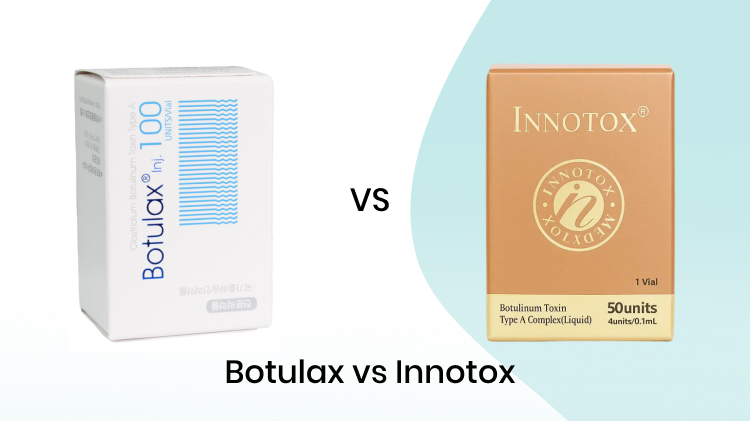
The field of aesthetic medicine has evolved tremendously over the last few decades; new products are introduced to the market, improved formulations allow both specialists and patients to have a more pleasant experience, and more needs can be met in the doctor’s office, thus the level of patient satisfaction grows. One of the new best-sellers available on FillerSupplies, in high demand among our customers, is the Korean botulinum toxin. Particularly, Botulax and Innotox.
Even though both are produced in South Korea, which is known and respected for its innovations in the cosmetic beauty sphere, these brands have some crucial differences. Understanding them is vital to selecting the correct treatment for your patients and ensuring top-notch results every time they visit your clinic. You’ll find all the key points explained in our comprehensive blog post.
Primary Characteristics Comparison Table
Before discussing the topic in more detail, we invite you to take a closer look at the primary characteristics of both Botulax and Innotox. This table contains all the essentials for a better comprehension of both products.
| Product Feature | Botulax | Innotox |
|---|---|---|
| Formulation | Lyophilized powder; requires manual reconstitution with 0.9% sterile saline. | Pre-diluted sterile liquid solution inside a single-use vial; ready for immediate clinical use. |
| Preparation Method | Manual mixing is required, allowing for flexible custom dilution setups. | Ready-to-inject format requiring no dilution; drastically minimizes operational human error. |
| Sterility Profile | Exhibits localized contamination risks during the open reconstitution phase. | Factory-sealed liquid configuration maintains strict sterile integrity up to the point of injection. |
| Storage Requirements | Strict climate control required; must remain frozen or refrigerated and is highly sensitive to temperature shifts. | Flexible handling profile; requires standard refrigeration (2–8°C) but safely tolerates room temperature (15–25°C). |
| Dosing Precision | Highly customizable dosage adjustments, though manual volume preparation can lead to clinical variance. | Standardized, fixed concentration profile ensuring absolute clinical consistency across every session. |
Detailed Comparison of Korean Botulinum Toxin Products
Before you order Innotox or Botulax, you should understand which one would be in greater demand among your customers. For that, you should analyze clinical data, consider your patients’ needs, and determine the most effective botulinum toxin type A based on the received data.
Formulation Differences
One of the most prominent features distinguishing Innotox from other botulinum toxin injections, including Botulax, is its unique formulation. It arrives as a ready-to-use liquid solution, so it doesn’t need to be reconstituted; this significantly reduces the risk of human-made errors during injection, ultimately improving patient outcomes. On the contrary, Botilax comes in the form of freeze-dried powder that must be reconstituted with a sterile saline; even though the risks are higher here, such a formulation allows specialists to calculate a more precise dosing for the procedure.
Another crucial aspect to consider when comparing Innotox and Botulax is the presence of human serum albumin in their composition. Botulax does contain it, while in Innotox the component was replaced by methionine and polysorbate, making it free from animal-derived ingredients. This means the risk of immunogenicity is lower with Innotox, as the likelihood of becoming more resistant after repeated treatments decreases.
“The elimination of human serum albumin in liquid configurations like Innotox marks a critical milestone in minimizing potential long-term immunogenic reactions during chronic neurotoxin maintenance therapy.” — Dr. Ji-Hyun Park, PhD, Molecular Immunologist
Injection Technique and Diffusion
The administration process for both Botulax and Innotox is the same as for other botulinum toxin injections. Before the session, the treated area is cleaned of all contaminants, including makeup, natural facial oils, etc. At the people’s request, a topical numbing cream may be applied to the skin to minimize discomfort during treatment for sensitive patients. The toxins are meant to be administered directly into the muscle so they can reach the nerve endings and block nerve signals, temporarily paralyzing the muscle’s contraction.
As for the diffusion, Botulax is a better option for more precise injections and smaller areas, while Innotox is better suited for broader diffusion, and thus larger areas, such as the forehead and neck. These brands are often combined with other cosmetic treatments, such as dermal fillers or mesotherapy, to provide visible results.
Onset of Action
As for the onset of action, Innotox is known to work faster than other botulinum neurotoxin type A injections. Innotox shows effects within 2–3 days. Botulax generally has a slower onset of action, taking 3–7 days, which is more similar to traditional Botox. Innotox is typically chosen for those who need a faster onset, but it is pricier, which is why some still opt for Botulax as their go-to botulinum toxin. Botulax also allows for more flexible dosing than Innotox.
“Clinical observations indicate that fully dissolved liquid botulinum formulations demonstrate rapid initial neuromuscular blockade, making them highly effective for patients requiring compressed clinical onset timelines.” — Dr. Jonathan Choi, MD, Dermatologist
Duration of Effect
The facial rejuvenation timeline with Botox and Innotox varies slightly, but it is important to note that longevity often depends on personal factors, such as genetics, skin characteristics, patients’ age, the severity of aesthetic concerns, and others.
Innotox typically lasts up to 6 months, and in some patients, the results may extend to 8 months. Botulax lasts between 3 and 5 months and requires more frequent maintenance procedures to maintain desired treatment outcomes.
Clinical Performance
Botulax and Innotox are cosmetic injectables designed to target dynamic facial wrinkles caused by facial movement and rich expressions. Typically, specialists use them to eliminate forehead wrinkles, glabellar lines, crow’s feet, as well as some other aesthetic concerns, namely, a gummy smile. They are also often used for a wide range of therapeutic treatments, such as overactive sweating, chronic migraines, cervical dystonia, and others.
Safety Nuances
Considering the risks before any cosmetic treatment is a crucial step. Limitations, adverse effects, and precautions must always be discussed with patients beforehand to guarantee a safe experience for them. Another important nuance to consider is immunogenicity — the potential of the body to develop resistance to the substance due to the inactive protein content. High levels of such proteins can promote antibody formation, which may affect the treatment’s efficacy over time.
The formulations of both botulinum toxins differ, leading to differences in safety regulations. Innotox doesn’t contain complexing proteins and only works with active neurotoxins, which minimizes the risks of immunogenicity and provides a higher level of patient satisfaction. It’s particularly beneficial for individuals who plan to use Innotox long-term with higher frequency. Botulax, on the other hand, contains complexing agents and inactive proteins, which increase the likelihood of developing antibodies if used repeatedly or scheduled without adequate spacing. Botulax may also include animal-derived proteins in some batches. In general, both products are safe and efficient, but choosing the right option is important to meet patients’ expectations.
“When executing continuous therapeutic interventions with botulinum neurotoxins, preventing secondary treatment failure requires meticulous evaluation of cell-derived complexing proteins and patient-specific dosing frequency.” — Dr. Amelia Vance, MD, Neurologist
Storage and Market Regulations
The products’ handling is the feature that differs significantly between Innotox and Botulax. As Botulax is a powder that requires reconstitution, it should be stored in the refrigerator at 2–8°C before use. Innotox, on the contrary, is a ready-to-use liquid that can be safely stored at room temperature (15–25°C), making it a much more convenient option for specialists with busy schedules or those who are mobile.
However, Innotox is priced slightly higher due to its innovative formulation and animal-free ingredients, which is why it’s considered a premium product in some markets, while Botulax is more affordable globally. Botulax is widely available through international distributors; Innotox has a more limited global market reach.
Botulax vs. Innotox: Which One to Choose?
To pick the best product for your clinical practice, you should primarily consider your patients’ needs. Both Innotox and Botulax are equally good South Korean products; their differences don’t make one brand worse than another, they just mean specialists must explore the options to tailor the most efficient plan for their clients.
If a faster-working, animal-free product for a larger area is required, Innotox will be an excellent option. If patients seek a more affordable variant to eliminate dynamic lines, Botulax is your winner.