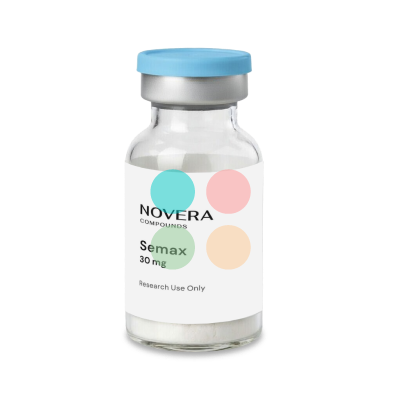
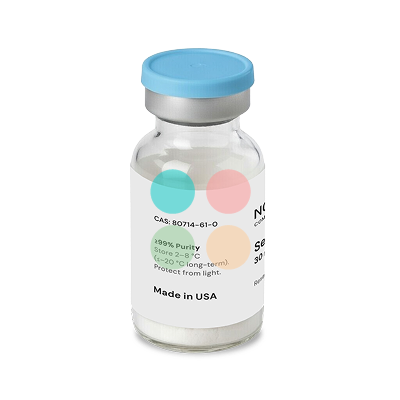
Semax is a synthetic heptapeptide derived from the adrenocorticotropic hormone (ACTH 4-7) fragment, primarily used for cognitive enhancement, memory retention, and neuroprotection in laboratory research. The compound has been studied for applications such as cognitive function and stroke recovery, with published data spanning murine models of rat brain focal ischemia, optic nerve pathology, and mood-related neurotransmitter modulation. Researchers investigating brain health, neuroplasticity, and neurotrophic signaling pathways have found this peptide semax to be a valuable tool for probing how brain derived neurotrophic factor and related growth factors shape neural outcomes after injury.
FillerSupplies.com supplies Semax under the Novera brand exclusively for research and laboratory use, available to licensed professionals. When you buy semax peptide through our platform, you receive a compound backed by decades of published scientific investigation – though it remains important to recognize that Semax is not FDA-approved in the United States, and the evidence for its potential benefits is primarily based on small or older studies, particularly from Russia. All product descriptions, dosing references, and mechanistic discussions on this page reflect published literature and are intended to inform research protocols, not clinical treatment decisions.
General Information About Semax
The peptide semax is a seven-residue synthetic peptide with the sequence Met-Glu-His-Phe-Pro-Gly-Pro (often abbreviated as met glu his phe-PGP). Its structure corresponds to the ACTH(4-7) fragment extended at the c terminus by the tripeptide pro gly pro, a modification that substantially increases resistance to proteolytic degradation compared to the parent adrenocorticotropic hormone analogue. This pro gly pro tail is not merely a stabilizing element – the PGP fragment itself exerts independent biological activity, modulating gene expression in ischemia models and contributing to the compound’s functional profile in the central nervous system.
Developed at the Institute of Molecular Genetics in Russia, this synthetic heptapeptide received approval for cerebrovascular indications in that country during the mid-1990s. Outside Russia, the compound remains classified among research peptides without FDA or EMA marketing authorization. Compounded medications like Semax are not FDA-approved, and it can only be legally accessed through a licensed compounding pharmacy with a prescription or acquired for legitimate laboratory investigation.
Several interconnected mechanisms underlie the compound’s observed effects. Semax increases brain-derived neurotrophic factor (BDNF) levels across multiple brain regions, with concurrent upregulation of nerve growth factor, Neurotrophin-3, and their cognate receptors (TrkA, TrkB, TrkC). Beyond neurotrophic signaling, the peptide semax affects serotonergic pathways: Semax exposure has been reported to raise serotonin turnover in the brain, although this line of evidence is thinner than the neurotrophic work and comes largely from Russian-language animal reports. The compound also activates CREB (cAMP response element-binding protein) and suppresses pro-inflammatory and pro-apoptotic markers including JNK, MMP-9, and c-Fos in stroke models, pointing to broad influence on both immune and vascular systems.
Plasma half-life of the parent peptide is notably brief – estimated at 2–5 minutes in animal models regardless of administration route – due to rapid enzymatic degradation. Functional effects in the central nervous system persist much longer (hours), attributed to the PGP metabolite’s sustained presence in brain tissue and its capacity to regulate downstream gene expression over an extended period. By contrast, the parent ACTH molecule retains steroidogenic hormonal activity through its full-length sequence; Semax avoids these endocrine effects entirely because it comprises only the amino acids from positions 4 through 7 plus the stabilizing PGP extension.
Semax Use in the Research Setting
Semax is typically supplied as lyophilized powder for reconstitution or as a pre-formulated solution, and all applications described below pertain to research and laboratory use only.
Neuroprotection and Stroke Recovery
Among the most extensively documented research areas, neuroprotection after ischemic stroke has generated both animal and limited human data for this molecule. In a permanent middle cerebral artery occlusion (pMCAO) rat model, Dmitrieva and colleagues demonstrated that Semax enhanced transcription of neurotrophins and their receptors in the ischemic cortex: Bdnf, TrkC and TrkA rose 3 hours after occlusion, Nt-3 and Ngf at 24 hours, and Ngf was still elevated at 72 hours. Semax triggers gene expression changes in the brain within 20 minutes, and genome wide transcriptional analysis of these models has revealed coordinated shifts in genes related to cell survival, inflammation, and vascular remodeling.
Working in a transient MCAO model, Sudarkina and colleagues (2021) tracked proteins rather than transcripts. Twenty-four hours after occlusion, Semax-treated rats carried more active CREB in subcortical structures including the focus of ischemic damage, less MMP-9 and c-Fos in the adjacent frontoparietal cortex, and less active JNK in both tissues – inflammatory and cell-death signalling suppressed while recovery pathways stayed switched on.
Human data, while limited, exist. In a 2018 clinical study by Gusev et al. published following investigation of 110 ischemic stroke patients (mean age approximately 58 years), Semax was administered at 6,000 µg/day across two 10-day courses separated by a 20-day interval. Treated patients at different stages of recovery showed increased plasma BDNF, and high BDNF levels correlated positively with improvements in Barthel index scores and motor performance, accelerating functional recovery even among patients entering rehabilitation approximately 214 days post-stroke. Compared to other neuroprotective compounds such as Cerebrolysin (a mixture of neurotrophic peptides derived from porcine brain) or Noopept (a dipeptide nootropic), Semax is distinctive in its targeted upregulation of specific neurotrophin receptor subtypes and its additional serotonergic modulation, though direct head-to-head trials remain absent from the English-language literature.
“In a 2018 study by Gusev et al., 110 ischemic stroke patients received Semax at 6,000 µg/day; treated groups showed elevated plasma BDNF that correlated with accelerated functional recovery on the Barthel index, even when rehabilitation began as late as 214 days post-stroke.”
Cognitive Enhancement Research
Semax may enhance focus and working memory, according to animal behavioral paradigms that have assessed learning, sustained attention, and information processing after administration. A 2006 rat study using 50 µg/kg intranasally found a maximal ~1.4-fold increase in hippocampal BDNF protein, ~1.6-fold increase in TrkB phosphorylation, ~3-fold rise in BDNF exon III mRNA, and ~2-fold increase in TrkB mRNA – accompanied by enhanced performance in conditioned avoidance tasks, demonstrating measurable improvement in learning and memory outcomes. These results were reported in murine models only, and translation to human cognitive performance has not been confirmed in controlled trials outside Russian clinical practice.
Regional specificity adds nuance: frontal cortex transcripts appear to rise early after administration, while hippocampal and retinal changes follow delayed or transient kinetics depending on the observation window. Semax may improve cognitive function in murine models of epilepsy as well, though these data come from smaller investigations. Russian imaging work has reported prefrontal cortex activation and default mode network modulation in healthy adults receiving the compound intranasally, but published English-language data on these fMRI findings remain limited as of mid-2026. Nasal administration may improve learning capabilities more effectively than subcutaneous delivery in certain paradigms, likely owing to rapid CNS penetration, though overall systemic bioavailability is lower.
Citation capsule: In 2006, a rat study with Semax at 50 µg/kg intranasally reported ~1.4-fold increase in hippocampal BDNF protein, ~3-fold rise in BDNF exon III mRNA, and enhanced conditioned avoidance performance – evidence of brain function improvement via neurotrophic signaling, published and indexed via PubMed (PMID 16996037).
Mood and Anxiety Studies
The compound’s influence on emotional balance and anxiety-related behavior stems primarily from its modulation of monoaminergic systems. Rat work points to increased turnover of serotonin in the striatum rather than a simple release of it, though the published measurements are few and none carry a peer-reviewed English-language source. Dopamine and its metabolites showed less pronounced changes unless combined with pharmacological challenge (e.g., amphetamine co-administration), suggesting that serotonergic pathways carry more of the stress response and mood-modulating signal.
Enkephalin enzyme inhibition represents another mechanism: in human serum in vitro, both Semax and related compounds inhibit enkephalin-degrading enzymes with an IC₅₀ of approximately 10 µM, which could theoretically prolong endogenous enkephalin action and contribute to anxiolytic effects. Clinical or behavioral confirmation in humans remains sparse.
Semax is not viewed as an established, low-risk nootropic due to limited human safety data, and caution is required when combining Semax with antidepressants or stimulants, given the overlapping serotonergic mechanisms. The compound should be avoided in individuals with active psychotic disorders or severe psychiatric instability.
A growing body of preclinical work has also examined n acetyl semax amidate (Ac-Semax), a modified variant with enhanced proteolytic resistance. The table below summarizes key differences relevant to research settings:
|
Feature
|
Semax (Unmodified)
|
N-Acetyl Semax Amidate
|
|
Proteolytic Stability
|
Rapid parent peptide degradation (minutes in plasma); PGP metabolite partially stable in tissue
|
N-acetyl and amidate modifications confer greater exopeptidase resistance; likely longer functional duration in animal models
|
|
Effective Dose (Animal Models)
|
50–100 µg/kg in rat models; 100 µg/kg IP for stroke neuroprotection with multiple dosing points
|
Doses may be lower in some protocols due to increased potency and stability; precise comparative data remain limited
|
|
Behavioral / Cognitive Data
|
Documented learning and memory improvements; serotonin metabolite increases; conditioned avoidance enhancement
|
Mood and anxiety modulating potential remains speculative; fewer published behavioral studies as of 2026
|
|
Regulatory Status
|
Approved for clinical use in Russia; research-only elsewhere
|
Research compound only; no regulatory approvals in any jurisdiction
|
Optic Nerve and Neuroinflammation
Research on optic nerve pathology has yielded some of the most striking clinical case data. A Russian patent (RU2157258C1) describes intranasal Semax (0.1% solution) administered at 1,200 µg/day in three doses over 7 days for patients with optic neuritis and optic nerve atrophy. In treated cases, visual acuity improved substantially, visual field boundaries expanded, and electrophysiological indices of optic nerve function showed measurable gains.
“Against the background of basic therapy, a 0.1% solution of Semax in the nose was prescribed at a dose of 1,200 µg per day in three doses for seven days … visual acuity was restored to 0.9 … visual field boundaries increased from 234.3 ± 12.5 to 327.4 ± 14.1 total degrees in 25 of 30 eyes (83.3%).”
In a 2014 glaucoma study by Strakhov, Popova, and Fedorov, 36 patients (72 eyes) with primary open-angle glaucoma received 0.1% semax nasal spray alongside standard intraocular pressure therapy. After one month of treatment, no negative structural changes were observed in the optic nerve head or corneal nerve plexus, and functional state assessed by perimetry did not worsen. Semax nasal spray is generally well-tolerated in studies, and this trial confirmed an acceptable safety profile over the observation period. The neuroprotective effects in ocular tissue likely stem from BDNF and nerve growth factor upregulation, with potential suppression of neuroinflammation in perioptic regions – mechanisms also relevant to optic neuritis in multiple sclerosis models.
Administration Route Studies
Two primary routes dominate published protocols: intranasal delivery via nasal spray and subcutaneous or intraperitoneal injection. Each route offers distinct advantages that vary based on the experimental objectives.
Intranasal administration produces remarkably rapid CNS penetration – intact parent peptide has been detected in rat brain within approximately 2 minutes of nasal dosing. A 30mg semax nasal spray delivers 300mcg per pump, and one 30mg nasal spray bottle lasts 50 days at two pumps daily (semax nasal spray costs $76.99 for a 30mg bottle). Semax nasal spray is easy to administer, making it the preferred route in many behavioral paradigms. Systemic bioavailability, however, is low – estimated at only 5–10% relative to parenteral dosing due to extensive proteolysis in nasal mucosa.
Subcutaneous injections provide precise and reliable dosing with higher systemic bioavailability and more sustained plasma concentrations, peaking at approximately 30–60 minutes post-injection. A 30mg vial of Semax injections costs $76.48, and semax injections are priced lower than nasal spray for bioavailability when total absorbed dose is considered. Injectable Semax may cause pain and skin irritation at the injection site, and more research is needed on Semax injection safety over repeated administration across an extended period. The first few days of any injection protocol in animal studies typically involve monitoring for local tissue reaction.
|
Parameter
|
Intranasal (Nasal Spray)
|
Subcutaneous / Intraperitoneal
|
|
Onset to CNS Detection
|
~2 minutes (rat brain); rapid functional onset
|
30–60 minutes to peak plasma/tissue levels
|
|
Systemic Bioavailability
|
Low (5–10%); significant nasal mucosal degradation
|
Higher; less enzymatic loss; greater total exposure
|
|
Duration of Functional Effect
|
Shorter peak; neurotrophin gene expression persists hours
|
Extended effect window; suited for sustained observation protocols
|
|
Practical Considerations
|
Non-invasive; easy to administer; reliable dosing per pump
|
Precise dose control; potential injection site irritation
|
Important to Know: Semax is not currently listed on the WADA prohibited substances list. However, because the compound modulates neurotrophic factors and shares signaling pathways with agents that regulatory bodies monitor (e.g., growth factors), researchers working in sports science or with athlete-adjacent populations should verify current compliance requirements before designing protocols. Semax nasal spray has not been evaluated by the FDA for safety, and compounding pharmacies providing the compound operate outside FDA new-drug approval processes.
Buy Semax Online at FillerSupplies.com
When you’re ready to buy semax for your laboratory, FillerSupplies.com offers a dependable source for this semax peptide and related compounds under the Novera brand. Whether you need to buy semax peptide in lyophilized powder form, as a reconstituted solution, or as a semax nasal spray, our catalog is built for researchers who require consistent potency, proper cold-chain handling, and responsive vendor support. For those looking for where to buy semax peptide from a trusted supplier, semax peptide buy online through FillerSupplies provides:
-
Authentic, certified products – original, quality-controlled compounds, warehouses worldwide.
-
11 years of reliability & trust – established supplier on the market since 2006.
-
Temperature-controlled shipping – thermal packaging with ice gel / cold packs preserves stability.
-
Express worldwide shipping – next-day dispatch, global delivery.
-
Best wholesale prices – tiered bulk discounts and price-match guarantee.
-
Privacy guaranteed; expert support at (888) 392-6640, WhatsApp and email, Mon-Fri 10am-6pm EST.
-
Supplied for research use only, to licensed professionals.
All Semax products sold through FillerSupplies.com are intended for research and laboratory use only and should be stored according to manufacturer guidelines to preserve quality and efficacy across your experimental timeline.
Related research peptides available at FillerSupplies.com: Selank, Dihexa, PE-22-28.
FAQ
What Is Semax Peptide and What Is It Studied For?
Semax is a synthetic heptapeptide consisting of seven amino acids (Met-Glu-His-Phe-Pro-Gly-Pro), developed as an analogue of the ACTH(4-7) fragment. It is primarily used for cognitive enhancement, memory retention, and neuroprotection in research settings, with additional investigation into stroke recovery, optic nerve pathology, and mood modulation.
How Does Semax Work Mechanistically?
The peptide semax affects multiple signaling cascades: it upregulates brain derived neurotrophic factor and nerve growth factor expression, activates CREB phosphorylation, and suppresses pro-inflammatory markers like JNK and MMP-9 in ischemia models. Semax has also been reported to shift serotonin turnover in the striatum, on the basis of a small number of animal reports.
What Is the Difference Between Semax and N-Acetyl Semax Amidate?
N acetyl semax amidate features chemical modifications at both termini that increase resistance to enzymatic degradation, potentially extending functional duration compared to unmodified Semax. Fewer published behavioral and efficacy studies exist for the amidate variant, and it holds no regulatory approvals in any jurisdiction - making it strictly a research compound.
What Doses Are Used in Published Research Models?
Animal studies typically employ 50–100 µg/kg in murine models: 50 µg/kg intranasally for cognitive paradigms and 100 µg/kg intraperitoneally for stroke neuroprotection with multiple dosing points. In the Gusev et al. 2018 human stroke study, patients received 6,000 µg/day across two 10-day courses separated by a 20-day interval.
How Should Semax Be Stored and Reconstituted for Laboratory Use?
Lyophilized powder should be stored at –20°C for long-term stability. Once reconstituted in bacteriostatic water or sterile saline, the solution should be refrigerated at 2–8°C and used within the timeframe specified by the supplier to maintain potency.
Is Semax Safe Based on Current Research?
Semax nasal spray is generally well-tolerated in published studies, and the 2014 glaucoma trial (36 patients, one month) reported no negative structural or functional changes. However, the compound is not viewed as an established, low-risk nootropic due to limited human safety data, and it should be avoided in individuals with active psychotic disorders or severe psychiatric instability. Potential risks include local irritation with injectable formulations.
Is Semax on the WADA Prohibited Substances List?
As of mid-2026, Semax does not appear on the WADA prohibited list. Researchers in sports science contexts should nonetheless verify current regulations, given that neurotrophic agents may attract scrutiny from regulatory bodies monitoring performance-enhancing compounds.