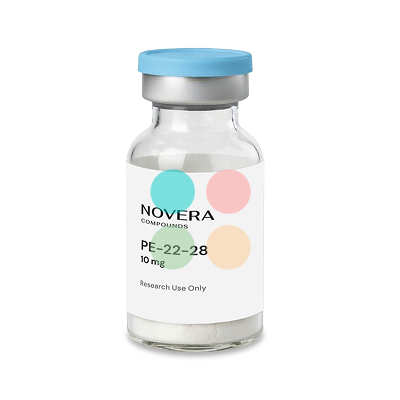
PE-22-28 is a synthetic heptapeptide that selectively inhibits the TREK-1 potassium channel (KCNK2), a two-pore domain K⁺ channel implicated in neuronal excitability and mood regulation. Derived from the naturally occurring peptide spadin through strategic truncation, this compound has attracted significant attention in neuroscience research for its antidepressant-like effects in animal models, its ability to promote neurogenesis, and its markedly improved potency and vivo stability over the parent molecule. Researchers looking to buy PE-22-28 can obtain it as a lyophilized powder intended for controlled experimental settings.
FillerSupplies.com supplies PE-22-28 peptide for sale under the Novera brand exclusively for research and laboratory use by qualified professionals. PE-22-28 is not FDA approved for human use, and no clinical trials have evaluated its safety or efficacy in humans. Every claim discussed on this page derives from preclinical literature-primarily rodent behavioral studies and in vitro electrophysiology-and should not be interpreted as therapeutic guidance for any patient population.
General Information About PE-22-28
PE-22-28 is classified as an investigational peptide, synthesized using solid-phase peptide synthesis methods. Its amino acid sequence-GVSWGLR (Gly-Val-Ser-Trp-Gly-Leu-Arg)-represents residues 22 through 28 of the sortilin propeptide, the same protein from which full-length spadin (PE 12-28, a 17-amino-acid fragment) was originally identified. The compound has a molecular weight of 802.94 Da and a molecular formula of C₃₅H₅₅N₁₁O₉.
At the molecular level, PE 22 28 functions as a selective antagonist of the TREK-1 potassium channel. TREK-1 belongs to the two-pore domain potassium channel family and contributes a background “leak” current that hyperpolarizes neurons, reducing their firing probability. By blocking this channel, PE-22-28 increases neuronal excitability-a mechanism that parallels the downstream effects of several conventional antidepressant drug classes but acts through an entirely distinct molecular target. Importantly, patch-clamp studies demonstrate that the peptide does not significantly inhibit related K₂P channels such as TREK-2, TRAAK, TRESK, or TASK-1, nor does it affect the hERG cardiac channel, which reduces the theoretical risk of cardiac off-target effects.
Compared to spadin analogs of greater length, PE-22-28 was engineered for improved pharmacokinetic properties. Spadin degrades rapidly in mouse serum because proteases attack its extended N-terminal region; the shortened sequence of PE-22-28 removes these vulnerable residues, yielding a compound with superior stability in biological fluids. Its duration of action exceeds 24 hours post-administration in murine behavioral assays, roughly three times longer than the approximately 7-hour window observed with spadin under equivalent conditions.
PE-22-28 Use in the Research Setting
PE-22-28 is commonly available in lyophilized powder format and is intended for laboratory research only, reconstituted in bacteriostatic water or appropriate buffer prior to use in experimental protocols. Below are the principal research domains where the compound has generated preclinical data.
TREK-1 Channel Inhibition and Selectivity
The core pharmacological property driving interest in PE-22-28 is its extraordinary potency at the TREK-1 channel. In a 2017 study by Djillani et al. published in Frontiers in Pharmacology, in vitro patch-clamp recordings in HEK cells expressing human TREK-1 revealed an IC₅₀ of approximately 0.12 nM for PE-22-28-compared to roughly 40–60 nM for spadin. That represents a greater-than-300-fold increase in inhibition efficiency, meaning researchers can achieve equivalent channel block at substantially lower concentrations.
In vitro patch-clamp work by Djillani et al. (2017) reported that PE-22-28 inhibited the hTREK-1 channel with an IC₅₀ of approximately 0.12 nM, compared to full-length spadin’s IC₅₀ of 40–60 nM, indicating more than 300-fold greater potency in HEK cells expressing human TREK-1 channels.
Selectivity data from the same study confirmed that the peptide produced no meaningful inhibition of TREK-2, TRAAK, TRESK, TASK-1, or hERG channels at concentrations well above its TREK-1 IC₅₀. For laboratories investigating the specific physiological role of TREK-1 in neuronal circuits, this selectivity profile makes PE-22-28 a far more precise pharmacological tool than less selective potassium channel blockers.
|
Property
|
Spadin (PE 12-28)
|
PE-22-28
|
G/A-PE-22-28 (Analog)
|
|
Amino Acid Length
|
17 residues
|
7 residues
|
7 residues (Gly→Ala at position 22)
|
|
IC₅₀ for TREK-1 Inhibition
|
~40–60 nM
|
~0.12 nM
|
~0.10 nM
|
|
Behavioral Effect Duration (Mice, Acute Dose)
|
~7 hours
|
~23 hours
|
~21 hours
|
|
Neurogenesis (Sub-chronic, 4 Days)
|
Significant increase observed
|
Significant increase observed
|
Comparable or greater effect
|
|
Serum Stability
|
Rapid degradation
|
Improved; resistant to N-terminal proteolysis
|
Similar to PE-22-28
|
Antidepressant-Like Activity in Animal Models
Research suggests potential antidepressant-like effects of PE-22-28 in rodent models across several standard behavioral paradigms. Djillani and colleagues (2017) tested the compound in the forced swim test (FST), novelty-suppressed feeding (NSF), learned helplessness, and corticosterone-induced depression models in mice. Intraperitoneal doses as low as 3–4 µg/kg significantly reduced immobility time in the FST, a widely used proxy for antidepressant activity.
PE-22-28’s antidepressant effects last nearly 24 hours following a single acute dose, a finding that distinguishes it sharply from spadin’s approximately 7-hour behavioral window. For researchers modeling treatment-resistant depression or studying dose-response relationships, this extended activity creates a practical advantage-fewer administrations are needed to maintain a consistent pharmacological effect over a 24-hour observation period.
In mice, a single acute intraperitoneal dose of PE-22-28 at 3–4 µg/kg produced antidepressant-like behavior in the forced swim test lasting up to approximately 23 hours, whereas spadin under identical conditions lost efficacy after about 7 hours post-injection (Djillani et al., 2017, Frontiers in Pharmacology).
PE-22-28 shows potential for treating mood disorders and may improve cognitive function related to mood, though these observations remain confined to preclinical animal models. Human safety and efficacy of PE-22-28 remain unknown due to the complete absence of clinical trials. No safety evaluations for PE-22-28 exist in human studies.
<em>Important to Know:</em>
Neurogenesis and Synaptic Plasticity
Beyond acute behavioral effects, PE-22-28 may enhance neurogenesis in animal models. In the 2017 study by Djillani et al., sub-chronic treatment over just 4 days (3–4 µg/kg/day, IP) significantly increased hippocampal neurogenesis in mice, as quantified by BrdU-positive cell counts-a standard marker of newly born neurons in the brain.
Synaptogenesis data add another dimension to the compound’s research profile. In vitro exposure of mouse cortical neurons to 0.1 µM PE-22-28 produced a progressive increase in PSD-95 expression (a postsynaptic density protein and marker of synaptic plasticity) between 5 and 36 hours, roughly doubling by the 36-hour timepoint. PSD-95 upregulation suggests that the peptide may influence the formation and strengthening of excitatory synapses, a process thought to underlie the sustained antidepressant response observed with several novel therapeutic approaches.
These neurogenesis and synaptogenesis findings stand out because conventional antidepressant drug regimens in rodents often require 2–3 weeks of administration before comparable neurogenic effects become apparent. The ability to create measurable changes within 4 days makes PE-22-28 a particularly efficient tool for studying rapid-onset neuroplasticity mechanisms.
Pharmacokinetic Advantages Over Spadin
Spadin, despite being the foundational compound in TREK-1-targeted antidepressant research following its discovery by Mazella et al. in 2010 (Nature Medicine), suffers from significant practical limitations as a research tool. Its 17-amino-acid sequence is vulnerable to rapid serum proteolysis, and its behavioral effects dissipate within hours.
PE-22-28 addresses both problems. HPLC analysis of serum stability confirmed that the shortened spadin analogs display improved resistance to degradation-a direct consequence of removing the N-terminal residues that serve as protease recognition sites. The resulting improvement in vivo stability translates to the compound’s approximately 23-hour duration of behavioral efficacy, which simplifies experimental designs that require sustained TREK-1 inhibition across a full circadian cycle.
Dose-response data from the Djillani et al. (2017) study also revealed that efficacy plateaus beyond certain microgram-per-kilogram thresholds, an important consideration for researchers calibrating dose ranges. Administering the compound via intraperitoneal or intravenous routes has been validated in the published literature; subcutaneous injection and intranasal delivery are discussed in some community and vendor sources but lack peer-reviewed confirmation of absorption, bioavailability, or CNS penetration as of mid-2026.
<em>Important to Know:</em>
Product Specifications
-
Amino Acid Sequence: GVSWGLR (Gly-Val-Ser-Trp-Gly-Leu-Arg)
-
Molecular Weight: 802.94 Da
-
Molecular Formula: C₃₅H₅₅N₁₁O₉
-
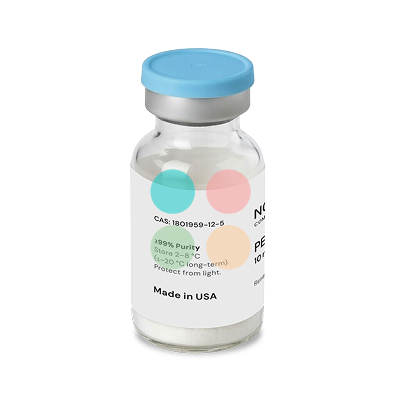
CAS Number: 1801959-12-5 (acetate form)
-
Physical Form: Lyophilized powder requiring reconstitution with bacteriostatic water or suitable buffer solution
-
Purity: HPLC-purified research-grade compound; batch-specific Certificates of Analysis (COA) should confirm purity greater than or equal to 99%
-
Synthesis Method: PE-22-28 is synthesized using solid-phase peptide synthesis methods
-
Storage: Store unopened vials at -20°C or colder, protected from moisture and light; avoid repeated freeze-thaw cycles; aliquot reconstituted solution for short-term use
-
Solubility: Soluble in water and common buffer systems; also documented in acetonitrile and methanol for analytical characterization
-
Research Applications: TREK-1 channel studies, neurogenesis and synaptic plasticity research, antidepressant mechanism investigation, ion channel pharmacology
-
Regulatory Status: Investigational compound for research use only. PE-22-28 is not FDA approved for human use. FDA has not flagged PE-22-28 as a significant safety risk, but no regulatory body has evaluated it for therapeutic or diagnostic purposes.
Who Should Buy PE-22-28
This compound is intended for use in controlled experimental settings by qualified researchers. Ideal purchasers include:
-
Licensed researchers studying TREK-1 potassium channel mechanisms and their influence on neuronal response patterns
-
Neuroscience laboratories investigating hippocampal neurogenesis, synaptic plasticity, and the role of two-pore domain potassium channels in brain physiology
-
Academic institutions focused on novel antidepressant pathways-particularly those seeking alternatives to monoamine-based models-who need a well-characterized, selective TREK-1 antagonist
-
Pharmaceutical research facilities conducting preclinical peptide studies and evaluating spadin analogs as potential drug candidates for mood disorders
-
Electrophysiology labs requiring a high-potency, selective tool compound for patch-clamp experiments on K₂P channels
All purchases must be for research and laboratory use only. PE-22-28 is primarily used in laboratory research settings, and reliability of vendors should prioritize analytical transparency and COA quality. PE-22-28 is available through specialized research chemical suppliers, and purchasing PE-22-28 is primarily through specialized gray-market chemical suppliers when not obtained from established research vendors. PE-22-28 is not available as a prescription medicine in any jurisdiction; it exists only as an investigational compound supplied for laboratory research.
Buy PE-22-28 Online at FillerSupplies.com
When you order PE 22-28 online through FillerSupplies.com, you gain access to a trusted supplier with over a decade of experience serving research professionals worldwide. The best place to buy PE 22-28 is from a vendor that combines product authenticity with temperature-controlled logistics-exactly what the Novera brand delivers. Whether you need a single vial for a pilot study or bulk quantities for an extended protocol, FillerSupplies.com offers PE-22-28 peptide for sale with efficient order processing and responsive expert support.
-
Authentic, certified products – original, quality-controlled compounds, warehouses worldwide.
-
11 years of reliability & trust – established supplier on the market since 2006.
-
Temperature-controlled shipping – thermal packaging with ice gel / cold packs preserves stability.
-
Express worldwide shipping – next-day dispatch, global delivery.
-
Best wholesale prices – tiered bulk discounts and price-match guarantee.
-
Privacy guaranteed; expert support at (888) 392-6640, WhatsApp and email, Mon–Fri 10am–6pm EST.
-
Supplied for research use only, to licensed professionals.
Buy PE-22-28 peptide from FillerSupplies.com and ensure your laboratory receives a high-quality, properly handled compound suitable for rigorous TREK-1 channel research. All orders are filled with the understanding that this investigational peptide is intended for research use only-not for human consumption, therapy, or diagnostic application.
Related research peptides available at FillerSupplies.com: Semax, Selank, Dihexa.
FAQ
Is PE-22-28 Safe For Human Use?
PE-22-28 has not been evaluated in human clinical trials, and no safety data exist for its use in people. All published evidence on this compound comes from animal models and in vitro electrophysiology experiments. Researchers should consult institutional review guidelines and note that the peptide is sold exclusively for laboratory research, not for any form of human treatment or self-administration.
How Does PE-22-28 Work At The Molecular Level?
The compound selectively inhibits the TREK-1 potassium channel (KCNK2), a two-pore domain K⁺ channel that normally hyperpolarizes neurons through a background leak current. Blocking this channel increases neuronal excitability, which in animal models correlates with antidepressant-like behavioral outcomes. Djillani et al. (2017) demonstrated an IC₅₀ of approximately 0.12 nM against human TREK-1 in HEK cell patch-clamp assays, with no significant inhibition of related channels like TREK-2 or hERG.
How Does PE-22-28 Compare To Spadin?
PE-22-28 is a truncated, more potent derivative of the naturally occurring peptide spadin. Its IC₅₀ for TREK-1 inhibition is over 300-fold lower than spadin's (~0.12 nM vs. ~40–60 nM), and its behavioral effects in mice persist for approximately 23 hours compared to spadin's 7-hour window. The shortened sequence also confers greater serum stability by eliminating protease-susceptible N-terminal residues present in full-length spadin.
What Dose Ranges Have Been Used In Animal Research?
Published studies by Djillani et al. (2017) employed intraperitoneal doses of 3–4 µg/kg in mice for both acute behavioral tests (forced swim test, novelty-suppressed feeding) and sub-chronic neurogenesis protocols over 4 days. Dose-response curves showed efficacy plateaus above certain thresholds. These figures apply only to murine research models and should not be extrapolated to suggest any dose for human use.
How Should PE-22-28 Be Stored And Reconstituted?
Store the lyophilized powder at -20°C or colder in a moisture-free, light-protected environment. For reconstitution, dissolve in bacteriostatic water or a suitable buffer at neutral to slightly acidic pH, taking care to avoid protease contamination. Aliquot the resulting solution to prevent repeated freeze-thaw cycles, which can degrade peptide integrity over time.
Is PE-22-28 Banned By WADA Or Other Athletic Regulatory Bodies?
As of mid-2026, PE-22-28 is not specifically listed on the WADA prohibited substances list, and no doping investigations involving this compound have been publicly reported. However, the absence of an explicit listing does not constitute approval for athletic use. Researchers should discuss current prohibited-substance regulations with the relevant authority before incorporating any investigational compound into sports-related research.
What Is The Regulatory Status Of PE-22-28?
PE-22-28 is classified as an investigational peptide. It is not FDA approved for therapeutic, diagnostic, or veterinary use, and it has not entered any phase of clinical trials. FDA has not flagged PE-22-28 as a significant safety risk, but this reflects the absence of regulatory review rather than a positive safety determination. The compound is sold for research use only by qualified professionals in appropriate research settings.