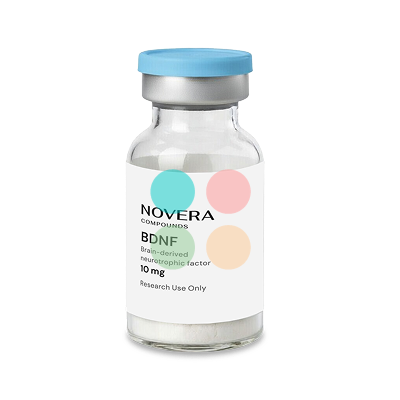
Brain-derived neurotrophic factor (BDNF) is a member of the neurotrophin family of growth factors that promotes survival of hippocampal and cortical neurons, regulates synaptic plasticity and transmission in the central nervous system, and drives neurogenesis in adult brain tissue. Researchers studying adaptive neuronal responses-including long term potentiation, dendritic remodeling, and memory consolidation-rely on human recombinant BDNF as an exogenous tool to probe these mechanisms in vitro and in vivo. The protein’s well-characterized signaling through the tropomyosin receptor kinase B (TrkB) receptor makes it indispensable for investigations into neuroprotection, cell proliferation, and neural regeneration.
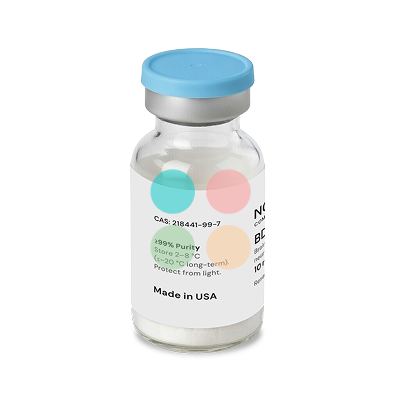
This derived neurotrophic factor BDNF product is supplied by FillerSupplies.com under the Novera brand, intended strictly for research and laboratory use by licensed professionals. It is not intended for therapeutic administration in humans. Researchers looking to buy BDNF for laboratory applications will find detailed scientific context below, along with ordering information and storage guidance.
General Information About BDNF
BDNF is initially synthesized as a pre-pro-protein of approximately 247 amino acids. After cleavage of the signal peptide and pro-domain, the mature form consists of 119 amino acid residues that assemble into a homodimer-a 27 kDa dimer formed by two identical subunits. The protein is expressed in the hippocampus and cortex, where it supports neuronal differentiation, survival, and synaptic transmission across diverse populations of neurons.
As a member of the classical neurotrophin family alongside nerve growth factor (NGF), NT-3, and NT-4/5, BDNF shares structural homology with these related growth factors but displays distinct receptor selectivity. The mature peptide binds primarily to TrkB, while NGF signals through TrkA and NT-3 preferentially activates TrkC with some cross-binding to TrkB in certain forms. All four neurotrophins also bind with lower affinity to the p75 neurotrophin receptor (p75^NTR), which can mediate opposing biological activity depending on the cellular context and concentration present.
The mechanism of action begins when the BDNF homodimer binds TrkB, inducing receptor dimerization and autophosphorylation. Three major downstream cascades follow: PI3K/Akt signaling drives neuronal survival by suppressing apoptotic pathways; MAPK/ERK activation promotes synaptic plasticity, differentiation, and gene expression changes; and PLCγ triggers intracellular calcium release. Transcription factor CREB (cAMP response element-binding protein) is subsequently activated, driving regulation of genes tied to long term potentiation, dendritic spine density, and receptor trafficking at synapses.
Stability data are important for researchers planning experimental timelines. Radiolabeled human BDNF shows a serum half-life of approximately 72 minutes due to proteolytic degradation, as determined in pharmacokinetic studies. Under storage conditions, plasma samples collected in K2EDTA tubes and held at −20°C or −80°C maintain reliable BDNF measurements for up to 6 months, though repeated freeze thaw cycles significantly degrade recovered concentration. Callahan et al. demonstrated in 2001 that the addition of NaCl to buffered formulations enhances conformational and shelf stability of the compound, preserving the homodimeric state and reducing monomer degradation. Sequence homology across species is high-mature human BDNF shares greater than 90% identity with mouse and rat orthologs, enabling cross-species use of human recombinant protein in rodent models and cell culture systems.
BDNF Use in the Research Setting
Recombinant BDNF is typically supplied as a lyophilized powder for reconstitution, produced using an insect cell expression system. All applications described below are for research use only in laboratory and preclinical settings.
Neuroplasticity and Synaptic Function
BDNF is essential for long-term memory storage in the hippocampus and regulates synaptic plasticity and transmission in neurons throughout the central nervous system. In a 1999 study, Gottschalk and colleagues demonstrated in neonatal rat hippocampal slices that application of exogenous BDNF attenuated synaptic fatigue at CA1 synapses during high-frequency stimulation. The effect required activation of both MAPK (ERK) and PI3K signaling but not PLCγ, underscoring the specificity of downstream pathways involved in short term synaptic plasticity modulation.
“In neonatal hippocampal slices, application of BDNF rapidly activated MAPK and PI3K … Neurotrophin-3 … did not activate MAPK or PI3K and had no effect on synaptic fatigue.”
BDNF is involved in adaptive neuronal responses like long-term potentiation, the cellular correlate of learning and memory. Through ERK-mediated phosphorylation of CREB and PI3K/Akt signaling, the peptide increases dendritic spine density and drives AMPA/NMDA receptor trafficking to synapses in hippocampal neurons-effects confirmed across multiple in vitro preparations. NT-3, by contrast, did not produce equivalent changes in the same experimental paradigm. These findings position BDNF as the most potent neurotrophin for studies of synaptic function in hippocampal and cortical neurons, although nerve growth factor retains importance for cholinergic neuron survival research.
BDNF is correlated with improvements in working memory and processing speed in animal behavioral models, reinforcing its role in cognitive neuroscience research. Low BDNF levels are observed in individuals with chronic stress or low mood, making the molecule a subject of intense preclinical investigation-though all exogenous administration studies remain confined to animal and in vitro systems.
Neurogenesis and Neural Development
During development, the expression patterns of neurotrophins diverge significantly. NT-3 is highly expressed in regions of active neurogenesis, migration, and differentiation during embryonic and neonatal periods, while BDNF expression remains low early and increases with maturation. In the adult hippocampus, BDNF expression is high and correlates with sustained neuronal survival and plasticity.
BDNF enhances differentiation of neural progenitor cells into neurons-a finding with direct relevance to stem cell research. Human iPSC-derived neural progenitor cells cultured with recombinant BDNF (typically at concentrations of 50–100 ng/mL) show increased neurite length, branching, and commitment to neuronal lineages versus untreated controls. The EC50 for BDNF promoting neuroblastoma cell proliferation is 5 ng/mL, providing researchers a concrete benchmark for dose-response analysis by western blot, SDS PAGE, or immunocytochemistry.
Citation Capsule: Human recombinant BDNF has an EC50 of 5 ng/mL for promoting cell proliferation in neuroblastoma assays, establishing a quantitative threshold that guides concentration selection in neural differentiation and neurogenesis studies across diverse in vitro model systems.
Neuroprotection Research
Exogenous BDNF promotes survival of dorsal root ganglion and hippocampal neurons in multiple injury and disease models studied in vitro and in vivo. The neuroprotective mechanism operates primarily through TrkB → PI3K/Akt signaling, which suppresses caspase activation, reduces oxidative stress, and stabilizes mitochondrial function. Preclinical models of ischemia, spinal cord injury, and neurodegenerative conditions consistently demonstrate increased neuronal survival when BDNF is administered soon after the insult.
The ability of BDNF to protect cortical neurons from excitotoxic and oxidative damage has been documented in multiple cell culture systems. These findings, while promising, remain limited to animal and in vitro settings. Brain-Derived Neurotrophic Factor (BDNF) cannot cross the blood-brain barrier intact when ingested orally, which presents a significant delivery challenge and has spurred research into alternative administration strategies such as intracerebroventricular infusion, viral vector delivery, and nanoformulations.
Cognitive Function and Memory Studies
Animal studies using intrahippocampal BDNF infusion consistently report improvements in hippocampal-dependent memory tasks, including spatial navigation in the Morris water maze and contextual fear conditioning. BDNF knockout models and Val66Met polymorphism variants show impaired long term potentiation and decreased memory consolidation, effects that TrkB activation or exogenous BDNF administration can restore. BDNF is essential for long-term memory storage in the hippocampus, with the molecule’s dysregulation linked to cognitive deficits across multiple paradigms.
|
Property
|
BDNF (TrkB)
|
NGF (TrkA)
|
NT-3 (TrkC / TrkB cross)
|
|
Primary role in cognitive research
|
Strong facilitation of LTP; required for maintenance of synaptic strength and memory consolidation in hippocampus
|
Modest effect on LTP; primarily supports cholinergic neuron survival rather than synaptic potentiation
|
Less effective in LTP; high expression in immature regions; limited effect on synaptic fatigue
|
|
Key receptor pathway
|
TrkB → MAPK/ERK, PI3K/Akt, PLCγ
|
TrkA → MAPK/ERK, PI3K/Akt
|
TrkC → MAPK/ERK (weaker activation in hippocampal slices)
|
|
Memory model evidence
|
Restores spatial memory in knockout/polymorphism models; enhances contextual fear conditioning
|
Supports basal forebrain cholinergic function; indirect role in spatial learning
|
Limited direct evidence for memory enhancement; stronger developmental role
|
|
Expression in adult brain
|
High in hippocampus, cortex, and select subcortical regions
|
Lower in adult hippocampus; concentrated in basal forebrain
|
Moderate; declines from developmental peak
|
Supplements marketed for BDNF support do not contain BDNF itself, and clinical evidence that over-the-counter ingredients meaningfully raise brain BDNF remains sparse. Dietary polyphenols help support neurological pathways related to BDNF, and regular aerobic exercise is a strong trigger for increasing natural BDNF levels-lifestyle variables may outperform over-the-counter supplements in boosting BDNF levels. Dietary supplements are not strictly evaluated by the FDA for efficacy before sale, so researchers investigating BDNF biology should rely on recombinant protein rather than other supplements or consumer-grade products.
Neural Regeneration Applications
A 2024 systematic review of animal studies in rats, mouse models, and rabbits found that BDNF-based therapies-administered exogenously or via gene therapy and stem cells-significantly improve axonal regeneration, remyelination, and functional recovery versus controls. These findings span peripheral nerve crush, transection, and delayed repair paradigms.
Boyd and Gordon published a critical dose-response study in 2002 in the European Journal of Neuroscience demonstrating that low doses of BDNF (0.5–2 µg/day for 28 days) promoted motor axon regeneration after delayed nerve repair in rats. Higher doses (12–20 µg/day over the same period) inhibited regeneration, an effect mediated via p75^NTR activation. This biphasic response underscores the importance of precise concentration control in any BDNF research protocol.
Citation Capsule: Boyd and Gordon (2002) determined in a rat delayed nerve repair model that BDNF at 0.5–2 µg/day facilitated motor axon regeneration, while doses of 12–20 µg/day inhibited it through p75^NTR activation, as published in the European Journal of Neuroscience, 15(4), 613–626.
In a separate in vivo study, sciatic nerve transection followed by delayed repair in rats showed that BDNF administration increased axon diameter from approximately 2.43 µm to 2.8 µm and improved functional recovery indices, though statistical significance for some endpoints was borderline. PODS® co-crystals represent one emerging delivery approach, providing sustained release of BDNF to maintain local concentration within the effective range over extended periods.
Low-dose BDNF promoted motor axon regeneration after delayed repair, but high doses inhibited regeneration via p75 receptor signaling-dose and receptor context are critical variables in any regeneration study protocol.
Important to Know: All neural regeneration data cited above derive exclusively from animal studies. No human clinical dosing or therapeutic protocol is established for BDNF. This product is supplied for research use only. Proper handling requires temperature-controlled storage, avoidance of repeated freeze thaw cycles, and reconstitution in buffers containing NaCl to preserve the homodimeric form and biological activity. Analysis by western blot or SDS PAGE is recommended to confirm protein integrity before use in sensitive assays.
Buy BDNF Online at FillerSupplies.com
Researchers ready to buy BDNF for laboratory applications can select from high-quality recombinant protein available through FillerSupplies.com. Whether your work involves neuroplasticity analysis in hippocampal slice preparations, neurogenesis studies in stem cell culture, or peripheral nerve regeneration models in vivo, this BDNF peptide is formulated to support rigorous experimental demands. Add the product to your cart and our team will ensure prompt, temperature-controlled dispatch to preserve compound stability from warehouse to your bench.
-
Authentic, certified products – original, quality-controlled compounds, warehouses worldwide.
-
11 years of reliability & trust – established supplier on the market since 2006.
-
Temperature-controlled shipping – thermal packaging with ice gel / cold packs preserves stability.
-
Express worldwide shipping – next-day dispatch, global delivery.
-
Best wholesale prices – tiered bulk discounts and price-match guarantee.
-
Privacy guaranteed; expert support at (888) 392-6640, WhatsApp and email, Mon–Fri 10am–6pm EST.
-
Supplied for research use only, to licensed professionals.
For documentation, receipt confirmation, or questions about price and availability, contact our support team directly. All BDNF products sold through FillerSupplies.com are intended for research use only by qualified, licensed professionals.
Related research peptides available at FillerSupplies.com: ARA-290, Semax, Selank.
FAQ
Is BDNF Safe To Use in Research Settings?
BDNF is a well-characterized recombinant protein with extensive use in preclinical research. Standard laboratory safety protocols for handling growth factors apply, including proper storage at −20°C or −80°C and reconstitution in sterile, NaCl-containing buffers. The compound is not approved for human therapeutic use.
How Does BDNF Exert Its Biological Activity?
The mature BDNF homodimer binds to TrkB, triggering receptor dimerization and autophosphorylation. Downstream cascades-PI3K/Akt for survival, MAPK/ERK for plasticity and differentiation, and PLCγ for calcium signaling-drive changes in gene expression, dendritic morphology, and synaptic transmission in target neurons.
How Does BDNF Compare to Nerve Growth Factor in Research?
While both are neurotrophins, BDNF binds TrkB and strongly facilitates long term potentiation in hippocampal circuits, whereas nerve growth factor signals through TrkA and primarily supports cholinergic neuron survival. Researchers studying synaptic plasticity and memory generally select BDNF; those investigating peripheral sensory or sympathetic neurons often choose NGF.
What Concentrations Are Used in In Vitro Research?
Dosing varies by experimental model. Many neural differentiation and cell proliferation assays use 50–100 ng/mL in culture medium. Human recombinant BDNF has an EC50 of 5 ng/mL in neuroblastoma proliferation assays, providing a useful starting point for dose-response studies in other cell types.
How Should Reconstituted BDNF Be Stored?
Lyophilized BDNF should be stored at −20°C or −80°C prior to reconstitution. Once reconstituted, aliquot the solution to minimize freeze thaw cycles, which degrade protein integrity. The presence of NaCl in the reconstitution buffer helps maintain the homodimeric form and extends shelf stability, as determined by conformational analysis.
What Is the Regulatory Status of BDNF?
Recombinant BDNF is classified as a research reagent and is not approved by any regulatory agency for therapeutic use in humans. Supplements marketed for BDNF support do not contain the protein itself, and dietary supplements are not strictly evaluated by the FDA for efficacy before sale. Only laboratory-grade recombinant preparations deliver the characterized molecule for controlled studies.
Where Can Researchers Buy BDNF Peptide Online?
Licensed researchers can buy BDNF through FillerSupplies.com, which offers temperature-controlled shipping, wholesale pricing, and global delivery. The BDNF peptide buy process is straightforward: select the product, add to cart, and the team handles next-day dispatch with thermal packaging to preserve the compound's biological activity upon receipt.