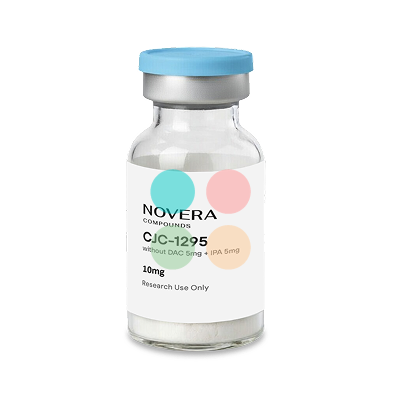
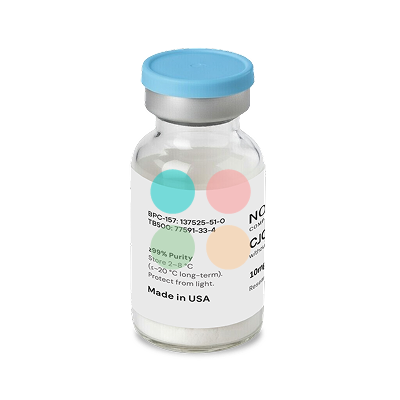
CJC-1295 no DAC + Ipamorelin is a lyophilized peptide blend combining a modified growth hormone releasing hormone (GHRH) analog with a selective growth hormone secretagogue. Together, these two peptides activate complementary signaling pathways on somatotroph cells in the pituitary gland – the GHRH receptor and ghrelin receptors, respectively – producing amplified growth hormone pulses that exceed what either compound achieves alone. Researchers studying GH pulsatile secretion, insulin like growth factor (IGF-1) signaling, body composition, and tissue repair have adopted this ipamorelin peptide blend as a dual-agonist tool for investigating the GH/IGF-1 axis under controlled laboratory conditions.
This cjc 1295 ipamorelin combination is supplied by FillerSupplies.com under the Novera brand strictly for research and laboratory use only. Neither CJC-1295 nor Ipamorelin are FDA-approved for anti-aging or wellness uses, and all findings discussed below should be interpreted within the scope of preclinical or early-phase investigational data. Licensed researchers and medical professionals seeking to buy cjc-1295 ipamorelin peptides online will find detailed mechanistic, pharmacokinetic, and specification data throughout this page.
General Information About CJC-1295 no DAC + Ipamorelin
CJC-1295 no DAC – more precisely called Modified GRF(1-29) or tetrasubstituted GRF(1-29) – is a 29-amino-acid analog designed to mirror the bioactive fragment of human GHRH(1-44). Four amino acid substitutions at positions 2, 8, 15, and 27 protect the molecule from rapid enzymatic degradation, particularly by dipeptidyl peptidase-4 (DPP-IV), and from oxidation. Unlike CJC-1295 with DAC (Drug Affinity Complex), which was originally developed by ConjuChem Biotechnologies to bind albumin and extend circulation time, the no-DAC variant lacks the albumin-tethering moiety. That distinction matters: CJC-1295 with DAC has a half-life of 5.8 to 8.1 days in human trials (Teichman et al., 2006), whereas the no-DAC form has an estimated plasma half-life of approximately 30 minutes based on animal and preclinical data, making it suitable for studies requiring discrete, pulsatile GH stimulation rather than continuous stimulation.
Ipamorelin, identified by the research code NNC 26-0161, is a synthetic pentapeptide first described by Raun et al. in 1998. It functions as a ghrelin receptor agonist (GHS-R1a) that aids in growth hormone secretion without significantly raising cortisol, ACTH, or prolactin – a critical distinction from older GH releasing peptides such as GHRP-6 and GHRP-2. Ipamorelin is a selective growth hormone secretagogue: ipamorelin does not affect other pituitary hormones at GH-stimulating concentrations, giving researchers a cleaner pharmacological probe for the GH axis. In a 1999 human pharmacokinetic trial published by Gobburu et al. in Pharmaceutical Research, ipamorelin administered via subcutaneous injection produced a terminal half-life of about 2 hours, with peak GH release occurring at approximately 0.67 hours post-dose, clearance of 0.078 L/h/kg, and volume of distribution of 0.22 L/kg.
At the molecular level, CJC-1295 no DAC stimulates growth hormone release via GHRH receptors on anterior pituitary somatotroph cells. Binding activates G proteins (Gs), which drive adenylyl cyclase → cAMP → PKA → CREB phosphorylation, ultimately promoting GH gene transcription and secretory granule formation. Ipamorelin engages GHS-R1a through both Gq and Gs protein coupled receptors: the Gq pathway triggers phospholipase C → IP3 → intracellular Ca²⁺ release, causing exocytosis of pre-formed GH granules, while the Gs component contributes additional cAMP as second messengers. When these two peptides are administered together, the GHRH analog primes GH synthesis while the ghrelin receptor agonist triggers rapid granule release – a mechanistic basis for the reported synergistic amplification of GH pulses.
For reference, CJC-1295 (DAC variant) carries the CAS number 446262-90-4, UNII code 62RC32V9N7, and PubChem CID 91971820, with a molecular formula of C₁₆₅H₂₆₉N₄₇O₄₆ and molecular weight of approximately 3647.2 g/mol. The no-DAC form shares the same 29-residue backbone minus the albumin-binding extension. Ipamorelin’s primary literature designation remains NNC 26-0161 as reported by Andersen PH, Raun et al. in the European Journal of Endocrinology (1998).
CJC-1295 no DAC + Ipamorelin Use in the Research Setting
Supplied as a lyophilized powder intended for reconstitution and research and laboratory use only, this ipamorelin blend allows investigators to study dual-pathway GH stimulation across a range of preclinical models. Below are the principal areas of investigation, each supported by mechanistic rationale and available data.
Growth Hormone Pulsatility and IGF-1 Axis Modulation
Because the no-DAC variant clears from circulation within roughly 30 minutes, it generates discrete signaling events rather than sustained release, preserving the natural pulsatile secretion pattern of GH. That characteristic contrasts sharply with CJC-1295 with DAC, which – as Teichman et al. reported in a 2006 study in The Journal of Clinical Endocrinology & Metabolism (j clin endocrinol metab) – produced prolonged stimulation: a 2- to 10-fold increase in plasma GH sustained for 6 or more days, with insulin like growth factor-1 rising 1.5- to 3-fold above baseline for 9–11 days in healthy adults. CJC-1295 can increase growth hormone levels by 46%, based on overnight sampling data from Ionescu and Frohman (2006), who found that single injections of the DAC form at 60–90 µg/kg raised mean GH levels by approximately 46% and IGF-1 by roughly 45% while preserving pulse frequency.
Research Takeaway: CJC-1295 can increase growth hormone secretion by 46% and sustain IGF-1 above baseline for up to 28 days after multiple doses, according to Teichman et al. (2006) in J Clin Endocrinol Metab. Researchers should note, however, that these figures derive from the DAC variant; equivalent controlled human data for Modified GRF(1-29) combined with Ipamorelin remains unpublished.
Claims regarding significant benefits from CJC-1295 and Ipamorelin in combination are not heavily supported by evidence from randomized controlled trials in humans. Most synergy data come from preclinical research models – animal studies and in vitro pituitary cell assays – where co-administration of a GHRH analog and a ghrelin receptor agonist yielded GH pulses larger than either compound alone. Community-sourced reports suggest IGF-1 increases of approximately 20–60% above baseline after repeated combined use, but these figures lack peer-reviewed verification. Controlled human trials specifically evaluating Modified GRF(1-29) plus ipamorelin are a recognized gap in the igf research literature, and the international igf research society and growth hormone research society have highlighted the need for such data.
CJC-1295 is present in plasma beyond 72 hours in its DAC-conjugated form, a property that does not apply to the no-DAC molecule. Researchers must clearly distinguish between these two variants when interpreting published GH and IGF-1 data.
Metabolism, Body Composition, and Fat Metabolism
GH pulses drive lipolysis, modulate insulin sensitivity, and influence nitrogen balance and positive nitrogen balance states – all endpoints of interest in metabolism research. Ipamorelin may increase body weight by approximately 15%, as demonstrated in animal studies where once daily administration of the peptide to steroid treated rats and intact models produced measurable gains in lean mass alongside shifts in fat metabolism. The blend may improve lean body mass and metabolic capabilities through the combined effect of enhanced GH amplitude (via dual receptor activation) and preserved pulsatile frequency (via the no-DAC formulation).
The molecular events downstream of GH binding include activation of JAK-STAT pathways, upregulation of messenger rna for IGF-1 in the liver, and modulation of urea cycle enzymes involved in urea synthesis and nitrogen disposal. A 2009 proteomic study of serum from healthy men following CJC-1295 with DAC injection (published in Proteomics – Clinical Applications) identified changes in serum proteins correlated with IGF-1 elevation, pointing toward biomarkers of GH action that extend beyond IGF-1 itself.
Citation Capsule: In animal models, ipamorelin can increase body weight by approximately 15% through selective GH axis activation without measurably raising cortisol or prolactin, as reported by Raun et al. (1998) in European Journal of Endocrinology. Ipamorelin appears to spare stress-axis hormones even at doses that strongly stimulate GH release, a property that distinguishes it from GHRP-6 and GHRP-2.
|
Parameter
|
CJC-1295 no DAC (Mod GRF 1-29)
|
CJC-1295 with DAC
|
Ipamorelin
|
|
Receptor Target
|
GHRH receptor (GHRHR)
|
GHRH receptor (GHRHR)
|
Ghrelin receptor (GHS-R1a)
|
|
Half-Life
|
~30 min (animal/preclinical)
|
5.8–8.1 days (human trials)
|
~2 hours (human volunteer trial)
|
|
GH Release Pattern
|
Discrete, pulsatile
|
Sustained, elevated baseline
|
Acute pulse, transient
|
|
Effect on Cortisol/Prolactin
|
Minimal (GHRH-selective)
|
Minimal (GHRH-selective)
|
No significant elevation
|
|
Reported GH Increase
|
Preclinical; no human RCT data
|
2–10× for ≥6 days; 46% mean increase
|
Dose-dependent acute pulse
|
|
IGF-1 Elevation
|
Anecdotal 20–60% (unverified)
|
1.5–3× baseline for 9–11 days
|
Limited alone; enhanced in combination
|
Musculoskeletal Tissue, Recovery, and Tissue Repair
Animal studies investigating GH’s role in connective tissue have examined tendon, ligament, and bone density outcomes under conditions of elevated GH/IGF-1 signaling. By amplifying GH pulse amplitude without flattening pulse frequency, the cjc 1295 and ipamorelin combination allows researchers to explore whether pulsatile GH patterns support recovery and regeneration differently than tonic GH exposure. Muscle growth, protein synthesis rates, and collagen turnover are common endpoints in such models.
The no-DAC formulation normalizes growth hormone release toward a physiological pattern, avoiding the prolonged receptor occupancy and potential action of receptor desensitization associated with a longer half life molecule like the DAC variant. For investigators focused on tissue repair kinetics, this shorter signaling window may more closely replicate the GH surges observed during natural healing. Potential side effects of elevated growth hormone in research subjects include water retention and headaches, findings consistent with the broader literature on exogenous GH administration. Legal and safety concerns are associated with sourcing peptides from unregulated vendors, and purchasing peptides should be done through licensed medical providers for safety and compound integrity.
<em>Important to Know:</em>
Sleep Physiology and Neuronal Function
GH secretion peaks during slow-wave sleep, and research into sleep quality has used timed GH secretagogue administration to study the relationship between GH pulse amplitude, sleep architecture, and neuronal function. The short-acting profile of Modified GRF(1-29) combined with ipamorelin’s approximately 2-hour half-life allows precise timing of subcutaneous injection relative to sleep onset, enabling researchers to investigate whether amplified GH pulses during specific sleep stages alter markers associated with neuromolecular medicine endpoints such as cognitive function or neural repair. Findings from cold spring harbor perspectives on neuroendocrine regulation provide theoretical grounding for this line of inquiry, though direct clinical evidence for the combination remains preclinical.
Hormone Optimization and Endocrine Regulation Studies
One of the growth hormone secretagogue effects most relevant to endocrine researchers is the ability to dissect feedback loops – somatostatin tone, IGF-1 negative feedback, and cross-talk with other hormones – under controlled conditions. Modified GRF(1-29) acts as a GH releasing hormone analog designed to increase total pituitary rna transcription for GH, while ipamorelin triggers release of stored GH without perturbing ACTH, prolactin, or cortisol. Together, these properties make the blend a pharmacological tool for studying hormone optimization in animal models, including the ghrh knockout mouse, where researchers can assess the contribution of each receptor pathway independently.
Key Observation: Because ipamorelin is a selective growth hormone secretagogue that does not affect other pituitary hormones, and because Modified GRF(1-29) targets only the GHRH receptor, the combination permits isolated study of GH axis dynamics – an advantage over older secretagogues that confound results with cortisol and prolactin responses.
Citation Capsule: Gobburu et al. (1999) reported in Pharmaceutical Research that ipamorelin administered subcutaneously in human volunteers produced a terminal half-life of approximately 2 hours, with clearance of 0.078 L/h/kg and volume of distribution of 0.22 L/kg – confirming ipamorelin’s short-acting, specific binding sites engagement on GHS-R1a ghrelin receptors.
Buy CJC-1295 no DAC + Ipamorelin Online at FillerSupplies.com
FillerSupplies.com is the best place to buy cjc 1295 ipamorelin for qualified research professionals. Whether you are evaluating cjc-1295 ipamorelin price for a single protocol or comparing cjc-1295 ipamorelin cost per month clinic-scale studies, FillerSupplies offers competitive wholesale pricing on this cjc-1295 combined with ipamorelin for sale under the Novera brand. Buy ipamorelin cjc 1295 with confidence from a supplier that has served the research community for over a decade.
-
Authentic, certified products – original, quality-controlled compounds, warehouses worldwide.
-
11 years of reliability & trust – established supplier on the market since 2006.
-
Temperature-controlled shipping – thermal packaging with ice gel / cold packs preserves stability.
-
Express worldwide shipping – next-day dispatch, global delivery.
-
Best wholesale prices – tiered bulk discounts and price-match guarantee.
-
Privacy guaranteed; expert support at (888) 392-6640, WhatsApp and email, Mon–Fri 10am–6pm EST.
-
Supplied for research use only, to licensed professionals.
All products sold by FillerSupplies.com are intended for research and laboratory use only and are not approved for human therapeutic administration.
FAQ
Is CJC-1295 no DAC + Ipamorelin Safe To Use in Research Settings?
Animal studies and early human pharmacokinetic trials for each peptide individually have not identified acute toxicity at standard investigational doses. Potential side effects of elevated growth hormone observed in research models include water retention and headaches. No published randomized controlled trial has assessed long-term safety of the combined no-DAC + ipamorelin protocol in humans, and researchers should monitor GH and IGF-1 levels alongside metabolic markers.
How Does the Mechanism of CJC-1295 no DAC + Ipamorelin Differ From Other GH Peptides?
CJC-1295 no DAC activates the GHRH receptor to prime GH gene transcription and granule synthesis, while ipamorelin engages ghrelin receptors to trigger exocytosis of stored GH. Older secretagogues like GHRP-6 stimulate cortisol and prolactin alongside GH, whereas ipamorelin is a selective growth hormone secretagogue that spares these axes. The dual-pathway approach of these two peptides produces larger GH pulses than either compound alone in preclinical studies.
How Does CJC-1295 no DAC Compare to CJC-1295 With DAC?
The DAC variant binds albumin, creating a long acting analog with a half-life of 5.8 to 8.1 days that produces continuous stimulation and sustained baseline GH elevation. Modified GRF(1-29) lacks the albumin tether, giving it an estimated half-life of roughly 30 minutes, which supports discrete pulsatile secretion. Researchers interested in mimicking natural GH rhythms typically prefer the no-DAC form, while DAC studies focus on prolonged stimulation protocols.
What Research Doses Have Been Studied?
In the 2006 Teichman et al. trial, CJC-1295 with DAC was administered at 30–60 µg/kg subcutaneously in healthy adults. Gobburu et al. (1999) used escalating doses of ipamorelin via subcutaneous injection in human volunteers to characterize pharmacokinetics. No standardized dosing protocol exists for the no-DAC + ipamorelin combination; researchers typically derive experimental concentrations from these foundational studies and adjust for their specific research models.
How Should CJC-1295 no DAC + Ipamorelin Be Stored and Reconstituted?
The lyophilized powder should be stored refrigerated at 2–8 °C prior to reconstitution. Reconstitution is typically performed using sterile bacteriostatic water or saline under aseptic conditions. After reconstitution, the solution should be used promptly or stored frozen for short-term stability, as human-trial-verified stability durations for this combination have not been established.
Is CJC-1295 no DAC + Ipamorelin Prohibited Under Anti-Doping Rules?
Yes. Growth hormone secretagogues and GH releasing hormone analogs are prohibited at all times under WADA's official journal of prohibited substances, both in- and out-of-competition. Researchers conducting studies involving human athletes or sport-related protocols must account for detection windows and regulatory compliance.
Where Is the Best Place To Buy CJC-1295 no DAC + Ipamorelin Online?
FillerSupplies.com offers this blend under the Novera brand with temperature-controlled shipping, tiered wholesale pricing, and express worldwide dispatch. Purchasing peptides should be done through licensed medical providers for safety, and FillerSupplies has served as an established supplier since 2006. Contact their support team at (888) 392-6640 for bulk or institutional orders.