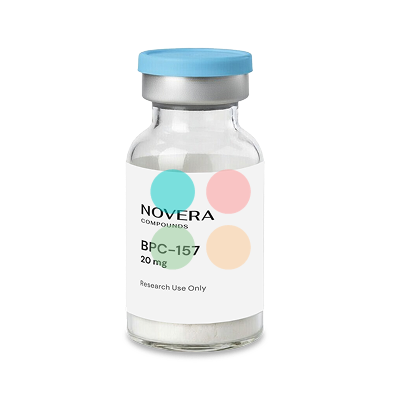
BPC-157 (body protection compound-157) is a synthetic peptide derived from a protective protein fraction found in human gastric juice, consisting of 15 amino acids that have been extensively studied in preclinical models for tissue repair, gastrointestinal cytoprotection, angiogenesis, and anti inflammatory properties. Most studies on BPC-157 have been conducted in animal models or in vitro, with research demonstrating its ability to promote collagen synthesis, accelerate wound closure, reduce inflammation, and support healing across multiple tissue types – making it one of the most actively investigated peptides in regenerative research.
FillerSupplies.com supplies BPC-157 under the Novera brand exclusively for research and laboratory use by licensed professionals. BPC-157 is not approved by the U.S. FDA for human use and is not legally sold for human consumption in the United States. All products, documentation, and support are oriented toward the research community – ensuring that investigators interested in this peptide can source authenticated compounds with confidence.
General Information About BPC-157
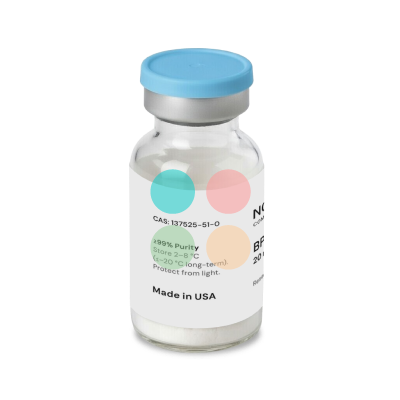
BPC-157 is a synthetic pentadecapeptide with the amino-acid sequence Gly-Glu-Pro-Pro-Pro-Gly-Lys-Pro-Ala-Asp-Asp-Ala-Gly-Leu-Val. Its molecular formula is C₆₂H₉₈N₁₆O₂₂, with a molecular weight of approximately 1,419.5 g/mol and CAS number 137525-51-0. BPC-157 is a partial sequence of a protective protein found in human gastric juice, first isolated and characterized in the early 1990s by Sikiric and colleagues at the University of Zagreb, Croatia. The designation “157” refers to the candidate number assigned during systematic fractionation of BPC protein isolates.
The peptide’s mechanisms of action, as characterized in preclinical research, involve multiple signaling pathways. BPC-157 activates the VEGFR2-Akt-eNOS pathway in endothelial cells, promoting angiogenesis and nitric oxide production – processes central to vascular repair and blood flow restoration. It also modulates FAK-paxillin adhesion signaling, which governs fibroblast cell migration, extracellular matrix remodeling, and collagen deposition in injured tissues. Anti inflammatory effects are mediated through downregulation of NF-κB pathways and reduction of pro-inflammatory cytokine release. Notably, BPC-157 exhibits high stability in gastric conditions (pH 1–2 with pepsin), attributed to the three consecutive proline residues at positions 3–5 that confer conformational rigidity. However, its plasma half-life is brief – under 30 minutes following intravenous administration in animal studies – and oral bioavailability remains poorly characterized.
BPC-157 Use in the Research Setting
BPC-157 is available as a lyophilized powder for reconstitution, and is also offered in oral capsule form and as transdermal patches, all supplied for research and laboratory use only.
#1. Tissue Repair and Wound Healing Research
BPC-157 promotes tissue repair and collagen synthesis across multiple preclinical injury models. BPC-157 enhances fibroblast migration in injury models, as demonstrated by Chang et al. (2011), who showed improved tendon outgrowth and organized collagen deposition via FAK-paxillin signaling in rat Achilles tendon preparations. BPC-157 accelerates wound closure in skin and muscle tissues – dermal incisional wound and burn models in rodents consistently show faster re-epithelialization, improved collagen fiber organization, and reduced scarring compared to controls.
When compared with related peptides such as TB-500 (a fragment of thymosin-β4), BPC-157 demonstrates distinct tissue specificity: BPC-157 research emphasizes tendon, ligament healing, and gastrointestinal mucosal repair, while TB-500 shows stronger evidence in cardiac, corneal, and systemic injury models, operating primarily through actin cytoskeleton modulation and cell migration. GHK-Cu, another peptide studied for tissue regeneration, functions through copper-dependent metalloproteinase activation rather than the VEGFR2/FAK pathways central to BPC-157 activity.
#2. Gastrointestinal Cytoprotection Studies
BPC-157 protects gastric tissues from NSAID-induced injury, as well as damage caused by alcohol and ischemia in preclinical gastric ulcer models. Research has shown that BPC-157 preserves mucosal blood flow, stabilizes membrane integrity, and stimulates angiogenesis within the gastric lining – mechanisms that are relevant to investigations of leaky gut syndrome and mucosal barrier function. In colon anastomosis and fistula models in rats, BPC-157 treatment accelerated healing, improved vascularization, and reduced markers of chronic inflammation. These gut-protective properties distinguish BPC-157 from most other peptides in the regenerative research pipeline, which typically lack gastrointestinal specificity.
#3. Angiogenesis and Vascular Research
BPC-157 upregulates VEGFR2 expression in endothelial cells even in the absence of exogenous VEGF, triggering downstream activation of Akt and eNOS – a cascade that promotes nitric oxide production and new blood vessel formation. In vitro and in vivo studies demonstrate enhanced capillary formation in wound beds and improved blood flow following vascular injury or occlusion. This vascular-focused mechanism of action supports healing and tissue regeneration across multiple organ systems, and is a primary differentiator from peptides such as TB-500, which relies on ILK/PINCH/Akt signaling and actin-based cell migration rather than direct vascular modulation.
#4. Anti-Inflammatory Response Research
BPC-157 reduces pro-inflammatory cytokine release, including TNF-α and IL-6, and decreases infiltration of inflammatory cells in rodent models of acute and chronic inflammation. Its anti inflammatory properties operate through NF-κB pathway modulation and nitric oxide system regulation, offering a mechanistically distinct approach compared to TB-500, which primarily inhibits NF-κB activation to suppress cytokine expression.
“BPC-157 modulates nitric oxide systems and upregulates VEGFR2, representing a vascular-focused anti-inflammatory approach, while TB-500 inhibits NF-κB activation to reduce pro-inflammatory cytokine expression.”
| Attribute |
BPC-157 |
TB-500 (Thymosin-β4 Fragment) |
| Origin |
Synthetic peptide derived from human gastric juice protein |
Fragment of thymosin-β4 (actin-binding domain) |
| Length / MW |
15 amino acids; ~1,419.5 g/mol |
~7 amino acids; ~1,600 Da (variable) |
| Primary Mechanism |
VEGFR2-Akt-eNOS, FAK-paxillin, NO modulation |
Actin cytoskeleton modulation, ILK/PINCH/Akt |
| Anti-Inflammatory Pathway |
NF-κB downregulation, cytokine modulation, NO regulation |
NF-κB inhibition, pro-inflammatory cytokine suppression |
| Key Research Models |
Tendon, ligament, GI mucosal injury, gastric ulcer |
Dermal wound, cardiac repair, corneal injury |
| Stability |
High gastric stability; plasma t½ < 30 min (IV) |
Longer systemic half-life; less gastric stability data |
| Sport/Regulatory Status |
WADA S0 (non-approved substances); prohibited |
WADA S2 (peptide hormones); prohibited |
Important to Know: BPC-157 is banned by the World Anti-Doping Agency (WADA) in and out of competition under the S0 category (non-approved substances). Any athlete or research team working in athletic or performance contexts must be aware that BPC-157 use is prohibited at all times and may result in sanctions. There is a lack of robust long-term clinical trials in humans on BPC-157, and veterinary evidence does not establish safety or efficacy for human use. The FDA has placed BPC-157 on the 503A Category 2 Bulks List due to safety risks, meaning it cannot be used in compounding pharmacies.
#5. Tendon and Muscle Tissue Research
Preclinical studies on Achilles tendon transection in rats demonstrate that BPC-157, administered at doses ranging from 10 ng/kg to 10 µg/kg daily via intraperitoneal or local injections, improves tensile strength, collagen alignment, and overall biomechanical properties compared to controls. BPC-157 also appears to counteract corticosteroid-induced impairment of tendon healing in research models – a finding of particular interest given the widespread clinical use of corticosteroids and their known negative effects on ligaments, muscles, and connective tissues. Research on cell growth and recovery in these models continues to expand our understanding of the peptide’s potential role in musculoskeletal tissue regeneration.
“BPC-157 enhanced tendon outgrowth, cell survival, and cell migration through activation of the FAK-paxillin pathway, resulting in improved biomechanical recovery in preclinical injury models.”
Buy BPC-157 Online at FillerSupplies.com
For researchers and licensed professionals looking for bpc 157 where to buy from a trusted source, FillerSupplies.com is an established supplier offering BPC-157 under the Novera brand. With over a decade in the market, FillerSupplies.com delivers authentic research peptides with the integrity, range, and service that the research community expects – making it the best place to buy bpc 157 for laboratory and investigational applications. You can buy bpc 157 online with confidence through the following advantages:
- Authentic, certified products – original, quality-controlled compounds, warehouses worldwide.
- 11 years of reliability & trust – established supplier on the market since 2006.
- Temperature-controlled shipping – thermal packaging with ice gel / cold packs preserves stability.
- Express worldwide shipping – next-day dispatch, global delivery.
- Best wholesale prices – tiered bulk discounts and price-match guarantee.
- Privacy guaranteed; expert support at (888) 392-6640, WhatsApp and email, Mon–Fri 10am–6pm EST.
- Supplied for research use only, to licensed professionals.
All BPC-157 products shipped by FillerSupplies.com are intended for research and laboratory use only. Consultation with a licensed healthcare professional is encouraged before using unregulated peptides. Quality control for BPC-157 products sold online is often lacking across the broader market – unregulated products may contain impurities or incorrect dosages – which makes sourcing from an established, certificate-backed supplier essential for valid research outcomes.
Related research peptides available at FillerSupplies.com: KPV.
FAQ
What Is the Difference Between BPC-157 10mg and 20mg Vials?
Both vials contain the identical pentadecapeptide; only the amount of lyophilized powder differs. A 20mg vial simply provides twice the material, which lets a laboratory prepare a higher-concentration solution or run a longer series from a single lot.
How Is a 20mg BPC-157 Vial Reconstituted for Research?
Reconstitution volume determines the final concentration: adding 2mL of bacteriostatic water to a 20mg vial yields 10mg/mL, while 4mL yields 5mg/mL. The diluent is directed against the vial wall and the vial is swirled rather than shaken to avoid mechanical stress on the peptide.
Why Do Laboratories Choose the Higher-Strength Vial?
Using one 20mg vial instead of two 10mg vials keeps an entire study series on a single lot, which removes lot-to-lot variability as a confounder. It also reduces the number of reconstitution steps and therefore the opportunities for contamination.
Does the 20mg Presentation Change BPC-157's Stability?
No. In lyophilized form the peptide is notably stable and the fill quantity does not alter that. Stability considerations become relevant only after reconstitution, when the solution should be refrigerated and used within the planned experimental window.
Is a 20mg Vial Suitable for Extended Research Protocols?
Yes. Multi-week animal or in vitro protocols consume material quickly, and the larger fill covers a longer run without reordering. Researchers typically aliquot the reconstituted solution to avoid repeated puncture of a single vial.
How Should Reconstituted BPC-157 Be Stored?
Refrigerate at 2-8 degrees C, protect from light, and use within the defined study period. Repeated freeze-thaw cycles are avoided because they can degrade peptide integrity and introduce variability between experimental runs.
Is BPC-157 Approved for Human Use?
No. BPC-157 is not approved by the FDA for any indication and is classified by the World Anti-Doping Agency as an S0 non-approved substance. All supply is intended strictly for laboratory research by licensed professionals.
- Hsieh, M. J., Liu, H. T., Wang, C. N., Huang, H. Y., Lin, Y., Ko, Y. S., et al. (2017). Therapeutic potential of pro-angiogenic BPC157 is associated with VEGFR2 activation and up-regulation. Journal of Molecular Medicine, 95(3), 323-333. https://doi.org/10.1007/s00109-016-1488-y
- Chang, C. H., Tsai, W. C., Lin, M. S., Hsu, Y. H., & Pang, J. H. (2011). The promoting effect of pentadecapeptide BPC 157 on tendon healing involves tendon outgrowth, cell survival, and cell migration. Journal of Applied Physiology, 110(3), 774-780. https://doi.org/10.1152/japplphysiol.00945.2010
- He, L., Feng, D., Guo, H., Zhou, Y., Li, Z., Zhang, K., et al. (2022). Pharmacokinetics, distribution, metabolism, and excretion of body-protective compound 157, a potential drug for treating various wounds, in rats and dogs. Frontiers in Pharmacology, 13, 1026182. https://doi.org/10.3389/fphar.2022.1026182
- McGuire, F. P., Martinez, R., Lenz, A., Skinner, L., & Cushman, D. M. (2025). Regeneration or Risk? A Narrative Review of BPC-157 for Musculoskeletal Healing. Current Reviews in Musculoskeletal Medicine, 18(12), 611-619. https://doi.org/10.1007/s12178-025-09990-7
- Perovic, D., Kolenc, D., Bilic, V., Somun, N., Drmic, D., Elabjer, E., et al. (2019). Stable gastric pentadecapeptide BPC 157 can improve the healing course of spinal cord injury and lead to functional recovery in rats. Journal of Orthopaedic Surgery and Research, 14(1), 199. https://doi.org/10.1186/s13018-019-1242-6