Retatrutide (LY3437943) is a synthetic peptide engineered by Eli Lilly & Company that functions as a triple agonist at three metabolic receptors – GLP-1R, GIPR, and GCGR – making it one of the most pharmacologically complex incretin-based compounds under active investigation. This GGG tri-agonist is extensively studied for its role in coordinated receptor signaling, intracellular signaling cascades, energy metabolism, and glucose homeostasis research, with phase 2 and phase 3 clinical data demonstrating dose-dependent metabolic effects that exceed those observed with single or dual receptor agonist peptides.
FillerSupplies.com supplies research-grade Retatrutide exclusively for laboratory research use only, providing licensed researchers and medical professionals with high-quality peptide compounds for their investigational studies. This compound is intended strictly for use in controlled laboratory environments and is not approved for human consumption, therapeutic application, or veterinary applications outside of authorized research protocols.
General Information About Retatrutide
Retatrutide is a synthetic peptide composed of 39 amino acids, modified with a C20 fatty diacid (lipidation) that enables albumin binding in plasma and significantly extends its circulating half-life. The compound carries the molecular formula C₂₂₁H₃₄₂N₄₆O₆₈ with a molecular weight of approximately 4,731 daltons (CAS registry number: 2381089-83-2). This lipid modification is a defining structural feature that differentiates retatrutide from shorter, non-acylated research peptides and supports its pharmacokinetic profile in experimental models.
The core mechanism of action centers on balanced triple agonism across three class B1 G protein-coupled receptors. Retatrutide engages GLP-1R, GIPR, and GCGR receptor systems simultaneously, producing coordinated downstream effects: GLP-1R and GIPR activation enhance insulin secretion pathways and suppress postprandial glucagon, while GCGR activation drives increased energy expenditure and hepatic fat oxidation. Cryo-EM structural analysis has revealed that retatrutide maintains conserved receptor-interacting residues common to all three receptors while adapting to receptor-unique residues in extracellular loop regions to stabilize binding across all targets.
Clinical phase 1 and phase 2 data indicate a mean plasma half-life of approximately six days, which supports once-weekly administration in research protocols. Pharmacokinetics are dose-proportional across the studied range. Receptor binding affinity analysis shows EC₅₀ values of approximately 0.0643 nM at GIPR, 0.775 nM at GLP-1R, and 5.79 nM at GCGR – indicating highest potency at the GIP receptor, followed by GLP-1 and then glucagon receptors. Relative to endogenous ligands, retatrutide demonstrates approximately 8.9× greater potency than human GIP at GIPR, ~0.4× the potency of human GLP-1 at GLP-1R, and ~0.3–0.35× the potency of human glucagon at GCGR. Retatrutide is an investigational drug not FDA-approved, and it is still undergoing Phase 3 clinical trials as of mid-2026.
Retatrutide Use in the Research Setting
Retatrutide is supplied as lyophilized powder for research and laboratory use only, enabling investigators to study its unique triple receptor agonist properties across metabolic research, receptor pharmacology, and endocrine pathway analysis.
#1. Multi-Receptor Signaling Research
Retatrutide’s primary value as a research tool lies in its ability to activate GLP-1, GIP, and glucagon receptors in a coordinated manner, enabling researchers to investigate multi-receptor cross-talk and intracellular signaling cascades that cannot be studied with conventional single-target compounds. It is used to study coordinated receptor signaling in metabolic research, and it is utilized in comparative studies of receptor binding dynamics against related peptide agonists.
Unlike semaglutide, which activates GLP-1R only, or tirzepatide, which targets GLP-1R and GIPR as a dual agonist, retatrutide additionally engages GCGR – providing researchers with the ability to investigate how glucagon receptor activation modulates energy expenditure and lipid metabolism when combined with incretin signaling. Preclinical rodent models have demonstrated that this triple receptor approach produces greater weight reduction and enhanced energy expenditure compared to dual agonism alone, effects attributed specifically to the GCGR component.
Structural biology studies using cryo-EM have shown that retatrutide binds all three receptors in similar overall configurations but with specific adaptations in extracellular loops and transmembrane helix 7 regions to accommodate receptor-specific binding sites. This structural data provides researchers with detailed molecular frameworks for understanding how a single peptide achieves balanced agonism across multiple variants of class B1 GPCRs.
<em>Important to Know:</em>
#2. Metabolic Research Applications
In metabolic research, retatrutide has been investigated for its effects on glucose homeostasis, insulin sensitivity, and energy metabolism across multiple experimental paradigms. Phase 2 obesity trials enrolling approximately 338 adults demonstrated dose-dependent weight reduction: at 48 weeks, mean weight loss reached −24.2% in the 12 mg/week group compared to −2.1% with placebo. Lower doses produced proportionally smaller effects, with 1 mg/week yielding approximately −7.2% weight loss at 24 weeks. Over 80% of participants in the highest-dose group achieved ≥15% body weight reduction.
In type 2 diabetes research models, retatrutide improved glycemic control with HbA1c reductions in the range of 1.6–2.1 percentage points at higher doses, alongside substantial weight reduction. These findings suggest coordinated metabolic effects that exceed what has been reported with single or dual receptor agonist compounds in similar study designs.
The TRIUMPH program – encompassing TRIUMPH-1 through TRIUMPH-4 studies with over 5,800 participants – is currently investigating retatrutide’s effects across multiple adiposity-related conditions including metabolic dysfunction-associated steatotic liver disease (MASLD), obstructive sleep apnea, knee osteoarthritis, and cardiovascular outcomes. Most recent topline Phase 3 results show weight loss signals of approximately 28% over 80 weeks at higher dosages.
“In phase 1 and 2 clinical trials, each trial demonstrated greater weight loss with retatrutide treatment in comparison to placebo, with greatest efficacy at higher doses.”
#3. Receptor Pharmacology Studies
Binding affinity analysis across the three target receptors enables researchers to characterize retatrutide’s pharmacological profile with precision using analytical methods such as cell-based reporter assays, radioligand displacement, and surface plasmon resonance. The compound’s EC₅₀ data demonstrate a clear potency gradient – highest at GIPR (0.0643 nM), intermediate at GLP-1R (0.775 nM), and lowest at GCGR (5.79 nM) – which researchers can leverage to investigate how differential receptor activation potencies translate to physiological outcomes in experimental models.
The following comparison table summarizes receptor selectivity data and research applications across the three major incretin-related peptides currently under investigation:
|
Peptide
|
Receptor Profile
|
Studied Weekly Dose Range
|
Max Observed Weight Reduction
|
Regulatory Status
|
|
Retatrutide (LY3437943)
|
GLP-1R + GIPR + GCGR (triple agonist)
|
1–12 mg, with dose escalation
|
~24.2–28% at 48–80 weeks
|
Investigational; Phase 3 ongoing
|
|
Tirzepatide
|
GLP-1R + GIPR (dual agonist)
|
Up to 10–15 mg
|
~18–22% in obesity studies
|
FDA approved
|
|
Semaglutide
|
GLP-1R only
|
2.4–2.8 mg
|
~12–15% in obesity studies
|
FDA approved
|
GCGR activation by retatrutide introduces mechanisms not present in tirzepatide or semaglutide research, including increased hepatic fat oxidation and thermogenesis. However, researchers should note that GCGR activation carries theoretical risk of hyperglycemia if GLP-1 and GIP receptor-mediated insulin effects are insufficient – a consideration that must be accounted for in experimental design and data interpretation.
#4. Laboratory Stability and Handling
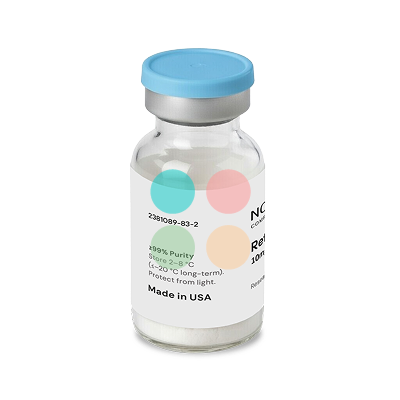
Retatrutide must be stored at −20°C for long-term stability in its lyophilized powder form. Proper storage conditions are essential for maintaining compound integrity across extended research protocols. After reconstitution with bacteriostatic water or sterile saline, the solution should be stored at 2–8°C and used within a defined experimental window. Researchers should avoid repeated freeze-thaw cycles, as these compromise peptide integrity and experimental reproducibility.
Product quality verification is critical for research peptides. Retatrutide purity is verified at ≥99% by HPLC, and mass spectrometry confirms molecular identity. Independent testing is crucial for verifying the purity of research chemicals, as products marketed with vague purity claims should be approached with caution. Reputable suppliers provide Certificates of Analysis for retatrutide, and each batch should include documentation detailing analytical testing results.
Unregulated vendors may sell contaminated or mislabeled retatrutide, and dosage and mixing errors are significant risks when obtaining unregulated formulations. The FDA warns against obtaining unapproved drugs online and has issued warning letters to companies unlawfully marketing retatrutide. Compounded retatrutide is not legally permitted under current federal rules related to the Federal Food, Drug, and Cosmetic Act.
#5. Comparative Research Advantages
Retatrutide’s triple agonist profile provides enhanced research potential versus single-target peptides in laboratory studies of metabolic pathway interactions. The simultaneous activation of GLP-1, GIP, and glucagon receptors enables investigation of receptor synergy effects – specifically, how GCGR-mediated energy expenditure interacts with GLP-1R/GIPR-mediated insulin secretion and appetite regulation pathways.
This broader receptor engagement translates to research applications across endocrine and metabolic pathway analysis, including studies of hepatic lipid metabolism, pancreatic beta-cell function, and central appetite regulation. For researchers studying coordinated metabolic signaling, retatrutide provides a pharmacological tool that no approved compound currently replicates.
“Retatrutide represents a novel approach to studying coordinated metabolic signaling through simultaneous activation of three key receptor pathways, offering researchers unprecedented insight into multi-target therapeutic mechanisms.”
<em>Important to Know:</em>
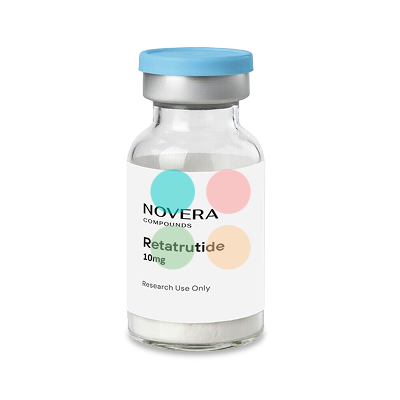
The 10mg Presentation of Retatrutide
This listing supplies Retatrutide as a 10mg vial; the same compound is also offered in 20mg and 60mg. The peptide is identical across strengths, so the choice is about how much material a protocol needs from one lot rather than about the molecule itself.
Working concentration follows directly from the diluent volume. Reconstituting a 10mg vial with 2mL of bacteriostatic water yields 5mg/mL, while 4mL yields 2.5mg/mL. Because concentration depends on both fill and diluent, research protocols document the reconstitution recipe rather than the vial size alone, which is what makes results comparable between strengths.
A 10mg fill is the common starting point for triple-agonist work, giving enough material for a dose-response arm without surplus left over once the vial is reconstituted. Once reconstituted, the solution is refrigerated, protected from light and used within the planned experimental window, regardless of which fill it was prepared from.
Buy Retatrutide Online at FillerSupplies.com
FillerSupplies.com is your trusted chemical supplier for research-grade Retatrutide, offering verified peptide compounds for your investigational laboratory studies. When you buy Retatrutide online from our laboratory supply division, you receive premium research compounds backed by rigorous quality control procedures and detailed documentation. Retatrutide pricing ranges from $99 to $350 per vial depending on quantity, and bulk purchases can reduce costs by 10–20%. Most vendors accept major credit cards and bank transfers, with payment security ensured through encrypted processing systems.
-
Authentic, certified products – original, quality-controlled compounds, warehouses worldwide.
-
11 years of reliability & trust – established supplier on the market since 2006.
-
Temperature-controlled shipping – thermal packaging with ice gel / cold packs preserves stability.
-
Express worldwide shipping – next-day dispatch, global delivery.
-
Best wholesale prices – tiered bulk discounts and price-match guarantee.
-
Privacy guaranteed; expert support at (888) 392-6640, WhatsApp and email, Mon-Fri 10am-6pm EST.
-
Supplied for research use only, to licensed professionals.
Order your research-grade Retatrutide today from FillerSupplies.com and advance your metabolic research with confidence, knowing you’re working with compounds intended strictly for research and laboratory use only. Vendors must comply with FDA regulations for research peptides, and all materials are intended solely for use in controlled laboratory environments by qualified researchers.
Related research peptides available at FillerSupplies.com: Cagrilintide, Tesofensine.
FAQ
Where Can I Buy Retatrutide Online For Research?
You can buy Retatrutide online from FillerSupplies.com, an established chemical supplier offering research-grade peptides exclusively for laboratory research purposes. All products are supplied with documentation and are intended for research use only by licensed professionals. Note that there are no FDA-approved retail sources for retatrutide in the United States, and legitimate supply chains for retatrutide outside of clinical trials do not currently exist for therapeutic use.
What Makes Retatrutide Different From Other Research Peptides?
Retatrutide is unique as a triple receptor agonist targeting GLP-1, GIP, and glucagon receptors simultaneously. Unlike semaglutide (GLP-1R only) or tirzepatide (GLP-1R + GIPR), retatrutide's additional GCGR activation enables researchers to investigate hepatic fat oxidation and energy expenditure mechanisms alongside incretin signaling. This multi-receptor approach opens research applications in coordinated metabolic pathway analysis not possible with single or dual agonist compounds.
How Should Research-Grade Retatrutide Be Stored?
Store lyophilized Retatrutide at −20°C or below for long-term stability. After reconstitution with bacteriostatic water or sterile saline, store at 2–8°C and use within the defined experimental timeline. Protect from light and avoid repeated freeze-thaw cycles to maintain peptide integrity and ensure experimental reproducibility across research protocols.
What Dosing Ranges Have Been Studied In Published Research?
Published phase 2 human studies investigated weekly subcutaneous doses of 1 mg, 4 mg, 8 mg, and 12 mg, with some escalation arms beginning at lower priming doses (e.g., 2 mg escalating upward) to mitigate gastrointestinal effects. Study durations extended to 48 weeks for weight-related endpoints and 80 weeks in recent phase 3 data. Specific research protocols should be developed based on experimental objectives and institutional guidelines.
What Safety Profile Has Been Observed In Clinical Research?
The primary adverse effects observed in clinical trials are dose-dependent gastrointestinal events including nausea, diarrhea, vomiting, and constipation. Dose escalation protocols have been shown to mitigate some of these effects. The long-term safety profile remains under investigation in ongoing phase 3 studies. Health hazards include severe side effects from unregulated drug use, and clinical trials provide the oversight and safety monitoring necessary for participant protection.
Is Retatrutide A Prohibited Substance In Research Contexts?
Retatrutide may be classified as a prohibited substance by sports anti-doping authorities such as WADA once it advances toward therapeutic approval. Researchers should be aware that investigational peptides with metabolic activity are frequently added to banned substance lists. Any use outside of defined research purposes or authorized clinical trials may carry legal and regulatory risk depending on jurisdiction.
What Documentation Should Accompany Research-Grade Retatrutide?
Each batch should include documentation detailing purity levels verified by HPLC, molecular identity confirmed by mass spectrometry, storage recommendations, and batch-specific analytical data. Suppliers should provide detailed documentation for retatrutide products to support experimental reproducibility and compliance with institutional research standards. Products lacking such documentation should be approached with caution.