Oxytocin is a nine-amino-acid peptide hormone synthesized in the hypothalamus and released by the posterior pituitary, functioning both as a circulating hormone and a central neuromodulator. Often called the “love hormone,” this molecule has drawn significant research interest for its roles in social bonding, stress response, sexual behavior, and cardiovascular regulation-particularly in male subjects. Oxytocin can influence bonding and social behavior, and research suggests it also modulates emotional health, mood, and intimacy across mammalian species. Most benefits of oxytocin treatment in men remain experimental, with ongoing studies examining how oxytocin levels affect everything from social cognition to reproductive health.
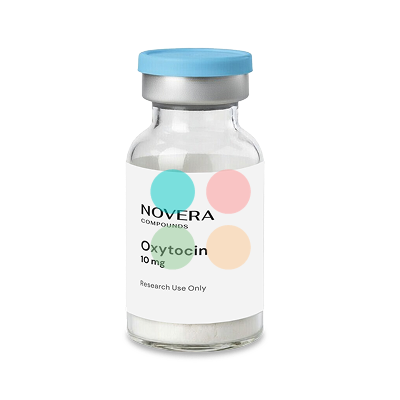
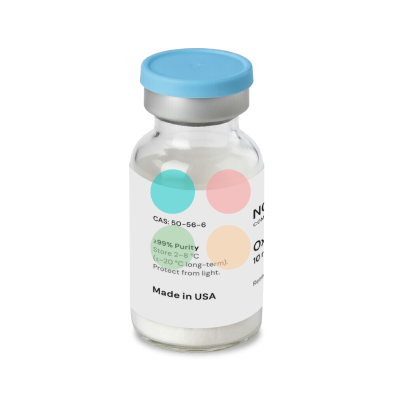
FillerSupplies.com supplies research-grade oxytocin under the Novera brand exclusively for laboratory and research use. Licensed researchers and medical professionals who wish to buy oxytocin for men’s studies can obtain this compound in lyophilized powder form, suitable for reconstitution according to individual protocol requirements. Nothing described on this page constitutes medical advice, human dosing guidance, or treatment recommendations-all data presented reflects published preclinical and clinical research findings.
General Information About Oxytocin
Oxytocin is a nonapeptide with a distinctive cyclic structure: a six-residue ring formed by a disulfide bridge between cysteine residues at positions 1 and 6, plus a three-residue C-terminal tail (Pro-Leu-Gly-NH₂). Its full amino acid sequence reads Cys-Tyr-Ile-Gln-Asn-Cys-Pro-Leu-Gly-NH₂. The compound is naturally produced as a larger precursor protein in the supraoptic and paraventricular nuclei of the hypothalamus, where post-translational processing yields active oxytocin alongside neurophysin I and a signal peptide. Magnocellular neurons project to the posterior pituitary for systemic hormonal release into the body, while parvocellular neurons distribute the peptide within the brain and spinal cord for local neuromodulatory effects.
At the receptor level, oxytocin binds to the oxytocin receptor (OXTR), a G-protein coupled receptor featuring seven transmembrane domains. Activation couples primarily through the Gq/11 pathway, triggering phospholipase C activity, increasing inositol trisphosphate and diacylglycerol, and raising intracellular calcium concentrations. Downstream effectors include nitric oxide signaling in specific brain regions. Some cross-reactivity with vasopressin receptors exists, though binding affinity is considerably lower.
Pharmacokinetic work points to rapid clearance: circulating oxytocin disappears within minutes, and only a small, highly variable fraction of an intranasal dose reaches systemic circulation – a critical consideration when designing any intranasal protocol.
Structurally, oxytocin shares remarkable similarity with vasopressin. Both peptides contain nine amino acids, a disulfide-bonded ring, and adjacent gene locations on chromosome 20 in humans. Vasopressin differs at just two positions: phenylalanine at position 3 (versus isoleucine in oxytocin) and arginine at position 8 (versus leucine). Despite this minimal structural divergence, their physiological roles differ markedly-vasopressin primarily governs water retention through kidney V₂ receptors and vasoconstriction via V₁a receptors, whereas oxytocin’s effects center on social interaction, reproduction, and stress modulation. Oxytocin supports sexual function and emotional bonding in men through distinct central and peripheral pathways that vasopressin does not replicate.
Oxytocin Use in the Research Setting
In laboratory settings, oxytocin is most commonly supplied as a lyophilized powder for reconstitution, administered via intranasal, intravenous, intraperitoneal, or intracerebroventricular routes depending on the experimental model. All oxytocin use described below is strictly for research and laboratory purposes.
Social Bonding and Attachment Behavior
Prairie vole models have provided foundational evidence for oxytocin’s role in male pair-bond formation. Male prairie voles demonstrate enhanced partner preferences when oxytocin transmission in the nucleus accumbens is increased-a finding that has shaped understanding of how this peptide mediates social bonding across mammalian species. Sex steroids modulate OXTR gene expression in complex ways: estrogens promote OXTR expression while testosterone tends to upregulate vasopressin pathways, creating distinct receptor density patterns in regions like the amygdala and lateral septum between male and female subjects. Intranasal oxytocin may reduce activation of the amygdala, which partly explains its influence on positive social contact and trust formation. The compound can enhance empathy and emotional openness, effects observed in both animal models and preliminary human studies exploring social cognition.
Comparative research between sexes has shown that male animals often exhibit lower receptor expression in certain brain regions compared to females, potentially explaining differential behavioral responses to the same dose. Oxytocin may ease social anxiety by calming stress circuits, a finding relevant to both social anxiety disorder research and broader investigations into emotional sensitivity.
Important to Know: Research protocols for social bonding studies vary considerably. Rodent experiments typically use central injections at nanogram doses, while human studies employ intranasal delivery at IU-scale doses. Outcomes depend heavily on dose, timing, species, and underlying conditions of the subjects-direct comparison across protocols requires caution.
Stress Response and HPA Axis Modulation
Animal studies consistently demonstrate that oxytocin administration reduces anxiety-related behavior and dampens hypothalamic-pituitary-adrenal (HPA) axis reactivity. In male mice, oxytocin delivered to the medial prefrontal cortex reduces anxiety markers in the elevated plus maze and open field tests, while also facilitating extinction of conditioned fear responses. These effects of oxytocin on the stress response involve parasympathetic nervous system activation and modulation of cortisol and corticosterone release. Oxytocin may help lift mood and steady emotions through these same pathways, though translation to human patients remains an active area of investigation.
Chronic stress appears to alter oxytocin receptor dynamics in male subjects. In male rats exposed to chronic non-habituating stress or corticosterone implants, OXTR binding in the ventral hippocampus increases-suggesting an adaptive upregulation under sustained hormonal stress. This receptor plasticity has implications for understanding how the peptide might function differently under acute versus chronic administration protocols. Oxytocin can exacerbate stress in social situations under certain experimental conditions, however, indicating that its anxiolytic properties are context-dependent rather than universal.
|
Peptide
|
Primary Stress-Related Mechanism
|
HPA Axis Effect
|
Key Male-Subject Evidence
|
|
Oxytocin
|
Gq/11 signaling → Ca²⁺ increase → NO release in mPFC
|
Dampens cortisol/corticosterone release
|
Reduced anxiety behavior in male mice (elevated plus maze); OXTR upregulation under chronic stress in male rats
|
|
Vasopressin
|
V₁a/V₁b receptor activation → HPA stimulation
|
Potentiates ACTH release; increases stress reactivity
|
Enhanced social dominance and aggression in male rodents; opposite HPA effect vs. oxytocin
|
|
CRH (Corticotropin-Releasing Hormone)
|
CRH-R1/R2 activation → ACTH cascade
|
Primary HPA axis activator
|
Central driver of stress response in both sexes; oxytocin acts as functional counterbalance
|
Sexual Behavior and Reproductive Function
Laboratory studies have produced some of the most striking data on oxytocin’s influence on male sexual behavior. Arletti et al. reported in European Journal of Pharmacology in 1990 that intraperitoneal oxytocin (0.1 µg) administered to 20-month-old “aging” male rats 60 minutes before behavioral testing significantly shortened mount, intromission, and ejaculation latencies in sexually sluggish animals. This animal-only finding suggested that the peptide could reactivate diminished sexual motivation through central and spinal pathways.
A 2025 report by Enomoto and colleagues in The Journal of Sexual Medicine extended the work to intranasal delivery, describing gains in both male sexual performance and fertility measures in rats. Research suggests oxytocin influences sexual function and orgasm intensity through activation of oxytocinergic neurons in the paraventricular nucleus and projections to the spinal ejaculation generator, modulated by nitric oxide.
“Systemic treatment of oxytocin promoted sexual activity, suggesting that oxytocin acts to control male sexual activity not only as a neuromodulator in the spinal cord but also as a circulating hormone.”
Oxytocin may assist with sexual satiety and delayed ejaculation based on these animal models, and oxytocin therapy may improve sexual function in men on SSRIs according to preliminary clinical observations. Sexual satisfaction outcomes have also been explored in female subjects-oxytocin can enhance sexual satisfaction in women through related receptor pathways-but male-specific reproductive research remains comparatively sparse. An important caveat emerged from prairie vole work: intracerebroventricular injection of a high dose (300 ng) actually inhibited sexual behavior in male voles, producing long-lasting suppression. Dose, route, and species clearly determine whether effects are facilitatory or inhibitory.
Citation Capsule: In 1990, Arletti et al. showed in European Journal of Pharmacology that a single 0.1 µg intraperitoneal oxytocin injection shortened ejaculation latency in aging male rats by a statistically significant margin compared to saline controls-evidence that remains foundational for male reproductive oxytocin research three decades later.
Cardiovascular and Metabolic Research
Cardiovascular investigations in male animal models reveal dose-dependent and route-dependent hemodynamic effects. In male Wistar rats, intravenous oxytocin at doses of 100 ng or above produced a biphasic cardiovascular response: an initial pressor effect with bradycardia and decreased cardiac output, followed by a sustained decrease in blood pressure over approximately 30 minutes with increased cardiac output. Oxytocin can interact with blood pressure and hormonal pathways in ways that differ substantially from its structural analogue vasopressin.
The synthetic analogue [Thr⁴, Gly⁷]-OT demonstrated a more consistent hypotensive profile-a drop in mean arterial pressure without the initial pressor spike-at doses ranging from 0.01 to 10 µg intravenously. Metabolic effects in male subjects remain less established; some rodent work has linked oxytocin to glucose metabolism and metabolic regulation, but most data comes from female models related to pregnancy, childbirth, and breastfeeding. Obesity-related metabolic investigations involving the peptide are still in early stages for male-specific protocols.
Important to Know: Cardiovascular monitoring is essential in any animal study involving oxytocin administration. The route of delivery, dose magnitude, and choice between native peptide versus analogue form significantly shift the hemodynamic response from pressor to depressor. High doses can lead to severe issues like seizures in certain experimental contexts, representing a real risk that protocols must account for.
Autism Spectrum Disorder Research
Autism spectrum disorder research represents one of the most active clinical domains for oxytocin investigation in male subjects. A 2013 randomized controlled trial involving 19 adults with high-functioning ASD (16 males) tested daily 24 IU intranasal oxytocin for six weeks. While primary measures of social function and repetitive behavior did not reach statistical significance after baseline correction, secondary measures-including the Reading-the-Mind-in-the-Eyes Test-showed improvement with an effect size of d = 1.2 (p = 0.002), published in the field of molecular psychiatry research.
A larger multicenter Japanese trial by Yamasue et al. in 2018, published in Molecular Psychiatry, enrolled 106 ASD adults (ages 18–48, mostly male) comparing 48 IU/day intranasal oxytocin nasal spray versus placebo over six weeks. Both groups improved on ADOS reciprocity scores with no between-group difference on the primary endpoint. The oxytocin group, however, showed significantly reduced repetitive behavior and increased gaze fixation to social stimuli-subtle but measurable shifts in social cognition.
Citation Capsule: Kosaka and colleagues reported in a 2016 Translational Psychiatry trial that among young men with high-functioning autism, the high-dose group (32 IU/day) showed significantly greater improvement on Clinical Global Impression-Improvement scores than placebo over the 12-week double-blind phase, while the low-dose group (16 IU/day) did not. No outcome improved in the intention-to-treat population as a whole, and an OXTR polymorphism predicted response at the lower dose.
A crossover pilot in males with ASD plus intellectual disability (ages 15–40) using 16 IU/day intranasal oxytocin spray for eight weeks found no significant differences in primary or secondary outcomes versus placebo, though early effects in daily-life social interactions were noted in the oxytocin-first arm. One participant experienced seizures during the trial. Common side effects across these studies include headaches and nasal irritation, and some patients report watery eyes and runny nose. Intranasal oxytocin may amplify existing biases in behavior rather than uniformly improving social interaction, a nuance that complicates interpretation. Regular external oxytocin dosing can disrupt natural production, adding another layer of complexity to chronic administration protocols.
FDA-approved oxytocin is not indicated for male libido or wellness applications-synthetic oxytocin is regulated and FDA approved for obstetrical uses including labor induction and management of milk supply and milk letdown during breastfeeding. Intranasal oxytocin has been studied in social-cognition research, but no approved indication exists for autism, depression, or social anxiety disorder outside investigational settings. Injectable oxytocin should be administered under medical supervision. Over-the-counter sales of oxytocin supplements are unregulated and discouraged by regulatory authorities.
Buy Oxytocin Online at FillerSupplies.com
Researchers seeking to buy oxytocin online for male-focused laboratory studies will find research-grade peptide available through FillerSupplies.com. Whether your protocol involves social bonding paradigms, HPA axis modulation, sexual behavior analysis, or ASD-related social cognition work, this
oxytocin peptide for sale meets the quality standards required for reproducible results. Customers across institutions worldwide rely on FillerSupplies for consistent supply and professional support.
-
Authentic, certified products – original, quality-controlled compounds, warehouses worldwide.
-
11 years of reliability & trust – established supplier on the market since 2006.
-
Temperature-controlled shipping – thermal packaging with ice gel / cold packs preserves stability.
-
Express worldwide shipping – next-day dispatch, global delivery.
-
Best wholesale prices – tiered bulk discounts and price-match guarantee.
-
Privacy guaranteed; expert support at (888) 392-6640, WhatsApp and email, Mon–Fri 10am–6pm EST.
-
Supplied for research use only, to licensed professionals.
All oxytocin products from FillerSupplies.com are intended exclusively for research and laboratory use by licensed professionals. Therapeutic oxytocin must be prescribed by a licensed physician for any clinical application-this product is not a medicine, drug, or treatment for any human condition.
Related research peptides available at FillerSupplies.com: PT-141, Kisspeptin-10.
FAQ
What Is Oxytocin and How Does It Work in Male Research Models?
Oxytocin is a nonapeptide hormone produced in the hypothalamus that binds to OXTR, a G-protein coupled receptor, activating the Gq/11 signaling cascade. In male research models, it modulates social bonding, stress reactivity, sexual behavior, and cardiovascular function through both central neuromodulatory and peripheral hormonal pathways. Oxytocin has roles in social bonding and stress response that are distinct from its better-known functions in women during childbirth and breastfeeding.
How Does Oxytocin Research Differ Between Male and Female Subjects?
Male and female subjects exhibit different OXTR expression patterns across brain regions-males typically show lower receptor density in areas like the amygdala and lateral septum. Estrogens promote OXTR expression while testosterone tends to upregulate vasopressin pathways instead. Most historical research focused on female reproductive applications (labor, milk let down, birth), so male-specific data on emotional sensitivity and social interaction remains comparatively limited.
What Are the Standard Research Dosing Protocols for Male Studies?
Protocols vary widely by species and route. Rodent studies commonly use intraperitoneal doses around 0.1 µg or intranasal concentrations of 10 mM, while human ASD trials have tested 16–48 IU/day via nasal spray over 6–12 weeks. Nasal spray provides rapid absorption into the bloodstream, though bioavailability remains low at approximately 0.7%. Oxytocin pills absorb differently and may have varied effects compared to intranasal delivery. Oxytocin is available as a nasal spray and pills in various research formulations.
How Should Research-Grade Oxytocin Be Stored and Reconstituted?
Lyophilized oxytocin should be stored at –20°C or below until reconstitution. Once reconstituted in sterile bacteriostatic water or appropriate buffer, aliquots should be kept refrigerated (2–8°C) and used within the timeframe specified by the protocol. Repeated freeze-thaw cycles degrade peptide integrity, so single-use aliquoting is standard practice.
Is Oxytocin Prohibited by WADA for Athletic Research Studies?
Oxytocin is not currently listed on the World Anti-Doping Agency's Prohibited List as a banned substance. Researchers studying its effects on better sleep, mood, or stress recovery in athletic contexts should nevertheless verify current WADA guidelines, as the list is updated annually and peptide hormones receive ongoing regulatory scrutiny.
How Does Oxytocin Compare to Vasopressin in Research Applications?
Despite differing at only two amino acid positions, oxytocin and vasopressin produce opposing effects in several domains. Vasopressin enhances HPA axis reactivity and promotes social dominance and aggression in male models, while oxytocin dampens cortisol release and promotes affiliative behavior. Vasopressin acts primarily through V₁a and V₂ receptors for vasoconstriction and water retention, whereas oxytocin signals through OXTR to influence social cognition and emotional processing. Cross-binding between their receptors occurs at much lower affinity.
What Safety Considerations Apply to Male Oxytocin Research?
Cardiovascular monitoring is essential, as intravenous doses above 100 ng can produce biphasic blood pressure changes in animal models. Rare adverse events in human ASD trials include temporary gynecomastia and one reported seizure. Regular external oxytocin dosing can disrupt natural production through receptor desensitization, and the compound shows hypersensitivity in some sensitive individuals. Clinical oxytocin is a prescription medicine and sits outside the scope of this listing. What FillerSupplies ships is research-grade material for laboratory use by licensed professionals, not a treatment and not a route to one.