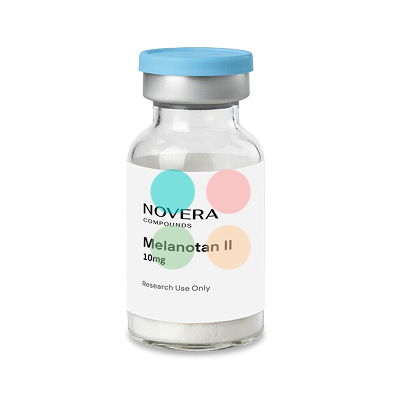
Melanotan II (MT-II) is a synthetic cyclic heptapeptide analogue of α-melanocyte-stimulating hormone (α-MSH) that serves as a non-selective agonist across multiple melanocortin receptor subtypes, making it one of the most broadly studied melanotropic peptides in pigmentation science, neurosexual function, metabolic regulation, and neuroprotection research. Originally developed in the 1980s by researchers at the University of Arizona, this superpotent cyclic melanotropic peptide has become a cornerstone compound for investigators exploring the melanocortin system and its downstream physiological actions.
Melanotan II is available for research purposes only and is not approved for human use. At FillerSupplies.com, it is supplied as a high purity lyophilized powder intended exclusively for licensed researchers and laboratory professionals conducting in vitro or preclinical animal model studies. If you need to buy Melanotan II online from a trusted source, this product meets the rigorous standards required for meaningful scientific evaluation.
General Information About Melanotan II
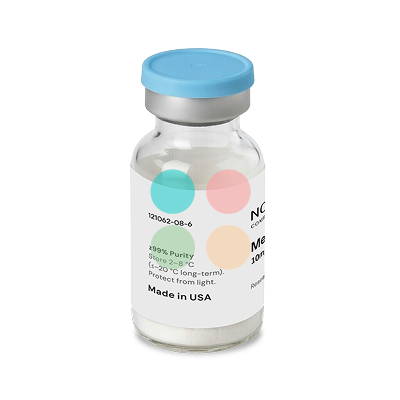
Melanotan II is a cyclic heptapeptide – a synthetic peptide built from 7 amino acids – with the precise sequence Ac-Nle-cyclo[Asp-His-D-Phe-Arg-Trp-Lys]-NH₂. Its chemical formula is C₅₀H₆₉N₁₅O₉, and it carries a molecular weight of 1024.2 g/mol. The CAS number for Melanotan II is 121062-08-6. The compound features an acetylated N-terminus, a lactam-bridged cyclic core containing the critical Phe-Arg-Trp-Lys pharmacophore, and a C-terminal amide – structural modifications that confer substantially greater protease resistance compared to the linear, endogenous α-MSH molecule.
As a synthetic analogue of α-MSH, Melanotan II is classified as a synthetic melanocortin receptor agonist. Its mechanism of action involves binding with high affinity to several melanocortin receptor subtypes: MC1R (involved in skin pigmentation and melanin production), MC3R and MC4R (central nervous system receptors implicated in appetite, energy balance, and sexual functions), and MC5R (exocrine gland regulation). MC2R, the adrenocorticotropic hormone receptor, appears to be minimally activated. This broad receptor profile is what distinguishes MT-II as a non-selective agonist and makes it a versatile tool across multiple lines of research.
Pharmacokinetic data from animal studies provide the most consistent picture of MT-II disposition. In rats administered 0.3 mg/kg intravenously, researchers observed a biphasic plasma decline with a beta-phase half-life of approximately 30–60 minutes. Human pharmacokinetic parameters – including Cmax, AUC, and plasma clearance – have not been formally published in peer-reviewed literature, which remains a notable gap in the field. The cyclic structure with norleucine substitution and amide terminus gives MT-II markedly longer functional persistence than natural α-MSH, which degrades rapidly in circulation.
Melanotan II Use in the Research Setting
Melanotan II is supplied as a lyophilized powder for reconstitution in laboratory and preclinical studies; it is designated strictly for research and laboratory use only.
#1. Melanogenesis and Pigmentation Research
Melanotan II is used in melanogenesis research to investigate the molecular mechanisms underlying skin pigmentation. When MT-II binds MC1R on melanocytes, it triggers the adenylyl cyclase→cAMP signaling pathway, activating tyrosinase and downstream enzymes that shift pigment synthesis toward eumelanin – the dark, photoprotective pigment – rather than pheomelanin. Melanotan II increases eumelanin production in skin cells, a finding that has driven substantial interest in photoprotection studies examining how enhanced eumelanin content improves UV-absorption profiles in tissue samples.
Receptor binding affinity data underscore the potency of MT-II at MC1R. Reported Ki values place MC1R binding in the sub-nanomolar range (approximately 0.16 nM), while MC4R affinity is estimated at roughly 1.8 nM, though exact values vary by assay system and species. In the landmark 1996 Phase I pilot trial by Dorr et al., three male volunteers received subcutaneous MT-II at escalating doses from 0.01 mg/kg to 0.03 mg/kg over a two-week period. Measurable increases in pigmentation on the face, upper body, and other regions were documented by reflectance spectrometry after approximately five doses. This study provided the first direct human evidence that melanocortin regulates sexual functions and pigmentation simultaneously in male and female humans exposed to melanocortin agonists, although this particular trial involved only male subjects.
Compared to natural tanning processes – which require UV-mediated DNA damage to trigger melanocyte stimulating hormone release – MT-II bypasses the UV requirement by directly activating MC1R, offering researchers a model system for studying melanogenesis independent of radiation exposure.
#2. Neurosexual Function and MC4R Pathway Studies
The discovery that MT-II influences sexual arousal through central melanocortin pathways emerged unexpectedly from the same pigmentation trials. Melanotan II enhances sexual arousal in over 80% of cases based on early human observations: over 80% of subjects showed increased arousal signaling with Melanotan II. In the Dorr et al. pilot trial, spontaneous penile erection was reported in male subjects, with episodes lasting 1–5 hours following subcutaneous dosing at 0.01–0.03 mg/kg. These effects are mediated primarily through MC4R activation in the brain and spinal cord regions involved in erectile function and sexual motivation.
“In 3 normal male volunteers … spontaneous penile erections which were intermittently experienced for 1–5 hours after MT-II dosing… increased pigmentation … two subjects had increased pigmentation …” – Dorr et al., Life Sciences, 1996
This pro-erectile effect motivated the development of more selective derivatives. PT-141 (bremelanotide) was engineered to retain MC4R activation for sexual function while minimizing MC1R-mediated pigmentation side effects. PT-141 received FDA approval in 2019 as Vyleesi for hypoactive sexual desire disorder (HSDD) in premenopausal female humans, precisely because of its cleaner receptor selectivity profile. MT-II, by contrast, remains a research compound due to its broad receptor activation and associated side-effect burden.
| Peptide |
MC1R Activity |
MC3R/MC4R Activity |
Primary Research Use |
Regulatory Status |
| Melanotan II (MT-II) |
High (Ki ~0.16 nM) |
High for both subtypes |
Pigmentation, appetite, sexual functions, photoprotection |
Research use only; not approved for human use |
| PT-141 (Bremelanotide) |
Low/minimal |
High (especially MC4R) |
Sexual dysfunction, libido studies |
FDA approved (Vyleesi) for HSDD in premenopausal women |
| Natural α-MSH |
Moderate |
Moderate |
Endogenous pigmentation and anti-inflammatory signaling |
Endogenous; not a drug product |
Dose-response relationships in preclinical studies show that behavioral effects in rodent models – including increased mating behavior and sexual motivation – follow a consistent pattern with systemic subcutaneous administration, while central intracerebroventricular delivery at microgram-per-kilogram doses is sufficient to trigger hypothalamic-pituitary axis-mediated responses involved in arousal and erectile function research.
#3. Metabolic and Energy Balance Research
The role of melanocortin receptors in energy balance and food intake regulation is well established, and MT-II has served as a key pharmacological tool for dissecting these mechanisms. Melanotan II activates multiple melanocortin receptors in research, and its agonism at MC3R and MC4R in the hypothalamus suppresses appetite and reduces food intake in animal models. Melanotan II reduces food intake and body weight in mice, with central administration shown to attenuate neuropeptide Y (NPY)-induced feeding in rats. Some models also demonstrate increased thermogenesis as an additional mechanism of action.
“In rats given MT-II 0.3 mg/kg IV, biphasic plasma decline was observed … biphasic disposition profile … t½ (beta-phase) approximately 30–60 minutes.” – Ugwu et al., Biopharmaceutics & Drug Disposition, 1994
Effective central doses in rodent metabolic studies are typically in the low microgram-per-kilogram range (intracerebroventricular), whereas peripheral subcutaneous or intravenous doses for systemic effects range from 0.1 to 1 mg/kg depending on species and target endpoint. Researchers investigating potential oral delivery have explored novel formulations achieving bioavailability of approximately 25% compared to subcutaneous routes in rat models, which may inform future non-injectable research protocols.
<em>Important to Know:</em>
#4. Neuroprotective and Anti-inflammatory Research
Emerging preclinical evidence suggests that Melanotan II shows neuroprotective properties in murine models, extending its research utility well beyond pigmentation and sexual function. In a maternal immune activation (MIA) mouse model of autism spectrum disorder, intracerebroventricular infusion of MT-II improved social behavior deficits over treatment periods of 7–14 days. Functional improvements in these models are thought to be mediated by MC4R activation in the brain, which modulates inflammatory signaling cascades and oxidative stress pathways.
Melanotan II enhances sensory function recovery after nerve injury, and its potential role in peripheral nerve regeneration has attracted attention from researchers studying tissue repair mechanisms. Melanotan II promotes nerve regeneration in animal models, with MC4R-mediated signaling shown to support axonal regrowth and functional recovery following experimental peripheral nerve lesions. Anti-atherosclerotic properties have also been explored in laboratory models, although direct evidence for MT-II in this target area remains more limited than for the closely related endogenous α-MSH peptide.
Compared to other neuroprotective peptides in research, MT-II’s cyclic structure offers greater protease resistance and longer functional persistence than linear α-MSH. More selective MC4R agonists such as Setmelanotide are being explored for obesity and energy regulation with fewer pigmentation effects, but MT-II’s broad receptor engagement makes it uniquely suited for studies examining the interplay between melanocortin receptor subtypes in neuroprotection and tissue recovery.
<em>Important to Know:</em>
Buy Melanotan II Online at FillerSupplies.com
When you need to buy Melanotan II for your research program, FillerSupplies.com provides a dependable supply chain built specifically for licensed professionals. The Novera-brand Melanotan II available here is supplied as a lyophilized powder suitable for reconstitution in preclinical and in vitro protocols, backed by over a decade of experience serving the research community. Whether you are investigating melanocortin receptor mechanisms, melanogenesis pathways, or metabolic regulation, you can order with confidence from a supplier that understands the requirements of rigorous scientific work.
- Authentic, certified products – original, quality-controlled compounds, warehouses worldwide.
- 11 years of reliability & trust – established supplier on the market since 2006.
- Temperature-controlled shipping – thermal packaging with ice gel / cold packs preserves stability.
- Express worldwide shipping – next-day dispatch, global delivery.
- Best wholesale prices – tiered bulk discounts and price-match guarantee.
- Privacy guaranteed; expert support at (888) 392-6640, WhatsApp and email, Mon–Fri 10am–6pm EST.
- Supplied for research use only, to licensed professionals.
All Melanotan II products at FillerSupplies.com are supplied for research and laboratory use only. To place your first order or contact our team for bulk pricing, visit our website or reach out directly – where to buy Melanotan II has never been more straightforward for qualified researchers.
Related research peptides available at FillerSupplies.com: Melanotan I.
FAQ
What Is Melanotan II and How Does It Work?
Melanotan II is a synthetic cyclic heptapeptide analogue of α-melanocyte-stimulating hormone that functions as a non-selective agonist at melanocortin receptors MC1R, MC3R, MC4R, and MC5R. Melanotan II stimulates melanin production via MC1R activation, triggering the cAMP signaling cascade in melanocytes to increase eumelanin synthesis. It also activates central nervous system receptors involved in appetite regulation and sexual functions.
How Does Melanotan II Compare to PT-141 in Research Applications?
The key difference between Melanotan 2 and PT-141 lies in receptor selectivity. MT-II activates MC1R (pigmentation) and MC3R/MC4R (central effects) with high affinity, whereas PT-141 was designed to minimize MC1R activity and primarily target MC4R for sexual function research. PT-141 received FDA approval for HSDD in premenopausal women, while Melanotan II remains a research-only compound.
What Are the Proper Storage and Reconstitution Protocols for Research Use?
Lyophilized Melanotan II should be stored at -20°C for long-term stability. Once reconstituted in bacteriostatic water or sterile saline, the solution should be refrigerated at 2–8°C and used within a timeframe consistent with the stability profile of peptides in solution. Avoid repeated freeze-thaw cycles, as these can degrade cyclic peptide structures.
Is Melanotan II Safe for Laboratory Research Studies?
Melanotan II is appropriate for in vitro and preclinical animal model studies when handled according to standard laboratory safety protocols. Melanotan II may cause side effects like nausea and flushing in human exposure scenarios, and can cause significant health risks including increased melanoma risk and kidney dysfunction based on adverse event reports. Melanotan II can cause the rapid development of new moles or darkening of existing moles. Using unregulated Melanotan II is linked to severe health complications such as rhabdomyolysis. Unregulated products may contain inaccuracies in dosing and unknown contaminants.
What Dosage Ranges Are Used in Preclinical Research Models?
In the Dorr et al. Phase I pilot study, subcutaneous doses of 0.01–0.03 mg/kg were administered to human volunteers for pigmentation evaluation. Rodent studies typically employ 0.1–1 mg/kg systemically or low microgram-per-kilogram intracerebroventricular doses for central effects. Dose-response relationships are species-dependent, and researchers should calibrate protocols to their specific model system.
Why Is Melanotan II on the WADA Prohibited Substances List?
WADA prohibits Melanotan II because its broad melanocortin receptor activation can influence metabolic, hormonal, and performance-related physiological pathways. Its non-approved drug status and potential for misuse as a cosmetic or performance-enhancing agent place it under strict regulatory scrutiny in competitive sports and clinical contexts.
Where Can I Buy Authentic Melanotan II for Research Purposes?
You can buy Melanotan II online at FillerSupplies.com, which stocks certified research-grade peptides with temperature-controlled shipping and worldwide delivery. All products are supplied to licensed professionals for research use only and are not intended for human consumption.
- Dorr, R. T., et al. (1996). Evaluation of Melanotan-II, a superpotent cyclic melanotropic peptide in a pilot phase-I clinical study. Life Sciences, 58(20), 1777-1784. https://doi.org/10.1016/0024-3205(96)00160-9
- Hallam, T. J., et al. (2007). Melanocortins in the treatment of male and female sexual dysfunction. Current Topics in Medicinal Chemistry, 7(11), 1137-1144. https://doi.org/10.2174/156802607780906681
- Minakova, E., et al. (2019). Melanotan-II reverses autistic features in a maternal immune activation mouse model of autism. PLOS ONE, 14(1), e0210389. https://doi.org/10.1371/journal.pone.0210389