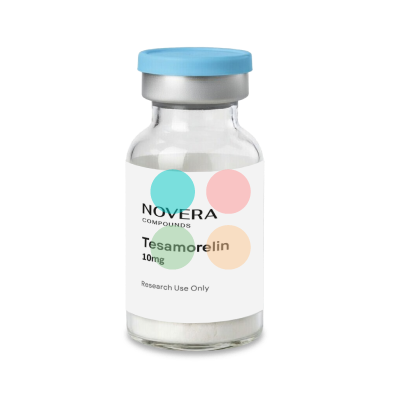
Tesamorelin is a synthetic analogue of human growth hormone releasing hormone (GHRH), also known as growth hormone releasing factor, engineered as a 44 amino acid peptide with a trans-3-hexenoic acid modification at its N terminus to enhance enzymatic stability. It is one of the most extensively evaluated GHRH analogues in clinical research, with published data demonstrating its capacity to stimulate growth hormone secretion from the pituitary gland and produce measurable changes in body composition-most notably a reduction in visceral fat accumulation. The tesamorelin peptide has been studied across multiple domains including HIV-associated lipodystrophy, metabolic function, and emerging cognitive research, generating a substantial body of peer-reviewed evidence.
This compound is supplied by FillerSupplies.com as a lyophilized powder under the Novera brand, intended exclusively for research use by licensed professionals and qualified laboratories. All product descriptions, mechanistic discussions, and literature references presented here are provided to support analytical applications and in vitro/in vivo investigation-not as guidance for human treatment or self-administration.
General Information About Tesamorelin
Tesamorelin is constructed from the complete 44 amino acid sequence of native human growth hormone releasing hormone (positions 1–44), with a critical chemical modification: a trans-3-hexenoic acid moiety is conjugated to the N terminus. This modification confers resistance to dipeptidyl peptidase IV (DPP-IV) degradation, a key enzyme that rapidly inactivates endogenous GHRH in circulation. The result is a compound with meaningfully improved metabolic stability compared to both native GHRH and truncated analogues such as sermorelin.
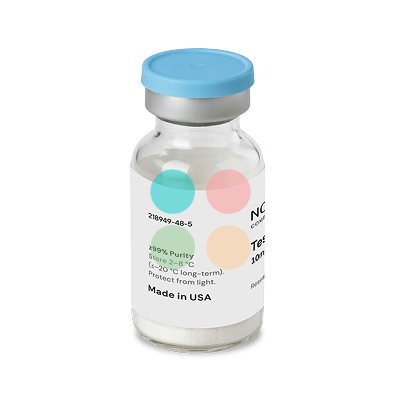
The molecular formula of the free-base peptide is C₂₂₁H₃₆₆N₇₂O₆₇S, yielding a molecular weight of approximately 5,135.9 daltons (free peptide) or roughly 5,579 Da in its acetate salt form. Its CAS registry number (free peptide) is 218949-48-5. As a drug substance, tesamorelin appears as a white to off-white amorphous powder that is soluble in water and slightly soluble in methanol.
The mechanism of action centers on the GHRH receptor (GHRHR) expressed on somatotroph cells of the anterior pituitary gland. Upon binding, tesamorelin activates the adenylyl cyclase–cAMP–PKA–CREB signaling cascade, which leads to increased production of growth hormone at the transcriptional and secretory levels. Downstream, this elevated growth hormone output stimulates hepatic and peripheral synthesis of insulin like growth factor-1 (IGF-1) and IGF-binding protein 3 (IGFBP-3), which mediate the compound’s broader metabolic effects.
Pharmacokinetic data from clinical studies indicate that after subcutaneous administration of 2 mg, tesamorelin reaches peak plasma concentration (Tmax) at approximately 0.15 hours (~9 minutes). The terminal elimination half-life is roughly 26 minutes in healthy subjects and approximately 38 minutes in HIV-infected patients following 14 consecutive days of dosing. Although the peptide itself clears rapidly from circulation, the biological effects-particularly sustained IGF-1 elevation-persist for hours due to the downstream hormonal signaling cascade. Tesamorelin is a prescription-only medication in the United States and is FDA-approved for HIV-related lipodystrophy treatment, marketed under the brand names Egrifta SV and Egrifta WR. It is not approved for general weight loss or obesity treatment.
Tesamorelin Use in the Research Setting
Tesamorelin is supplied as a lyophilized powder (acetate salt) for reconstitution, designated for research and laboratory use only. The following subsections summarize key domains in which this compound has been evaluated in published, peer-reviewed literature.
#1. Visceral Adipose Tissue Research
The most robust evidence base for tesamorelin centers on its effects on visceral fat-the metabolically active adipose tissue surrounding internal organs. In a landmark randomized, placebo-controlled trial enrolling 404 HIV-infected patients with excess abdominal fat, subjects receiving tesamorelin (administered via daily subcutaneous injections at 2 mg) showed a mean visceral adipose tissue (VAT) reduction of approximately –10.9% (≈ –21 cm²) over 26 weeks, compared to –0.6% in the placebo group. Among those continuing treatment through 52 weeks, VAT reduction reached approximately –18%. Pooled analysis across the pivotal Phase III trials (Studies 10 and 11 in the FDA review) documented placebo-adjusted mean VAT reductions of –19.6% (95% CI: –23.7 to –15.3) and –11.7% (95% CI: –16.2 to –7.1), respectively, with a combined long-term estimate of roughly –17.5% at one year of continued use. Clinical evidence shows tesamorelin significantly reduces abdominal fat, and separate data indicate tesamorelin reduces visceral fat by at least 15.4%.
These studies also reported consistent improvements in trunk fat, waist circumference, and waist-to-hip ratio, while subcutaneous adipose tissue remained largely unchanged-indicating selective abdominal fat reduction rather than generalized lipolysis. Treatment with tesamorelin should be discontinued according to protocol guidelines to prevent reversal of fat reduction benefits. Off-label uses of tesamorelin may include fat reduction in patients without HIV, though evidence outside this population remains limited. Compounded versions of tesamorelin are available at telemedicine or specialized wellness clinics. Sermorelin is cheaper but lacks visceral fat reduction evidence of comparable magnitude.
| Parameter |
Tesamorelin |
Sermorelin |
CJC-1295/Ipamorelin |
| Sequence Length |
44 amino acids + trans-3-hexenoic acid |
29 amino acids (GHRH 1–29), no chemical modification |
Modified GHRH(1–29) + ghrelin mimetic |
| Half-Life |
~26–38 min (SC) |
~10–20 min |
CJC-1295 DAC: ~6–8 days |
| Visceral Fat Reduction (Clinical) |
15–19% over 26 weeks |
No robust VAT-specific data |
Limited published VAT data |
| IGF-1 Elevation |
Up to 122% increase |
Moderate, dose-dependent |
CJC-1295/Ipamorelin produces a larger GH pulse than tesamorelin |
| FDA Status |
Approved (HIV lipodystrophy) |
Previously approved, discontinued |
Not FDA-approved |
| Relative Cost |
Higher (tesamorelin costs more due to higher compounding costs) |
Lower |
Variable |
Important to Know:
#2. Growth Hormone Pathway Studies
Tesamorelin’s primary pharmacological action-binding the GHRH receptor on anterior pituitary somatotrophs-triggers a well-characterized intracellular signaling pathway. Activation of adenylyl cyclase increases intracellular cAMP, which activates protein kinase A (PKA) and subsequently the transcription factor CREB. This cascade drives both acute growth hormone exocytosis and longer-term GH gene transcription, resulting in elevated circulating growth hormone levels.
The downstream consequence is a significant rise in IGF-1 and IGFBP-3, produced primarily in the liver. IGF-1 levels increase by 122% with tesamorelin treatment, as documented in clinical trials, indicating robust engagement of the somatotropic axis. This increase in IGF-1 mediates many of the metabolic and body composition effects attributed to the compound.
“Tesamorelin uses the identical GHRHR binding mechanism as native GHRH, but its molecular design-retaining the full 44 amino acid sequence with an N-terminal trans-3-hexenoic acid group-produces a distinctly different pharmacokinetic profile. Phase III trials recorded a mean 15–18% reduction in visceral adipose tissue mass over 26 weeks.”
Compared with sermorelin, which comprises only the first 29 amino acids of GHRH without additional chemical modification, tesamorelin demonstrates greater stability and more robust metabolic outcomes in published literature. The difference in structural design translates to a longer functional half-life and more consistent receptor engagement. Researchers examining other peptides in the growth hormone releasing pathway-including CJC-1295 and ipamorelin-should note that receptor binding kinetics and signal transduction differ meaningfully across these compounds, influencing downstream GH/IGF-1 dynamics and study design.
#3. Metabolic Function Investigation
Beyond its effects on visceral fat, tesamorelin has been evaluated for broader metabolic outcomes. In the pivotal HIV lipodystrophy trials, the compound produced statistically significant increases in IGF-1 (P < 0.001) without consistent adverse changes in glucose parameters over 6 months. Safety extension data through 12 months showed that VAT reduction was maintained without clinically significant insulin resistance, an important finding given the known effects of growth hormone on glucose metabolism.
Research has also examined the influence of tesamorelin on triglyceride levels and hepatic fat. Reductions in triglycerides and improvements in adiponectin concentrations have been recorded in HIV-positive cohorts with abdominal obesity, suggesting potential effects on liver fat fraction and broader lipid metabolism. However, evidence in non-HIV populations-including general NAFLD or metabolic syndrome models-remains less robust, indicating a gap where further research is needed. Common monitoring for tesamorelin treatment in clinical contexts includes IGF-1 levels and blood glucose, and tesamorelin requires medical supervision and baseline blood tests when used in approved clinical settings.
Common side effects of tesamorelin evaluated in trials include injection site reactions and joint pain. Tesamorelin protocols in clinical use include a medical evaluation before treatment, and monitoring appointments are required to evaluate the effectiveness and safety of tesamorelin treatment. Health risks of unregulated tesamorelin include uncertain purity and safety-a critical consideration for any laboratory or research institution sourcing this compound.
#4. Cognitive Function Research
An emerging area of investigation involves the potential interaction between growth hormone pathway activation and neurological function. A 20-week daily tesamorelin trial in older adults (aged 55–87, mean ~68 years), including healthy participants and those with mild cognitive impairment, administered 1 mg daily and found that the compound elevated IGF-1 to levels consistent with younger adults. The study reported improvements in executive function, though gains in short-term verbal memory were less consistent.
In a separate 6-month Phase 2 randomized, open-label trial involving people with HIV and abdominal obesity, tesamorelin (2 mg daily) significantly reduced waist circumference (median –2.7 cm vs. standard of care, P = 0.015) and increased IGF-1, but changes in neurocognitive performance were not statistically significant between groups-likely because the study was underpowered for cognitive endpoints.
A pilot double-blind, placebo-controlled trial (n = 22, 10 weeks, 1 mg tesamorelin) examining adults with cognition ranging from normal to mild impairment assessed body composition, fatigue, sleep, glucose tolerance, cognitive function, and brain morphometry. No significant group-wise differences emerged in primary outcomes, though machine learning analyses hinted at region-specific brain differences (anterior cingulate, superior frontal occipital fasciculus) related to cognitive function.
Patients in clinical use often notice improved sleep and energy within 3–4 weeks, and visible fat reduction typically occurs between the second and third cycle. A typical tesamorelin cycle in approved clinical protocols lasts 3 months with a 5-on, 2-off schedule. An optional Optimization Panel monitors IGF-1 and other metrics post-cycle. These cognitive and quality-of-life findings, while preliminary, suggest that peptide therapy targeting the growth hormone axis warrants further investigation with larger, adequately powered, and longer-duration protocols before definitive conclusions can be drawn. Insurance does not cover compounded tesamorelin for body composition optimization.
Buy Tesamorelin Online at FillerSupplies.com
When you buy tesamorelin from FillerSupplies.com, you receive a research-grade compound sourced and handled to meet the demands of serious laboratory investigation. Tesamorelin 5mg and other available formats are supplied as lyophilized powder with a lot specific certificate and certificate of analysis to support your analytical applications and experimental protocols. Prices for research chemical vials typically range from $30 to $80, while medical clinics charge $200 to $400 per month and concierge providers may charge up to $1,500 monthly for tesamorelin. Perfect B offers tesamorelin at $445 per 3-month cycle, and BioLongevity Labs lists tesamorelin at $149.97 for 10 mg, for comparison.
- Authentic, certified products – original, quality-controlled compounds, warehouses worldwide.
- 11 years of reliability & trust – established supplier on the market since 2006.
- Temperature-controlled shipping – thermal packaging with ice gel / cold packs preserves stability.
- Express worldwide shipping – next-day dispatch, global delivery.
- Best wholesale prices – tiered bulk discounts and price-match guarantee.
- Privacy guaranteed; expert support at (888) 392-6640, WhatsApp and email, Mon–Fri 10am–6pm EST.
- Supplied for research use only, to licensed professionals.
All tesamorelin products from FillerSupplies.com are supplied exclusively for research use by qualified professionals. Product must be stored according to recommended protocol to protect against moisture and temperature excursion during transit and storage.
FAQ
What Safety Considerations Apply To Tesamorelin In Research?
Tesamorelin is a prescription-only medication in the United States, and its clinical use requires medical supervision and baseline blood tests. In published trials, common side effects include injection site reactions and joint pain. Researchers should be aware that growth hormone pathway stimulation may theoretically influence pre-existing malignancies, and all in vivo protocols should be reviewed by appropriate ethics committees. Health risks of unregulated tesamorelin include uncertain purity and safety.
How Does Tesamorelin's Mechanism Differ From Sermorelin?
Both compounds stimulate the same GHRH receptor on the pituitary gland, but tesamorelin retains the full 44 amino acid native GHRH sequence with a trans-3-hexenoic acid modification at the N terminus. Sermorelin uses only the first 29 amino acids without chemical modification, resulting in a shorter half-life (~10–20 minutes) and less robust metabolic efficacy. Sermorelin is cheaper but lacks visceral fat reduction evidence comparable to tesamorelin.
What Research Dosing Ranges Are Found In The Literature?
Published clinical trials have predominantly used 2 mg administered via daily subcutaneous injections for visceral adipose tissue and metabolic studies. Cognitive research protocols have evaluated 1 mg daily. These dosing parameters apply to human clinical investigation contexts; in vitro and animal model scaling requires separate determination based on species-specific pharmacokinetics. Tesamorelin is not approved for general weight loss or obesity treatment.
How Should Tesamorelin Be Stored And Reconstituted?
The compound is supplied as a lyophilized powder and should be stored protected from moisture, light, and excessive heat. Reconstitution is typically performed with bacteriostatic water or sterile water for injection according to laboratory protocol. Once reconstituted, the solution should be refrigerated and used within timeframes consistent with peptide stability guidelines.
Is Tesamorelin Prohibited Under Anti-Doping Regulations?
Yes. Tesamorelin, along with all growth hormone releasing hormone agonists, is classified as a prohibited substance under WADA anti-doping rules. Researchers and institutions working in sports science or with competitive athletes must account for this status in study design and compliance planning.
Where Can I Buy Tesamorelin For Research?
You can buy tesamorelin online at FillerSupplies.com, where it is supplied as a research-grade lyophilized powder to licensed professionals and qualified laboratories. Each order includes temperature-controlled shipping and a lot specific certificate of analysis. For questions about tesamorelin where to buy, availability, or wholesale pricing, contact FillerSupplies.com support.
What Purity And Quality Control Processes Are Used?
According to FDA chemistry review documentation, tesamorelin drug substance specifications include amino-acid analysis, MALDI-TOF mass spectral analysis, peptide mapping, HPLC identity testing, peptide content versus impurity profiling, and endotoxin/microbial load testing. Research-grade material should be verified against its certificate of analysis before use.
- Falutz, J., et al. (2007). Metabolic effects of a growth hormone-releasing factor in patients with HIV. New England Journal of Medicine, 357(23), 2359-2370. https://doi.org/10.1056/NEJMoa072375
- Stanley, T. L., et al. (2014). Effect of tesamorelin on visceral fat and liver fat in HIV-infected patients with abdominal fat accumulation: a randomized clinical trial. JAMA, 312(4), 380-389. https://doi.org/10.1001/jama.2014.8334
- Falutz, J., et al. (2010). Effects of tesamorelin (TH9507), a growth hormone-releasing factor analog, on visceral fat reduction in HIV patients. Journal of Acquired Immune Deficiency Syndromes, 53(3), 311-322. https://doi.org/10.1097/QAI.0b013e3181cbdaff