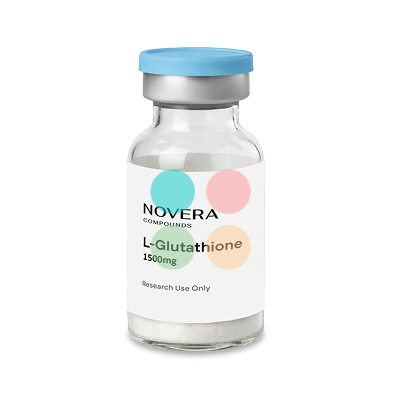
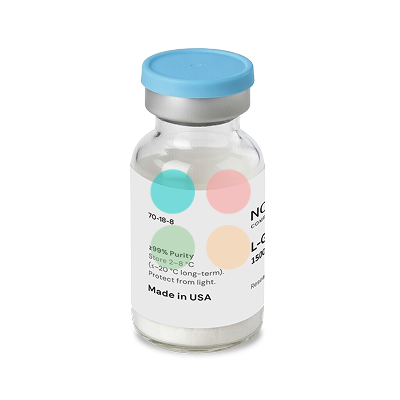
L-Glutathione is a tripeptide composed of three amino acids – glutamic acid, cysteine, and glycine – that functions as the body’s master antioxidant and a central regulator of cellular redox balance. Extensively studied for its role in oxidative stress protection, detoxification pathways, immune function modulation, and melanin synthesis inhibition, this powerful antioxidant has attracted sustained interest from researchers investigating cellular defense mechanisms, skin health biomarkers, and healthy aging interventions. Glutathione acts as a master antioxidant for cellular defense, and laboratory models consistently demonstrate its capacity to neutralize harmful free radicals, support hepatic conjugation of toxins, and modulate immune system signaling cascades.
FillerSupplies.com supplies pharmaceutical-grade L-Glutathione under the Novera brand, manufactured exclusively for research applications and scientific investigation. Licensed researchers and medical professionals looking to buy glutathione injection compounds for laboratory protocols will find this product formulated to meet the rigorous standards required for controlled experimental work – never intended for human consumption, cosmetic treatment, or clinical administration.
General Information About L-Glutathione
L-Glutathione (abbreviated GSH in its reduced form) is a low-molecular-weight tripeptide with a molecular weight of approximately 307.3 Da. Its structure features a gamma-peptide bond linking glutamic acid to cysteine, followed by a standard peptide bond to glycine. The thiol (-SH) group on the cysteine residue is the molecule’s reactive center, enabling direct scavenging of free radicals and serving as a substrate for enzymatic antioxidant reactions.
Biosynthesis proceeds through two ATP-dependent steps within the cytoplasm. Gamma-glutamylcysteine synthetase (also called glutamate-cysteine ligase) catalyzes the first and rate-limiting reaction, joining glutamic acid to cysteine. Glutathione synthetase then adds glycine to complete the tripeptide. Once formed, GSH serves as a cofactor for multiple enzyme families: glutathione peroxidases reduce hydrogen peroxide and lipid hydroperoxides, glutathione S-transferases conjugate electrophilic xenobiotics for elimination, and glutathione reductase regenerates GSH from its oxidized disulfide form (GSSG) using NADPH.
The ratio of reduced GSH to oxidized GSSG inside cells is a primary indicator of redox status and overall cellular health. Under normal conditions, GSH predominates at concentrations 10- to 100-fold higher than GSSG. When oxidative damage overwhelms the recycling capacity of glutathione reductase, GSSG accumulates, signaling stress pathways that can trigger apoptosis or senescence. This redox-cycling mechanism places the antioxidant glutathione at the center of nearly every major protective pathway studied in mammalian biology.
Pharmacokinetic data from human volunteer studies reveal that intravenous GSH is cleared rapidly from the bloodstream. In 1991, Aebi, Assereto, and Lauterburg published findings in the European Journal of Clinical Investigation showing that after IV infusion of 2 g/m² in ten healthy subjects, plasma total glutathione surged from approximately 17.5 ± 13.4 µmol/L to roughly 823 ± 326 µmol/L. The elimination half-life for total glutathione was approximately 14.1 ± 9.2 minutes, while the reduced GSH form alone cleared even faster with a half-life near 7 minutes. Volume of distribution measured around 176 ± 107 mL/kg, suggesting distribution beyond the plasma compartment into interstitial spaces and rapid organ uptake by the liver, kidney, and spleen.
L-Glutathione Use in the Research Setting
Supplied as a lyophilized powder for reconstitution, research-grade L-Glutathione is designated for research and laboratory use only. The sections below summarize key investigational areas where the compound has been studied, along with relevant mechanisms and comparative data from the published literature.
Oxidative Stress Protection
GSH’s capacity to neutralize reactive oxygen species (ROS) underpins its designation as a powerful antioxidant in experimental biology. The molecule donates an electron from its thiol group to unstable free radicals, converting them to less reactive species while GSH itself dimerizes into GSSG. Glutathione peroxidase-catalyzed reactions further reduce hydrogen peroxide and lipid hydroperoxides, preventing chain reactions of lipid peroxidation that would otherwise compromise membrane integrity.
Comparative studies position GSH alongside vitamin C (ascorbic acid) and alpha-tocopherol (vitamin E) in a cooperative antioxidant network. GSH helps regenerate oxidized ascorbate back to its active reduced form, while the glutathione peroxidase/reductase system supports recycling of oxidized alpha-tocopherol. A 2006 study published in the American Journal of Physiology-Lung Cellular and Molecular Physiology demonstrated that oral gavage of GSH at 300 mg/kg in mice significantly increased both plasma and lung tissue glutathione levels, with peak concentrations at 30–60 minutes post-administration. Tissue levels returned to baseline by approximately 240 minutes. These animal-only results illustrate both the antioxidant support capacity and the transient pharmacokinetic profile of exogenous GSH, even via non-injectable routes.
“In a 1991 human pharmacokinetic study, Aebi, Assereto, and Lauterburg reported in the European Journal of Clinical Investigation that intravenous infusion of reduced glutathione at 2 g/m² raised plasma total glutathione from ~17.5 µmol/L to ~823 µmol/L, with an elimination half-life of approximately 14.1 minutes – confirming rapid systemic clearance.”
Glutathione injections bypass the digestive system for faster effects, and injections deliver glutathione most efficiently compared to oral forms, since oral glutathione is often destroyed by stomach acid during digestion. Research models examining free radical damage in hepatocytes, cardiomyocytes, and neuronal cultures consistently show dose-dependent protection when GSH concentrations are maintained above baseline thresholds.
Detoxification Pathway Research
Phase II detoxification relies heavily on glutathione S-transferase (GST) enzymes, which conjugate GSH to electrophilic substrates – including environmental toxins, drug metabolites, and endogenous waste products – rendering them water-soluble for excretion via bile or urine. The liver houses the highest concentrations of both GSH and GST isoforms, making hepatic detox pathways a primary focus in glutathione research.
In the Aebi et al. (1991) study, IV glutathione administration produced a dramatic increase in urinary glutathione excretion – approximately 300-fold – alongside a roughly 10-fold increase in urinary cysteine output within 90 minutes. Free plasma cysteine rose from 8.9 ± 3.5 µmol/L to 114 ± 45 µmol/L. These findings indicate that exogenous GSH undergoes rapid extracellular degradation by gamma-glutamyltranspeptidase, liberating cysteine that can be re-imported into cells to fuel new GSH synthesis.
N-acetylcysteine (NAC) represents a frequently compared sulfur-containing compound. Rather than delivering intact GSH, NAC provides cysteine – the rate-limiting amino acid for glutathione biosynthesis – after deacetylation in the body. Some animal studies suggest NAC may sustain intracellular glutathione levels more effectively over longer periods because it bypasses the rapid extracellular degradation that free GSH undergoes. Glutathione injections improve immune function and detoxification, but the comparative kinetics differ substantially between direct GSH delivery and precursor-based approaches.
|
Parameter
|
L-Glutathione (IV / Injectable)
|
N-Acetylcysteine (NAC)
|
|
Mechanism
|
Direct GSH delivery to plasma; rapid extracellular breakdown releases cysteine for intracellular re-synthesis
|
Prodrug supplying cysteine after hepatic deacetylation; supports de novo GSH biosynthesis
|
|
Primary Research Routes
|
Intravenous infusion; intramuscular and subcutaneous injection explored in some protocols
|
Oral, intravenous (approved for acetaminophen overdose in humans)
|
|
Typical Research Dose Range
|
600–2,000 mg IV (human PK studies); 300 mg/kg oral gavage (murine models)
|
70–150 mg/kg IV loading (clinical overdose protocol); 600–1,800 mg/day oral in supplementation studies
|
|
Plasma Half-Life
|
~7 min (GSH) to ~14 min (total glutathione) after IV
|
~5.6 hours (oral NAC in human volunteers)
|
|
Key Limitation
|
Extremely short plasma residence; rapid degradation by gamma-glutamyltranspeptidase
|
Variable oral bioavailability (~6–10%); GI side effects at high doses
|
Injections are available via intramuscular, subcutaneous, or intravenous routes, though IV remains the most studied for achieving maximum absorption into systemic circulation in research protocols. Liposomal glutathione offers 100x better absorption than powders in some formulation comparisons, and a 1982 animal study published in Biochemical Pharmacology found that liposomally-entrapped GSH injected into mice achieved hepatic glutathione elevation to approximately 45 nmol/mg protein after two hours – substantially greater than free GSH injection, which primarily elevated kidney glutathione content to roughly 150% of baseline within 10 minutes.
Cellular Aging and Longevity Studies
Declining glutathione levels are a well-documented hallmark of aging across multiple organ systems. Mitochondrial GSH depletion impairs electron transport chain efficiency, increases electron leakage to molecular oxygen, and accelerates ROS-mediated damage to mitochondrial DNA. Research models using aged rodents demonstrate that supplementation strategies restoring intracellular GSH can partially reverse age-associated declines in ATP synthesis and mitochondrial membrane potential.
Protein carbonylation – a marker of irreversible oxidative damage – accumulates in aging tissues where glutathione-dependent repair mechanisms falter. GSH-dependent enzymes, including glutaredoxins, reduce oxidized protein thiols, maintaining enzymatic function and structural integrity. Cellular senescence markers such as beta-galactosidase activity and p21 expression correlate inversely with intracellular GSH concentrations in multiple cell culture studies, suggesting a mechanistic link between redox balance and replicative capacity.
“A 2025 systematic review examining 194 studies on glutathione in skin aging and tissue regeneration concluded that injectable GSH produces rapid systemic elevation but with short-duration benefits and significant safety uncertainties – underscoring the need for longer-term controlled trials before any translational conclusions.”
These findings inform the broader investigation of healthy aging interventions, though translating cell-culture and animal-model results into definitive conclusions about longevity remains premature. Glutathione benefits in aging research extend to energy levels and metabolic efficiency, areas where the compound’s role in maintaining mitochondrial redox homeostasis continues to attract investigation.
Immune System Function Research
The immune system depends on adequate intracellular glutathione to support lymphocyte proliferation, natural killer cell cytotoxicity, and balanced cytokine production. T-cell activation requires a burst of ROS for signaling, followed by rapid antioxidant buffering to prevent self-inflicted oxidative damage – a process in which GSH plays a key role. Studies in cell culture models show that depleting GSH with buthionine sulfoximine (a GSH synthesis inhibitor) suppresses T-cell proliferative responses and shifts cytokine profiles toward pro-inflammatory patterns.
Glutathione injections can reduce inflammation and chronic fatigue in research models examining systemic immune activation. Macrophage function, including phagocytic capacity and respiratory burst regulation, depends on GSH availability. Research examining inflammatory response modulation has identified GSH-dependent suppression of NF-κB activation as one mechanism through which the compound may reduce inflammation in experimental systems.
<em>Important to Know:</em>
Individuals must be screened for G6PD deficiency before taking glutathione injections in any research context, as glucose-6-phosphate dehydrogenase deficiency impairs NADPH regeneration needed to recycle GSSG back to GSH, potentially worsening oxidative stress rather than alleviating it.
Neurological Protection Models
Blood-brain barrier (BBB) transport of intact GSH is limited, though astrocytes – the principal GSH-synthesizing cells in the central nervous system – release GSH into the extracellular space, where ectoenzymes cleave it to supply cysteine for neuronal uptake and intracellular re-synthesis. Research models using primary neuronal cultures exposed to hydrogen peroxide or 6-hydroxydopamine demonstrate that maintaining adequate GSH levels significantly attenuates oxidative damage to lipids and proteins in neuronal membranes.
Dopamine metabolism generates ROS as a byproduct of monoamine oxidase activity and auto-oxidation, making dopaminergic neurons in the substantia nigra particularly vulnerable to oxidative stress. Animal studies in rodent models of nigrostriatal degeneration show measurable correlations between declining regional GSH content and progressive neuronal loss, though direct causation remains debated. Compared to other neuroprotective compounds investigated in similar models – including NAC, alpha-lipoic acid, and coenzyme Q10 – GSH offers the advantage of direct ROS scavenging but the disadvantage of poor membrane permeability and rapid extracellular clearance.
Glutathione helps neutralize harmful free radicals in both peripheral and central tissues, and its contribution to overall well being extends to neurotransmitter synthesis pathways where redox-sensitive enzymes require a reducing environment to function optimally. Research into advanced delivery systems such as liposomal L-glutathione formulations aims to overcome BBB limitations by enhancing cerebral uptake, though these approaches remain investigational.
Buy L-Glutathione Online at FillerSupplies.com
For licensed researchers seeking to buy L-Glutathione for laboratory investigation, FillerSupplies.com offers the Novera brand at competitive wholesale pricing with global delivery. Whether your protocol calls for glutathione injectable preparations for pharmacokinetic studies, detoxification pathway analysis, or antioxidant mechanism research, FillerSupplies provides the quality and reliability that rigorous science demands. Those searching for where to buy glutathione injection compounds from a trusted wholesale L-glutathione reseller will find a streamlined ordering process designed for institutional and professional purchasers.
-
Authentic, certified products – original, quality-controlled compounds, warehouses worldwide.
-
11
years of reliability & trust – established supplier on the market since 2006.
-
Temperature-controlled shipping – thermal packaging with ice gel / cold packs preserves stability.
-
Express worldwide shipping – next-day dispatch, global delivery.
-
Best wholesale prices – tiered bulk discounts and price-match guarantee.
-
Privacy guaranteed; expert support at (888) 392-6640, WhatsApp and email, Mon–Fri 10 am–6 pm EST.
-
Supplied for research use only, to licensed professionals.
All L-Glutathione products available through FillerSupplies.com are designated for research and laboratory use only. Purchasing is restricted to licensed researchers and qualified professionals conducting approved scientific investigations.
Related research peptides available at FillerSupplies.com: NAD+, GHK-Cu.
FAQ
What Is L-Glutathione And How Does It Work In Research Settings?
L-Glutathione is a tripeptide comprising glutamic acid, cysteine, and glycine that functions as the primary intracellular antioxidant in mammalian cells. In research settings, it is studied for its capacity to scavenge reactive oxygen species, serve as a cofactor for glutathione peroxidase and glutathione S-transferase enzyme families, and maintain cellular redox homeostasis through the GSH/GSSG cycle.
Where To Buy Glutathione Injection Quality Compounds For Research?
Licensed professionals can buy glutathione injection-quality compounds online through FillerSupplies.com, which supplies Novera-brand research-grade L-Glutathione with temperature-controlled shipping and quality-controlled sourcing from warehouses worldwide. When evaluating any supplier, researchers should verify that packing and processing standards ensure glutathione is sterile and free from endotoxins, given the FDA's documented concerns about contamination in improperly sourced powders. Purchasing injectable glutathione from unregulated sources poses serious health risks, and compounded medications must adhere to strict state and federal standards to ensure safety. The FDA warns against using raw ingredients intended for dietary supplements for sterile compounding.
How Does L-Glutathione Compare To Other Antioxidant Research Compounds?
Unlike vitamin C and alpha-tocopherol, which primarily operate in aqueous and lipid compartments respectively, GSH functions across both environments through enzymatic and non-enzymatic mechanisms. Compared to NAC, which acts as a cysteine prodrug supporting endogenous GSH synthesis, direct glutathione administration produces immediate but transient plasma elevations - the half-life of reduced GSH is approximately 7 minutes after IV infusion. Each compound occupies a distinct niche in antioxidant support research, and many protocols employ them in combination to achieve synergistic effects across multiple redox pathways.
What Are The Recommended Storage And Reconstitution Protocols?
Lyophilized L-Glutathione powder should be stored desiccated under refrigerated or frozen conditions, protected from moisture, light, and atmospheric oxygen to prevent oxidation of the reduced thiol group to the inactive GSSG form. Reconstitution for research use requires sterile technique with appropriate buffers, maintaining physiological pH and osmolarity, and all preparations should be used promptly given the compound's rapid degradation in aqueous solution.
Is L-Glutathione Considered A Prohibited Substance In Research?
Glutathione injections are not FDA-approved for any specific indication, whether cosmetic, therapeutic, or preventive. Regulatory agencies including the U.S. FDA have issued explicit warnings about compounding injectable drugs from glutathione powders marketed only as dietary ingredients, citing endotoxin contamination risks and the absence of sterility assurance. Multiple international health authorities - including the Philippine FDA - have similarly cautioned against off-label injectable use for cosmetic purposes such as skin brightening. Researchers must verify compliance with all applicable local, state, and federal regulations before incorporating injectable GSH into experimental protocols.
What Dosing Ranges Are Used In Current L-Glutathione Research Studies?
Published pharmacokinetic research in human volunteers has employed IV doses of 2 g/m² (approximately 100–150 mg/kg), as reported by Aebi et al. in 1991. Animal studies in murine models commonly use oral gavage at 300 mg/kg for tissue distribution research. Some cosmetic research protocols reference IV doses of 600–1,200 mg per session, though these lack standardization from rigorous clinical trials. All dose information is presented for research context only and does not constitute guidance for human administration. Any experimental use should involve consultation with a qualified healthcare provider.
Are There Safety Considerations For Laboratory Handling?
The thiol group on cysteine is air-sensitive and prone to oxidation, requiring researchers to handle reconstituted solutions under inert atmosphere when possible and to minimize exposure to light and ambient oxygen. Common side effects documented in research literature include nausea and flushing after injection, while serious reactions may include chest tightness and difficulty breathing, including one reported case of anaphylaxis in a short-term trial. Glutathione injections can cause severe allergic reactions or contamination risks when sourced improperly. Safety depends on the quality of the compounding pharmacy or supplier, and standard laboratory protective equipment - gloves, eye protection, fume hood for powder handling - should be used at all times.