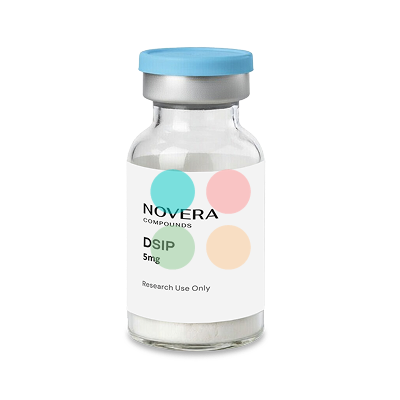
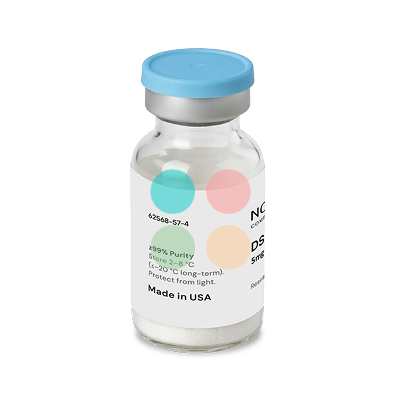
Sleep is crucial for people’s well-being; healthy sleeping patterns positively affect the body’s regenerative abilities, healing process, brain activity, and basically every other function in our organism. This is why regulating one’s sleep habits is crucial, and sometimes patients may need additional help to do so. DSIP (or delta sleep-inducing peptide) is an example of a neuropeptide that is currently under thorough study; it is not yet FDA-approved and is often sold by research chemical suppliers and is primarily used in research settings.
General Information About Delta Sleep-Inducing Peptide (DSIP)
DSIP is a neuropeptide formed with nine amino acids found in neurons, peripheral organs, and plasma that has a key role in inducing delta sleep in mammals. It was originally derived from the rabbit brain during slow-wave sleep. Despite its name, the delta sleep-inducing peptide doesn’t just induce sleep; rather, it balances irregular sleep architecture to increase slow-wave sleep in insomniac individuals, with minimal effect on those with normal sleep-wake cycles. DSIP also demonstrates impressive stress-protective properties, reducing ACTH and cortisol responses to physical and psychological stress.
As for the DSIP’s mechanism of action, it’s not completely determined. It has been shown to influence serotonin, dopamine, and GABA systems, as well as certain neurotransmitter systems. The findings suggest that DSIP can reduce cortisol and other stress-related hormones, thereby influencing circadian rhythms through the central nervous system.
Research Applications
DSIP products are freeze-dried to extend shelf life and preserve purity and integrity during storage. In research contexts, DSIP is often administered via subcutaneous injection. Below, we’ll highlight the leading results obtained from the product’s testing.
#1. Sleep Architecture Modulation
Human sleep behavior studies have demonstrated significant improvements in patients’ sleep architecture following DSIP therapy, particularly an enhancement of deep sleep, the most important phase for physical recovery and memory consolidation. Subjects who received DSIP injections showed longer slow-wave sleep duration and better sleep efficiency, with up to a 30% increase in delta-wave activity during the first sleep cycles. The sleep structure is said to be perfected for subjects with disrupted circadian rhythms, particularly individuals who experience jet lag, suffer from shift work disorder, or experience age-related sleep disorders. Studies suggest DSIP doesn’t show any withdrawal symptoms, meaning it has the potential to be developed into non-addictive sleep aids to regulate people’s sleep patterns.
#2. Therapy to Reduce Stress
DSIP has been linked to alterations in the hypothalamic-pituitary-adrenal axis, which is relevant in studies of depression. It can regulate stress hormone levels to relieve chronic or acute stress. 20-40% of subjects demonstrated reductions in cortisol levels in studies of major depressive disorders. Animal research models of psychological and physical stress displayed higher stress resilience, lower anxiety-like behaviors, and better chances of protection against stress-induced tissue damage. DSIP may influence levels of corticotropin, inhibit the production of somatostatin, and reduce stress hormone secretion. Positive feedback in such a type of research means that peptide-based treatments for stress-related disorders and burnout syndrome could soon be a reality.
#3. Analgesic Properties
A strong pain-modulating effect of DSIP injections happens due to interactions with endogenous opioid systems and other nociceptive pathways responsible for pain perception and transmission. Studies in animal models also documented DSIP’s analgesic properties compared with the average doses of traditional pain medications. The product increased the body’s natural pain-relieving peptides — enkephalin and endorphin — potentially meaning analgesia may be provided without the addiction liability, typically associated with exogenous opioid medications. Additionally, in chronic pain models, DSIP demonstrated a reduction in pain behaviors and inflammatory markers, suggesting it may help with persistent pain states and boost the ongoing chronic pain treatment studies.
#4. Hormonal Regulation and Neuroprotective Effects
Research involving DSIP demonstrated promising results in neuroendocrine function, including luteinizing hormone release, growth hormone secretion patterns, and thyroid hormone metabolism, which support its ability to contribute significantly to its sleep-promoting and regenerative properties. Most regenerative hormones, such as growth hormone, are released at higher levels during the night, playing a critical role in tissue repair and metabolic regulation during sleep. As for the DSIP’s neuroprotective effect, research demonstrates lower levels of markers of oxidative damage, including lipid peroxidation and protein oxidation, in brain tissue. That suggests neurons can be protected from stress-related damage. The neuroprotective effects are likely related to the peptide’s sleep-promoting properties, as slow-wave sleep is crucial for human brain waste clearance via the glymphatic system and for neural repair processes. Researchers hope the studies will provide a better understanding of the connections between sleep quality and long-term neurological health.
FAQ
Can DSIP Improve Sleep Latency?
Yes, DSIP acts as a neuromodulator, reducing sleep latency (the time to fall asleep) and increasing deep, slow-wave sleep, particularly in subjects with chronic insomnia.
Can Blood Pressure Be Improved After Taking DSIP?
Yes, due to the DSIP's stress-protective potency, researchers observed a significant improvement in the subjects' blood pressure regulation. A stress-limiting factor can potentially modulate cardiovascular responses caused by stress.
What Are DSIP Benefits on One's Overall Well-Being?
DSIP is a product that can improve subjects' sleep quality, contributing to stress management and hormonal regulation. It also supports recovery and one's overall well-being.
Delta sleep is also called deep sleep. It's a sleep phase known for its restorative properties and characterized by slow brain waves. This sleep phase is vital for faster physical recovery, better immune function, and improved memory. DSIP was named after early research due to its ability to promote delta sleep.
Is DSIP Approved for Human Use?
DSIP is strictly for research/laboratory use only, and human or animal use and/or consumption is strictly prohibited. Some individuals use it off-label, but we don't recommend it and strongly advise against using it without the guidance of an experienced medical professional.
- Kovalzon, V. M., & Strekalova, T. V. (2006). Delta sleep-inducing peptide (DSIP): a still unresolved riddle. Journal of Neurochemistry. National Library of Medicine. https://pubmed.ncbi.nlm.nih.gov/16824050/
- National Institutes of Health (NIH). (2021). The role of peptides in sleep regulation and stress response. Bethesda, MD: US Department of Health and Human Services. https://www.nih.gov/research
- World Health Organization (WHO). (2019). Sleep architecture and its impact on physiological recovery. Geneva: WHO Press. https://www.who.int/publications/sleep-health